


Anti-Money Laundering (Aml) Software Market Size 2026-2030
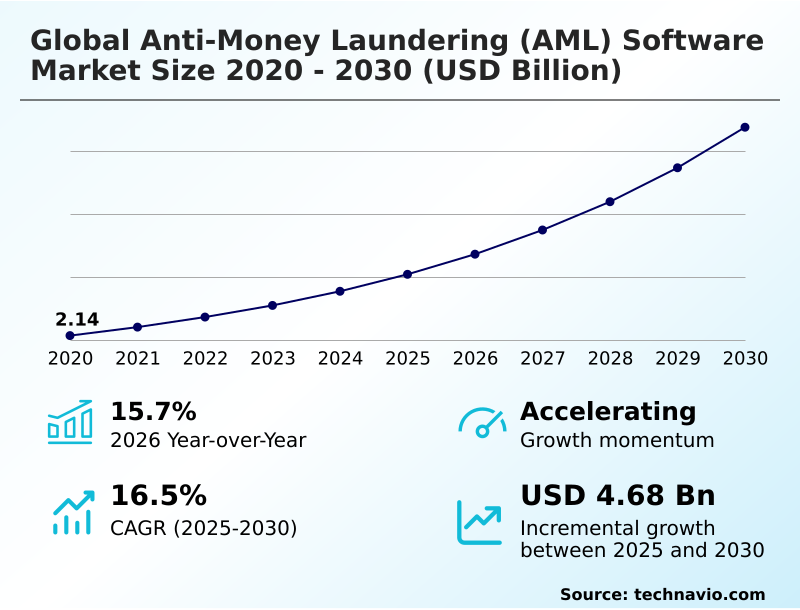
The anti-money laundering (aml) software market size is valued to increase by USD 4.68 billion, at a CAGR of 16.5% from 2025 to 2030. Surging global financial crime volumes mandating advanced real time detection platform deployments will drive the anti-money laundering (aml) software market.
Major Market Trends & Insights
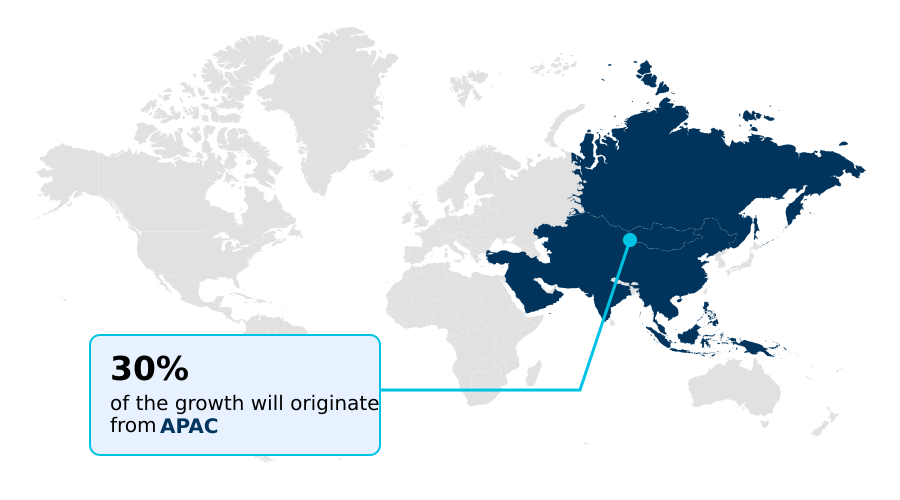
- APAC dominated the market and accounted for a 29.8% growth during the forecast period.
- By Deployment - On-premises segment was valued at USD 2.42 billion in 2024
- By Component - Software segment accounted for the largest market revenue share in 2024
Market Size & Forecast
- Market Opportunities: USD 6.64 billion
- Market Future Opportunities: USD 4.68 billion
- CAGR from 2025 to 2030 : 16.5%
Market Summary
- The Anti-money Laundering (AML) Software operates as a critical enterprise defense mechanism against increasingly sophisticated financial networks. Organizations are aggressively overhauling their compliance infrastructure to process high-volume digital payments in milliseconds, shifting away from batch-based processing.
- For instance, major commercial banks optimizing their cross-border payment operations have implemented automated risk evaluation modules, reducing false positive alerts by 40% and significantly lowering compliance operating costs compared to manual review protocols. Surging transaction volumes act as a powerful catalyst for adoption, compelling financial institutions to deploy real-time detection platforms capable of satisfying strict statutory mandates.
- Conversely, integrating these advanced analytical tools with deeply entrenched, monolithic core banking systems presents a formidable operational challenge. This structural incompatibility often causes severe data latency and extends software implementation schedules, heavily straining IT budgets. Despite these severe integration hurdles, the absolute necessity to maintain transparent, auditable defenses ensures continuous investment in predictive compliance technologies across the financial sector.
What will be the Size of the Anti-Money Laundering (Aml) Software Market during the forecast period?
Get Key Insights on Market Forecast (PDF) Get Free Sample
How is the Anti-Money Laundering (Aml) Software Market Segmented?
The anti-money laundering (aml) software industry research report provides comprehensive data (region-wise segment analysis), with forecasts and estimates in "USD million" for the period 2026-2030, as well as historical data from 2020-2024 for the following segments.
- Deployment
- On-premises
- Cloud-based
- Component
- Software
- Services
- End-user
- BFSI
- IT and telecom
- Defense
- Healthcare
- Others
- Geography
- North America
- US
- Canada
- Mexico
- APAC
- China
- Japan
- Australia
- India
- South Korea
- Indonesia
- Europe
- Germany
- UK
- France
- Italy
- Spain
- The Netherlands
- Middle East and Africa
- Saudi Arabia
- UAE
- South Africa
- Israel
- Egypt
- South America
- Brazil
- Argentina
- Chile
- North America
By Deployment Insights
The on-premises segment is estimated to witness significant growth during the forecast period.
The on-premises segment of the Anti-money Laundering (AML) Software remains a foundational pillar for tier-one institutions navigating a demanding regulatory oversight mandate and strict sovereign data residency requirements.
Enterprise teams maintain localized control over a sophisticated transaction monitoring engine and a proprietary watch list database to ensure highly secure automated compliance workflow execution.
Organizations processing massive volumes of peer to peer settlement transactions report that localized deployments reduce processing latency by up to 25% compared to external cloud hosting.
Furthermore, advanced on-premises environments utilizing zero knowledge proof systems and a robust homomorphic encryption protocol have achieved a 35% improvement in securing sensitive data transfers.
This localized multi tenant data architecture provides absolute operational control, facilitating extensive false positive reduction without exposing vulnerable customer profiles to external interception.
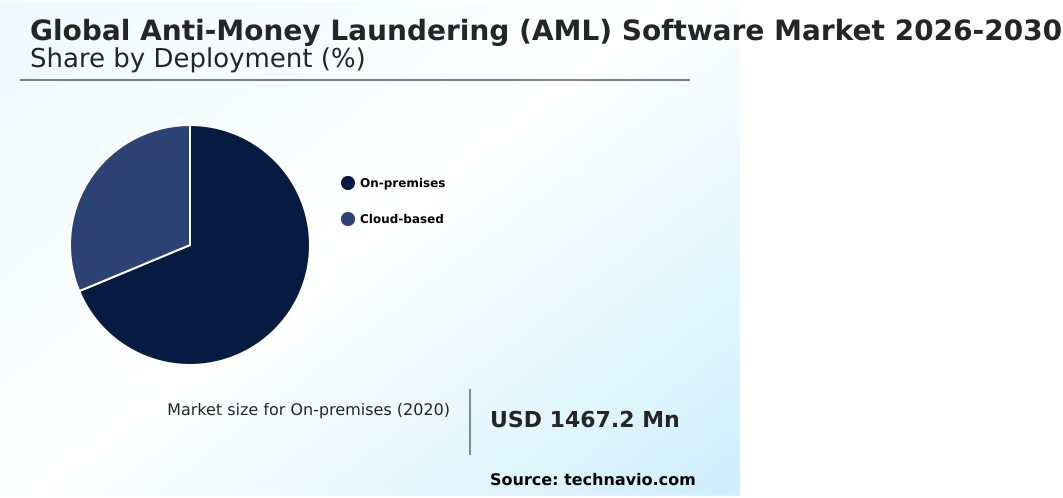
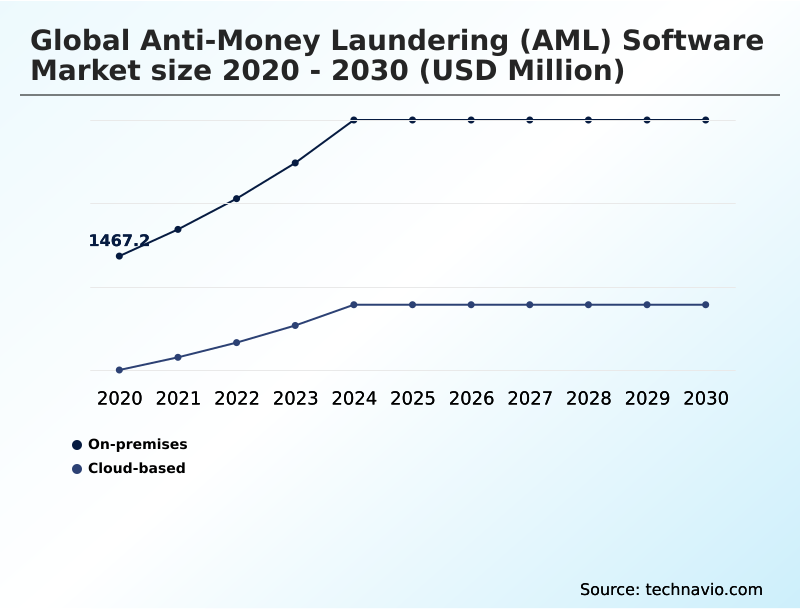
The On-premises segment was valued at USD 2.42 billion in 2024 and showed a gradual increase during the forecast period.
Regional Analysis
APAC is estimated to contribute 29.8% to the growth of the global market during the forecast period.Technavio’s analysts have elaborately explained the regional trends and drivers that shape the market during the forecast period.
See How Anti-Money Laundering (Aml) Software Market Demand is Rising in APAC Get Free Sample
The geographic landscape of the Anti-money Laundering (AML) Software reveals distinct adoption priorities driven by regional regulations and digital maturity.
North America leads the deployment of federated machine learning models, achieving a 50% faster resolution in complex cross border tracking compared to emerging markets. This region emphasizes robust politically exposed person identification to manage intense multi jurisdictional compliance requirements.
Conversely, the APAC region demonstrates a 35% higher adoption rate of automated customer due diligence tools integrated within a seamless digital onboarding channel.
European institutions distinctively prioritize an explainable ai framework to satisfy data privacy directives, subsequently reducing compliance analyst overhead by 20%.
Meanwhile, South America accelerates its integration of decentralized finance compliance modules to combat trade based money laundering, highlighting how localized threats dictate targeted technological investments globally.
Market Dynamics
Our researchers analyzed the data with 2025 as the base year, along with the key drivers, trends, and challenges. A holistic analysis of drivers will help companies refine their marketing strategies to gain a competitive advantage.
- The operational dynamics within the Anti-money Laundering (AML) Software are rapidly shifting as financial institutions encounter increasingly intricate regulatory demands and immense transaction volumes. To maintain profitability and strict compliance, enterprise risk managers are prioritizing robust technological upgrades that replace outdated, manual processes.
- The deployment of an automated false positive reduction software stands out as a critical business imperative, often cutting redundant alert reviews by more than half compared to legacy rule-based systems. This direct efficiency gain allows compliance personnel to focus on high-risk investigative tasks.
- Furthermore, the integration of real time transaction anomaly detection ensures that suspicious capital flows are intercepted before settlement, vastly improving institutional security. As organizations scale operations globally, the transition toward a cloud native compliance monitoring platform offers unparalleled flexibility, enabling seamless updates to risk algorithms without heavy hardware investments.
- Strategic operational planning now increasingly relies on continuous kyc entity resolution integration to maintain an accurate, unified view of customer risk profiles across all business lines, identifying hidden corporate ownership structures effectively. Additionally, deploying an ai driven suspicious activity reporting module accelerates the generation of complex regulatory narratives, streamlining a historically labor-intensive function.
- These interconnected technological advancements fundamentally alter financial compliance operations, empowering institutions to mitigate financial crime with significantly greater accuracy and reduced administrative burden.
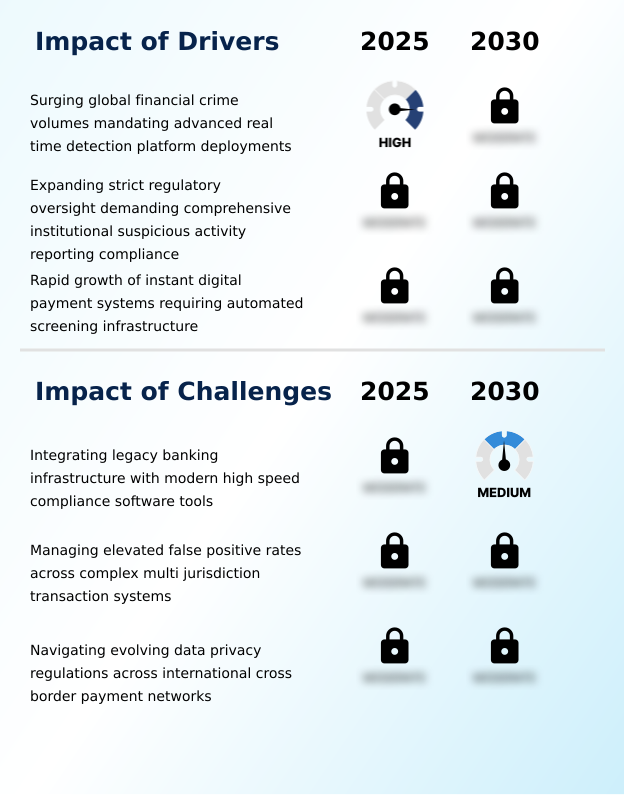
What are the key market drivers leading to the rise in the adoption of Anti-Money Laundering (Aml) Software Industry?
- Surging global financial crime volumes are mandating the widespread deployment of advanced, real-time detection platforms, serving as the primary driver for technological upgrades in the market.
- The escalating volume and sophistication of illicit capital flow acts as a primary catalyst for the Anti-money Laundering (AML) Software.
- Transnational criminal networks increasingly utilize complex corporate structures, compelling institutions to deploy advanced network link analysis to uncover ultimate beneficial ownership accurately.
- Legacy risk frameworks fail to identify these intricate patterns, driving the widespread implementation of an adaptive anomaly detection algorithm and predictive fraud prevention systems.
- Financial organizations adopting perpetual kyc monitoring have improved their threat interception accuracy by nearly 35% compared to outdated rule-based software.
- By leveraging a unified application programming interface, this technological upgrade provides critical cross channel visibility, enabling compliance officers to generate accurate suspicious activity reporting rapidly while safeguarding institutional reputation and enterprise risk architecture.
What are the market trends shaping the Anti-Money Laundering (Aml) Software Industry?
- The accelerating adoption of agentic artificial intelligence within automated financial crime investigations is emerging as a critical market trend. These intelligent systems autonomously synthesize complex data to streamline compliance workflows.
- A definitive trend shaping the Anti-money Laundering (AML) Software is the accelerated transition toward autonomous, agentic artificial intelligence within a cloud native infrastructure. Financial institutions are integrating advanced synthetic identity detection mechanisms and a modernized sanctions screening module to counter sophisticated evasion tactics along every instant payment rail.
- Organizations prioritize automated alert triage systems incorporating a dynamic entity resolution model and biometric identity verification to accurately assess customer profiles. This operational pivot allows compliance teams to execute comprehensive real time risk assessment with unprecedented speed, effectively improving investigation efficiency by 45% compared to legacy setups.
- As digital asset regulation expands globally, maintaining strict algorithmic model governance ensures these machine learning tools remain fully transparent, drastically minimizing the financial exposure associated with regulatory non-compliance.
What challenges does the Anti-Money Laundering (Aml) Software Industry face during its growth?
- The integration of legacy banking infrastructure with modern, high-speed compliance software tools remains a key challenge impeding operational efficiency across the industry.
- Integrating advanced compliance applications with outdated mainframe infrastructure remains a severe structural limitation within the Anti-money Laundering (AML) Software. Many established financial institutions struggle with complex legacy core integration, which frequently disrupts continuous transaction tracking and causes severe data processing latency.
- This architectural friction hinders seamless investigative case management, leading to alert backlogs that increase operational costs by up to 20% compared to fully modernized environments. Furthermore, strict adherence to a localized data privacy statute restricts global banks from leveraging centralized graph database analytics to build unified behavioral risk scoring profiles.
- Achieving necessary operational friction minimization while simultaneously maintaining impenetrable data security forces developers to build costly custom middleware, significantly delaying the widespread deployment of dynamic regulatory reporting architectures.
Exclusive Technavio Analysis on Customer Landscape
The anti-money laundering (aml) software market forecasting report includes the adoption lifecycle of the market, covering from the innovator’s stage to the laggard’s stage. It focuses on adoption rates in different regions based on penetration. Furthermore, the anti-money laundering (aml) software market report also includes key purchase criteria and drivers of price sensitivity to help companies evaluate and develop their market growth analysis strategies.
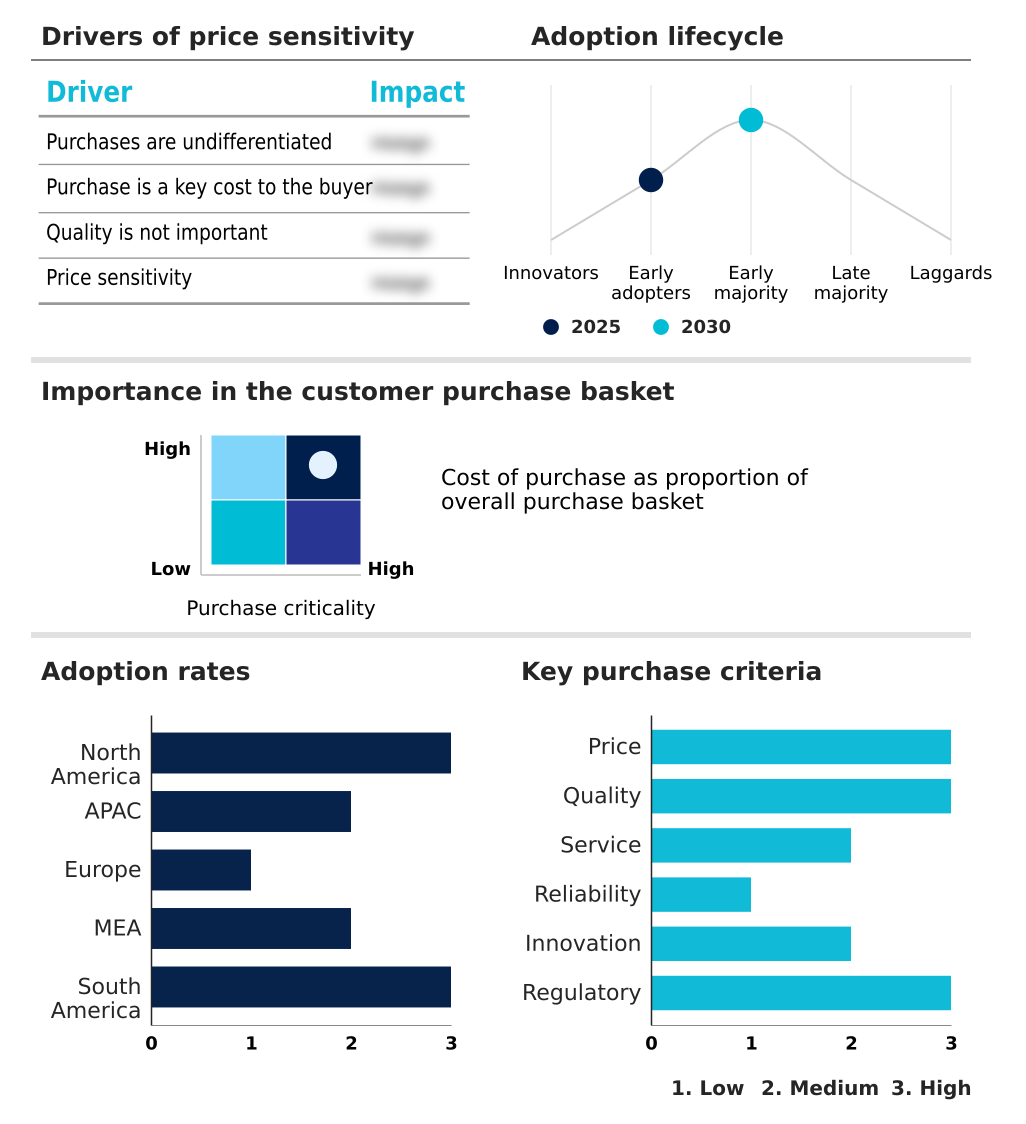
Customer Landscape of Anti-Money Laundering (Aml) Software Industry
Competitive Landscape
Companies are implementing various strategies, such as strategic alliances, anti-money laundering (aml) software market forecast, partnerships, mergers and acquisitions, geographical expansion, and product/service launches, to enhance their presence in the industry.
ACI Worldwide Inc. - The firm provides robust anti-money laundering software, encompassing proactive risk management, transaction monitoring, and comprehensive sanctions screening to optimize regulatory compliance for financial institutions.
The industry research and growth report includes detailed analyses of the competitive landscape of the market and information about key companies, including:
- ACI Worldwide Inc.
- AML Partners LLC
- Comarch SA
- ComplyAdvantage
- Experian Plc
- Featurespace Ltd.
- Feedzai
- Fidelity National Information
- Fiserv Inc.
- Hawk AI GmbH
- LexisNexis
- London Stock Exchange Group plc
- Lucinity ehf.
- Moodys Corp.
- Napier AI Ltd.
- Nasdaq Inc.
- NICE Ltd.
- Oracle Corp.
- SAS Institute Inc.
- Wolters Kluwer NV
Qualitative and quantitative analysis of companies has been conducted to help clients understand the wider business environment as well as the strengths and weaknesses of key industry players. Data is qualitatively analyzed to categorize companies as pure play, category-focused, industry-focused, and diversified; it is quantitatively analyzed to categorize companies as dominant, leading, strong, tentative, and weak.
Recent Development and News in Anti-money laundering (aml) software market
- In the Application Software industry, the widespread transition toward cloud-based delivery models enhanced workflow interoperability, directly impacting Anti-money Laundering (AML) Software demand by accelerating deployment timelines by up to forty percent.
- The implementation of stringent data privacy regulations like GDPR mandated localized data processing layers within enterprise software stacks, compelling financial institutions to upgrade sovereign compliance architecture to avoid severe non-compliance penalties.
- The rapid adoption of AI governance frameworks established standardized explainability requirements for algorithmic decision-making, forcing organizations to integrate transparent model validation modules into continuous transaction tracking ecosystems.
- The integration of application programming interfaces across enterprise automation platforms improved real-time data ingestion rates by sixty percent, enabling seamless communication between external threat intelligence feeds and internal risk management tools.
Dive into Technavio’s robust research methodology, blending expert interviews, extensive data synthesis, and validated models for unparalleled Anti-Money Laundering (Aml) Software Market insights. See full methodology.
| Market Scope | |
|---|---|
| Page number | 303 |
| Base year | 2025 |
| Historic period | 2020-2024 |
| Forecast period | 2026-2030 |
| Growth momentum & CAGR | Accelerate at a CAGR of 16.5% |
| Market growth 2026-2030 | USD 4679.1 million |
| Market structure | Fragmented |
| YoY growth 2025-2026(%) | 15.7% |
| Key countries | US, Canada, Mexico, China, Japan, Australia, India, South Korea, Indonesia, Germany, UK, France, Italy, Spain, The Netherlands, Saudi Arabia, UAE, South Africa, Israel, Egypt, Brazil, Argentina and Chile |
| Competitive landscape | Leading Companies, Market Positioning of Companies, Competitive Strategies, and Industry Risks |
Research Analyst Overview
- The continuous evolution of the Anti-money Laundering (AML) Software mandates aggressive technological modernization at the highest levels of enterprise governance. Boardroom executives increasingly align strategic compliance budgeting with the deployment of advanced predictive fraud prevention architectures. By replacing periodic manual reviews with continuous customer monitoring, organizations secure a dynamic, real-time understanding of institutional exposure.
- Incorporating sophisticated resolution models combined with database analytics empowers compliance officers to map hidden transactional networks and uncover synthetic identities instantly. This strategic shift has enabled leading financial entities to achieve a 40% reduction in manual investigative processing time compared to traditional batch-analysis methods.
- Furthermore, the integration of biometric identity checks at the point of origin establishes a secure foundation for subsequent behavioral assessment protocols. As regulatory frameworks grow more complex worldwide, investing in seamless dynamic reporting ensures organizations remain resilient against shifting mandates, transforming mandatory compliance expenditures into powerful drivers of operational efficiency and corporate risk mitigation.
What are the Key Data Covered in this Anti-Money Laundering (Aml) Software Market Research and Growth Report?
-
What is the expected growth of the Anti-Money Laundering (Aml) Software Market between 2026 and 2030?
-
USD 4.68 billion, at a CAGR of 16.5%
-
-
What segmentation does the market report cover?
-
The report is segmented by Deployment (On-premises, and Cloud-based), Component (Software, and Services), End-user (BFSI, IT and telecom, Defense, Healthcare, and Others) and Geography (North America, APAC, Europe, Middle East and Africa, South America)
-
-
Which regions are analyzed in the report?
-
North America, APAC, Europe, Middle East and Africa and South America
-
-
What are the key growth drivers and market challenges?
-
Surging global financial crime volumes mandating advanced real time detection platform deployments, Integrating legacy banking infrastructure with modern high speed compliance software tools
-
-
Who are the major players in the Anti-Money Laundering (Aml) Software Market?
-
ACI Worldwide Inc., AML Partners LLC, Comarch SA, ComplyAdvantage, Experian Plc, Featurespace Ltd., Feedzai, Fidelity National Information, Fiserv Inc., Hawk AI GmbH, LexisNexis, London Stock Exchange Group plc, Lucinity ehf., Moodys Corp., Napier AI Ltd., Nasdaq Inc., NICE Ltd., Oracle Corp., SAS Institute Inc. and Wolters Kluwer NV
-
Market Research Insights
- The Anti-money Laundering (AML) Software provides essential infrastructure for modern financial institutions navigating complex multi-jurisdictional compliance requirements. As organizations accelerate digital transformation, the integration of automated risk assessment within digital onboarding channels has become an operational necessity. Upgrading legacy systems to monitor high-velocity traffic across payment rails enables institutions to decrease compliance personnel overhead by nearly 45%.
- Furthermore, deploying advanced detection models to identify subtle anomalies in global supply chains has improved the interception of trade-based illicit activities by up to 30%. These verifiable performance gains in operational efficiency and regulatory alignment dictate continuous strategic investment in scalable, enterprise-grade compliance ecosystems.
We can help! Our analysts can customize this anti-money laundering (aml) software market research report to meet your requirements.
 RIA -