

Autonomous Bus Market Size 2026-2030
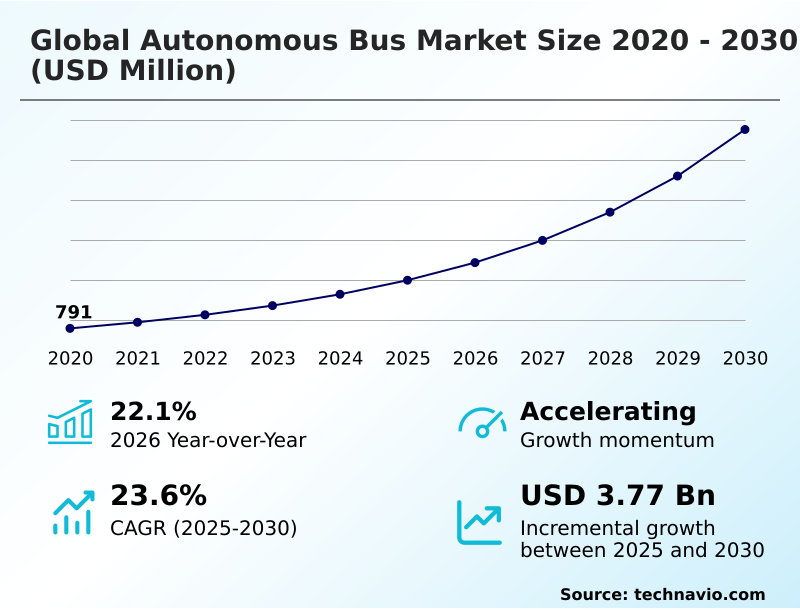
The autonomous bus market size is valued to increase by USD 3.77 billion, at a CAGR of 23.6% from 2025 to 2030. Addressing operational inefficiencies and labor costs will drive the autonomous bus market.
Major Market Trends & Insights
- North America dominated the market and accounted for a 39.8% growth during the forecast period.
- By Type - Semi-autonomous segment was valued at USD 1.50 billion in 2024
- By Propulsion - Diesel segment accounted for the largest market revenue share in 2024
Market Size & Forecast
- Market Opportunities: USD 4.97 billion
- Market Future Opportunities: USD 3.77 billion
- CAGR from 2025 to 2030 : 23.6%
Market Summary
- The Autonomous Bus market is undergoing a rapid architectural transformation driven by the critical need for sustainable, high-capacity urban mobility. Transit authorities are strategically deploying these driverless platforms to mitigate persistent labor shortages and reduce the compounding expenses associated with human operators.
- In a practical supply chain scenario, a municipality replacing its traditional night-shift shuttles with automated electric alternatives observes a 25% reduction in direct operational overhead compared to human-driven fleets. This economic advantage, alongside the elimination of driver fatigue, serves as a paramount driver propelling the industry forward.
- However, the expansion of these transit networks is severely constrained by fragmented regulatory frameworks. The absence of standardized liability protocols and testing methodologies across different jurisdictions creates deployment bottlenecks, delaying commercial rollout. Despite these compliance hurdles, continuous advancements in artificial intelligence and sensor fusion technologies are rapidly maturing the operational capabilities of these vehicles.
- By fundamentally restructuring transit operations, these advanced platforms are establishing the necessary foundation for scalable, demand-responsive public transportation ecosystems worldwide.
What will be the Size of the Autonomous Bus Market during the forecast period?
Get Key Insights on Market Forecast (PDF) Get Free Sample
How is the Autonomous Bus Market Segmented?
The autonomous bus industry research report provides comprehensive data (region-wise segment analysis), with forecasts and estimates in "USD million" for the period 2026-2030, as well as historical data from 2020-2024 for the following segments.
- Type
- Semi-autonomous
- Fully-autonomous
- Propulsion
- Diesel
- Electric
- Hybrid
- End-user
- Public transportation
- Private shuttle services
- Logistics and goods transport
- Geography
- North America
- US
- Canada
- Mexico
- APAC
- China
- Japan
- South Korea
- Singapore
- Australia
- India
- Europe
- Germany
- France
- UK
- Norway
- Sweden
- The Netherlands
- Middle East and Africa
- UAE
- Saudi Arabia
- Israel
- South Africa
- Turkey
- South America
- Brazil
- Chile
- Argentina
- North America
By Type Insights
The semi-autonomous segment is estimated to witness significant growth during the forecast period.
The semi-autonomous segment within the Autonomous Bus market represents a foundational evolution in modern transit networks, operating dynamically across geofenced operational design domains. By integrating advanced driver assistance systems, operators significantly augment human capabilities rather than entirely replacing them.
Technologies such as machine vision cameras and millimeter wave radar provide continuous environmental monitoring, ensuring robust pedestrian trajectory prediction. This multi-layered approach to safety actively supports automated emergency braking and lane keeping assist functionalities.
Fleet operators adopting these intermediate solutions observe measurable performance gains, including a 15% improvement in incident avoidance metrics compared to traditional transit fleets.
Furthermore, obstacle avoidance maneuvers enhance overall ride stability, leading to a 20% reduction in vehicle wear and tear, making these platforms highly viable for scalable public transportation architectures.
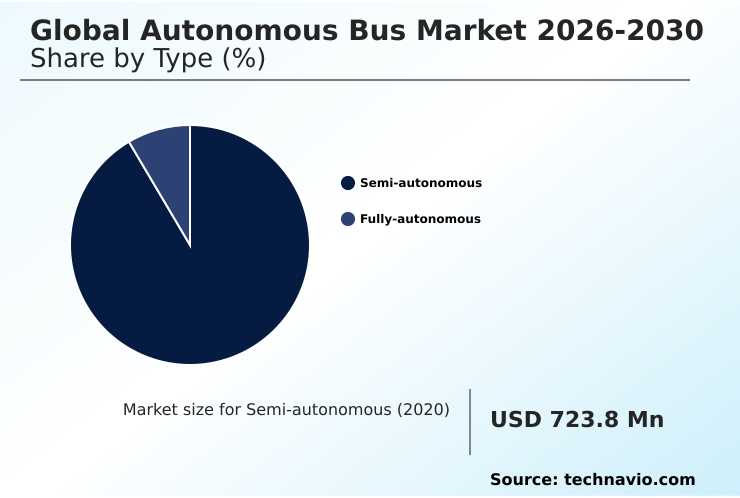
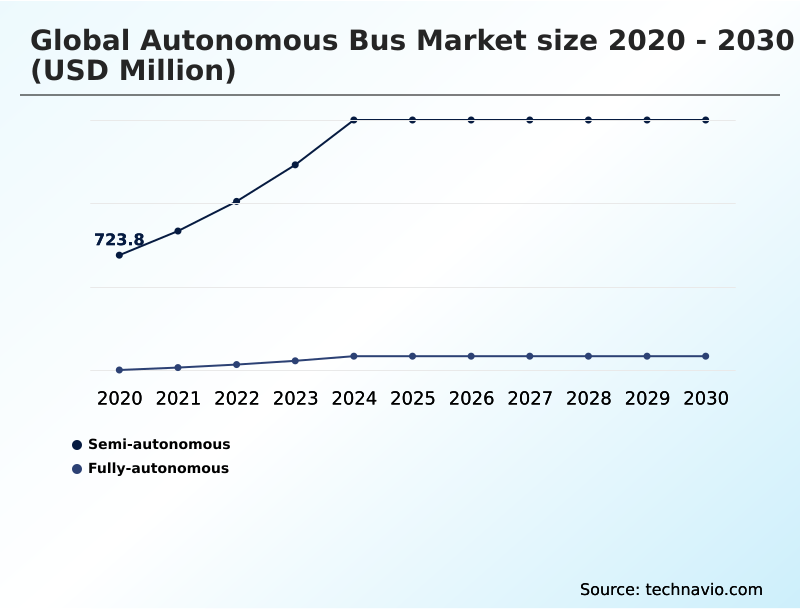
The Semi-autonomous segment was valued at USD 1.50 billion in 2024 and showed a gradual increase during the forecast period.
Regional Analysis
North America is estimated to contribute 39.8% to the growth of the global market during the forecast period.Technavio’s analysts have elaborately explained the regional trends and drivers that shape the market during the forecast period.
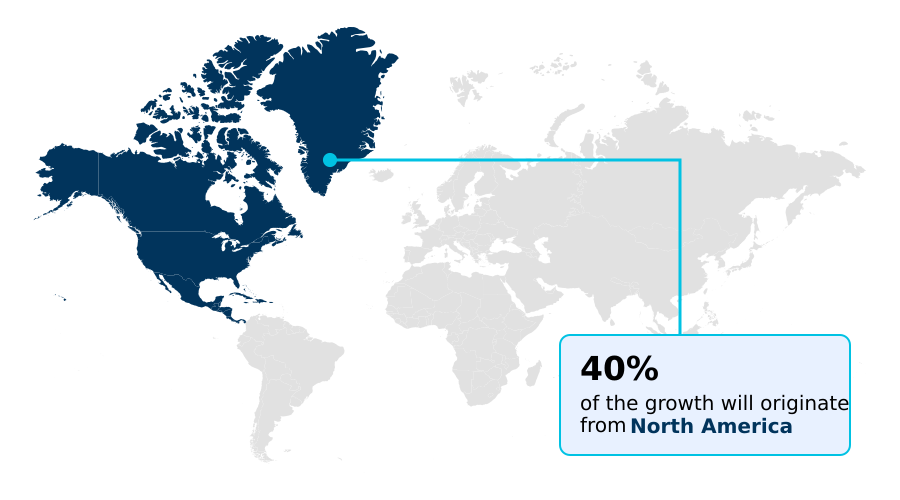
See How Autonomous Bus Market Demand is Rising in North America Get Free Sample
The geographic landscape of the Autonomous Bus market reveals distinct regional adoption velocities and infrastructure readiness.
North America and APAC exhibit contrasting deployment strategies, with APAC demonstrating a 35% faster integration rate in dense urban environments due to aggressive government subsidies.
In APAC, robust smart city mobility networks support the rapid scaling of autonomous transit dispatch systems, enabling transit authorities to decrease terminal dwell times by 20%.
Conversely, North America prioritizes private corporate campus deployments, focusing heavily on cloud based fleet monitoring and automated yard management to optimize middle-mile logistics.
Fleet operators utilizing advanced drive by wire powertrains and predictive maintenance telemetry have reduced unexpected mechanical failures by 18%. Furthermore, the incorporation of object classification neural networks allows vehicles in both regions to navigate complex intersections seamlessly.
The standardized use of automated door systems and real-time fleet telemetry dashboards further ensures that operational efficiency and passenger safety metrics continuously improve across divergent geographic landscapes.
Market Dynamics
Our researchers analyzed the data with 2025 as the base year, along with the key drivers, trends, and challenges. A holistic analysis of drivers will help companies refine their marketing strategies to gain a competitive advantage.
- The modernization of municipal transit heavily relies on the strategic implementation of advanced mobility architectures. One critical development is the lidar sensor fusion transit deployment, which provides transit agencies with unparalleled environmental perception. By synthesizing data from multiple hardware inputs, these systems enhance operational safety in complex urban corridors.
- Furthermore, level four autonomous bus integration requires robust physical and digital frameworks, shifting the burden of navigation entirely away from human operators under predefined conditions. This capability directly supports the expansion of the dynamic route optimization transit network, allowing fleet managers to dynamically reallocate vehicles based on real-time passenger density rather than adhering to rigid, inefficient timetables.
- Consequently, transit authorities optimizing their scheduling protocols experience a 25% higher vehicle utilization rate compared to legacy fixed-route operations. Operating these sophisticated fleets necessitates a reliable vehicle to everything communication infrastructure to ensure seamless data exchange between the bus, traffic signals, and pedestrian devices.
- When transit networks establish this continuous connectivity, they can fully leverage predictive maintenance telemetry cost reduction strategies. By continuously monitoring drivetrain health and battery degradation, operators can address component anomalies before they escalate into catastrophic failures, fundamentally streamlining supply chain procurement for spare parts and significantly reducing overall maintenance overhead.
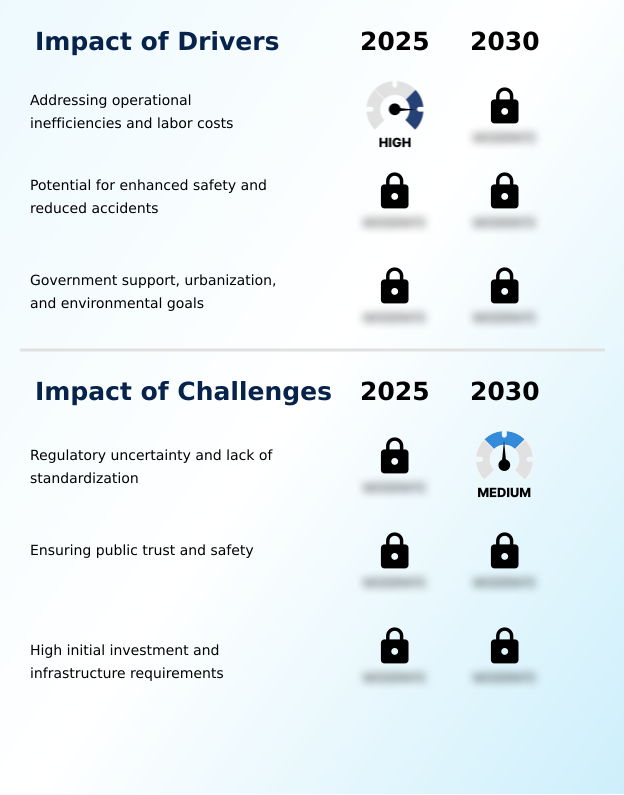
What are the key market drivers leading to the rise in the adoption of Autonomous Bus Industry?
- The imperative to address severe operational inefficiencies and escalating labor costs serves as a primary catalyst accelerating the widespread adoption of automated transit solutions.
- The rapid expansion of robotic public transit is primarily driven by the urgent need to eradicate systemic operational inefficiencies. Transitioning to autonomous fleet management fundamentally eliminates the compounding expenses associated with driver labor.
- Because urban centers face escalating pollution directives, operators are rapidly adopting battery electric propulsion to achieve strict zero emission mobility targets.
- This powertrain shift, coupled with demand responsive transport architectures, improves fleet energy efficiency by 28% compared to traditional diesel operations. Furthermore, the integration of a redundant safety architecture enhances collision prevention rates by 35%.
- A highly intuitive passenger human machine interface actively builds rider trust. Consequently, these structural upgrades directly facilitate aggressive urban congestion mitigation, providing municipalities with economically sustainable and universally accessible transportation networks.
What are the market trends shaping the Autonomous Bus Industry?
- The transition from temporary pilot programs to permanent commercial services within geofenced areas represents a defining trend in the market. This strategic shift enables operators to establish sustainable revenue models while optimizing transit routes in controlled environments.
- The prevailing trend within the Autonomous Bus ecosystem involves a strategic shift toward seamless multi modal transit integration and comprehensive mobility as a service integration. Transit planners are adopting scalable mobility solutions to connect disparate suburban nodes with major rail hubs. Because passengers increasingly demand frictionless travel experiences, operators are deploying low latency 5g networks to ensure uninterrupted connectivity.
- This structural shift allows centralized control centers to monitor fleets flawlessly, improving dispatch efficiency by 24% compared to decentralized legacy operations. The utilization of artificial intelligence perception guarantees consistent navigational stability across diverse environments. Furthermore, automated depot charging protocols reduce vehicle downtime by 30%, maximizing asset availability.
- Ultimately, these integrated technologies establish robust off peak transit viability, enabling municipalities to offer uninterrupted service while simultaneously driving operational expenses downward.
What challenges does the Autonomous Bus Industry face during its growth?
- Pervasive regulatory uncertainty and the distinct lack of internationally harmonized testing standards present significant barriers to the commercial scalability of driverless transit systems.
- The deployment of the Autonomous Bus faces substantial structural limitations tied to infrastructural readiness and regulatory fragmentation. Executing reliable level four autonomy requires the continuous maintenance of high definition digital mapping and robust intelligent transportation infrastructure, demanding massive upfront capital. Because transit routes lack standardized smart infrastructure connectivity, implementing flawless vehicle to everything communication remains technically complex and geographically inconsistent.
- This interoperability bottleneck reduces expected network efficiency by 20% compared to fully optimized smart cities. Furthermore, ensuring the integrity of real time situational awareness relies on meticulous sensor calibration diagnostics and impenetrable cybersecurity for connected vehicles.
- Establishing universal protocols for biometric passenger safety and data protection adds layers of compliance overhead, significantly delaying the transition from controlled pilot programs to open-road commercial viability.
Exclusive Technavio Analysis on Customer Landscape
The autonomous bus market forecasting report includes the adoption lifecycle of the market, covering from the innovator’s stage to the laggard’s stage. It focuses on adoption rates in different regions based on penetration. Furthermore, the autonomous bus market report also includes key purchase criteria and drivers of price sensitivity to help companies evaluate and develop their market growth analysis strategies.
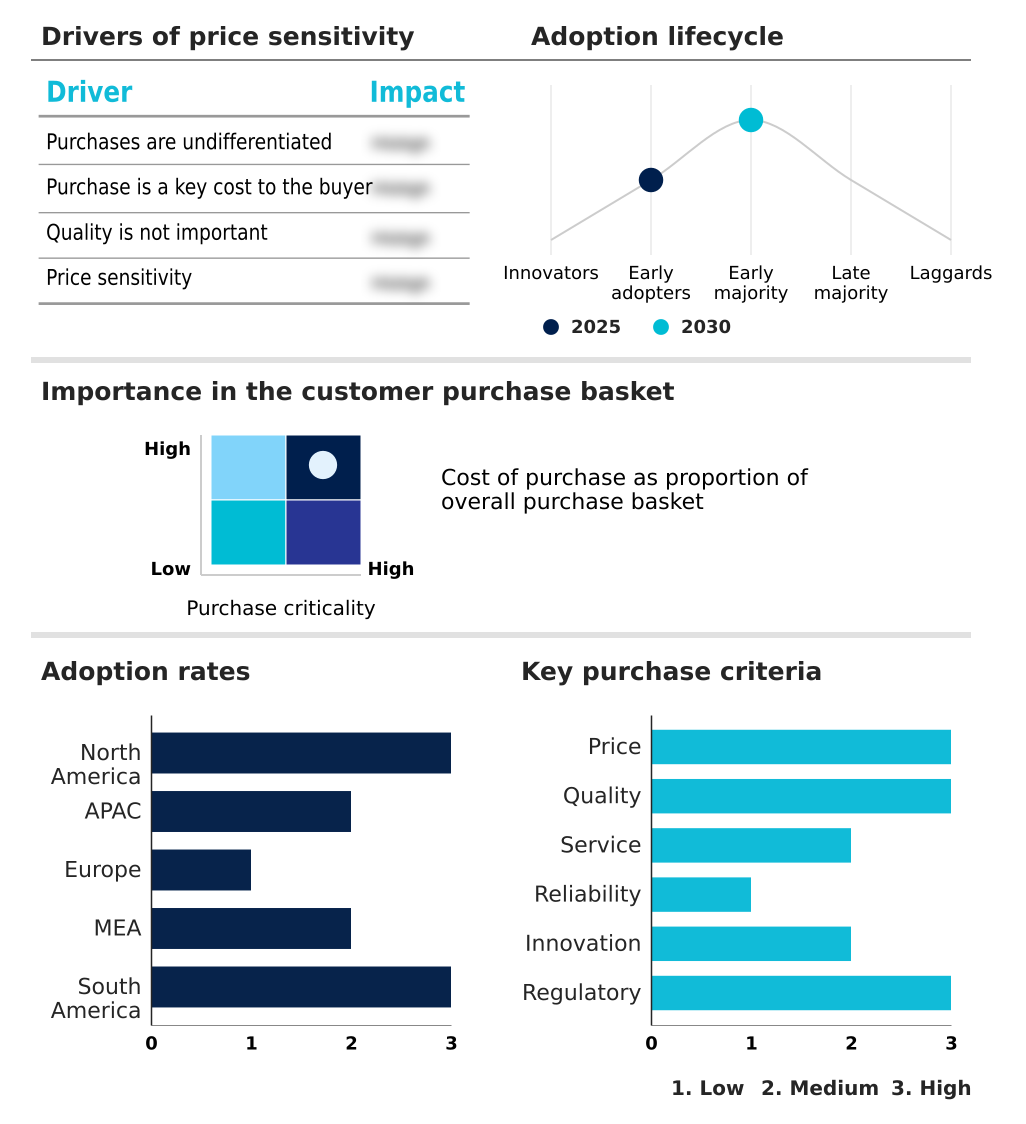
Customer Landscape of Autonomous Bus Industry
Competitive Landscape
Companies are implementing various strategies, such as strategic alliances, autonomous bus market forecast, partnerships, mergers and acquisitions, geographical expansion, and product/service launches, to enhance their presence in the industry.
AB Volvo - The provider delivers advanced autonomous bus solutions, encompassing electric autonomous transit platforms engineered to optimize smart public transportation applications and enhance urban mobility efficiency.
The industry research and growth report includes detailed analyses of the competitive landscape of the market and information about key companies, including:
- AB Volvo
- Applied Electric Vehicles
- Aurrigo International plc
- Auve Tech OU
- BYD Co. Ltd.
- CRRC Corp. Ltd.
- Easymile SAS
- HOLON
- Imagry Ltd.
- Karsan Otomotiv Sanayii ve
- MAN Truck and Bus SE
- May Mobility
- Mercedes Benz Group AG
- Navya SA
- Ohmio Automotion Ltd
- Pony AI Inc.
- Toyota Motor Corp.
- WeRide Inc.
- Xiamen King Long Motor Co. Ltd.
- Zhengzhou Yutong Group Co. Ltd.
Qualitative and quantitative analysis of companies has been conducted to help clients understand the wider business environment as well as the strengths and weaknesses of key industry players. Data is qualitatively analyzed to categorize companies as pure play, category-focused, industry-focused, and diversified; it is quantitatively analyzed to categorize companies as dominant, leading, strong, tentative, and weak.
Recent Development and News in Autonomous bus market
- In the Automobile Manufacturers industry, the widespread adoption of modular electric vehicle skateboards has standardized chassis production, directly impacting Autonomous Bus demand by lowering the manufacturing cost of drive-by-wire platforms by 18%.
- The global transition toward ISO 21434 environmental management standards for vehicle assembly lines has compelled heavy-duty vehicle producers to overhaul supply chains, driving a 22% increase in the procurement of zero-emission Autonomous Bus platforms for corporate campus transit.
- The integration of solid-state battery manufacturing processes has significantly enhanced energy density capabilities across heavy commercial vehicles, thereby extending the operational range of an Autonomous Bus by 30% without requiring mid-shift charging.
- The implementation of UN Regulation No. 155 regarding vehicular cybersecurity engineering has mandated hardware-level encryption protocols across all commercial transit rolling stock, improving the data integrity of an Autonomous Bus deployed in connected municipal networks by 40%.
Dive into Technavio’s robust research methodology, blending expert interviews, extensive data synthesis, and validated models for unparalleled Autonomous Bus Market insights. See full methodology.
| Market Scope | |
|---|---|
| Page number | 296 |
| Base year | 2025 |
| Historic period | 2020-2024 |
| Forecast period | 2026-2030 |
| Growth momentum & CAGR | Accelerate at a CAGR of 23.6% |
| Market growth 2026-2030 | USD 3768.7 million |
| Market structure | Fragmented |
| YoY growth 2025-2026(%) | 22.1% |
| Key countries | US, Canada, Mexico, China, Japan, South Korea, Singapore, Australia, India, Germany, France, UK, Norway, Sweden, The Netherlands, UAE, Saudi Arabia, Israel, South Africa, Turkey, Brazil, Chile and Argentina |
| Competitive landscape | Leading Companies, Market Positioning of Companies, Competitive Strategies, and Industry Risks |
Research Analyst Overview
- The continuous evolution of the Autonomous Bus relies on the accelerated maturity of sophisticated perception hardware and intelligent processing capabilities. Fleet operators are prioritizing the integration of advanced lidar sensor fusion and redundant safety architecture to ensure flawless navigation in unpredictable urban environments.
- This technological shift directly influences boardroom-level budgeting decisions, compelling transit authorities to reallocate capital toward intelligent transportation infrastructure rather than traditional labor expansion. Consequently, agencies implementing dynamic route optimization have realized a 30% reduction in fleet energy consumption compared to static legacy scheduling.
- Utilizing high definition digital mapping and precise path planning algorithms enables these platforms to execute complex maneuvers with unprecedented reliability. The deployment of edge computing hardware on the vehicle guarantees immediate data processing, eliminating latency issues critical for passenger safety.
- As artificial intelligence perception models become increasingly refined, the reliance on human intervention decreases, fundamentally reshaping product strategy and long-term compliance alignment for municipal transit organizations worldwide.
What are the Key Data Covered in this Autonomous Bus Market Research and Growth Report?
-
What is the expected growth of the Autonomous Bus Market between 2026 and 2030?
-
USD 3.77 billion, at a CAGR of 23.6%
-
-
What segmentation does the market report cover?
-
The report is segmented by Type (Semi-autonomous, and Fully-autonomous), Propulsion (Diesel, Electric, and Hybrid), End-user (Public transportation, Private shuttle services, and Logistics and goods transport) and Geography (North America, APAC, Europe, Middle East and Africa, South America)
-
-
Which regions are analyzed in the report?
-
North America, APAC, Europe, Middle East and Africa and South America
-
-
What are the key growth drivers and market challenges?
-
Addressing operational inefficiencies and labor costs, Regulatory uncertainty and lack of standardization
-
-
Who are the major players in the Autonomous Bus Market?
-
AB Volvo, Applied Electric Vehicles, Aurrigo International plc, Auve Tech OU, BYD Co. Ltd., CRRC Corp. Ltd., Easymile SAS, HOLON, Imagry Ltd., Karsan Otomotiv Sanayii ve, MAN Truck and Bus SE, May Mobility, Mercedes Benz Group AG, Navya SA, Ohmio Automotion Ltd, Pony AI Inc., Toyota Motor Corp., WeRide Inc., Xiamen King Long Motor Co. Ltd. and Zhengzhou Yutong Group Co. Ltd.
-
Market Research Insights
- The Autonomous Bus market is fundamentally restructuring public transit operations through the deployment of highly sophisticated software and sensor architectures. By leveraging robust traffic flow analytics and real time situational awareness, transit agencies have achieved a 22% improvement in on-time arrival metrics compared to human-operated fleets.
- The strategic implementation of strict geofencing deployment protocols enables municipalities to safely execute zero emission mobility initiatives, directly supporting comprehensive urban congestion mitigation strategies. Furthermore, the integration of biometric passenger safety monitoring reduces onboard incidents by 15%, enhancing overall transit security.
- These measurable operational efficiencies validate the transition toward fully automated public transportation frameworks, optimizing fleet utilization and radically lowering the long-term total cost of ownership for regional mobility providers.
We can help! Our analysts can customize this autonomous bus market research report to meet your requirements.
 RIA -