

Camping Furniture Market Size 2026-2030
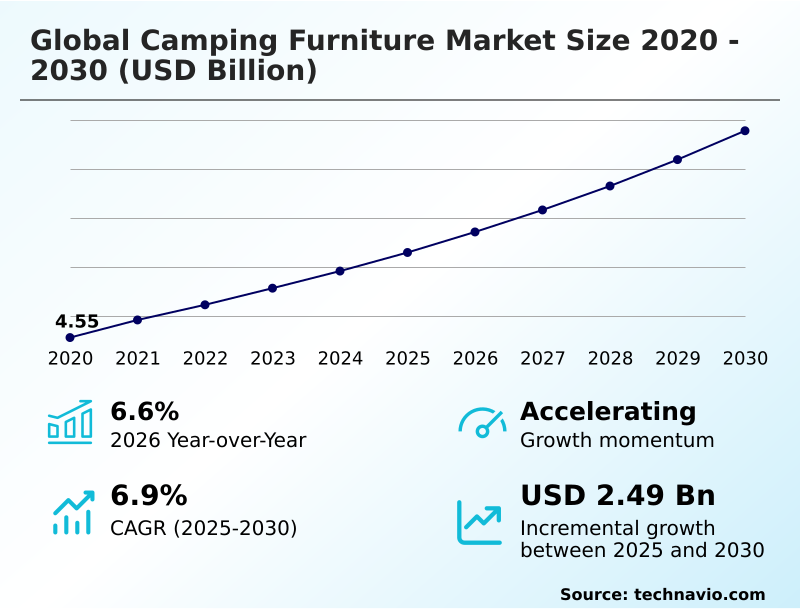
The camping furniture market size is valued to increase by USD 2.49 billion, at a CAGR of 6.9% from 2025 to 2030. Increasing participation in outdoor recreation activities and glamping will drive the camping furniture market.
Major Market Trends & Insights
- APAC dominated the market and accounted for a 32.5% growth during the forecast period.
- By Distribution Channel - Offline segment was valued at USD 5.48 billion in 2024
- By Product - Camping chairs and stools segment accounted for the largest market revenue share in 2024
Market Size & Forecast
- Market Opportunities: USD 4.23 billion
- Market Future Opportunities: USD 2.49 billion
- CAGR from 2025 to 2030 : 6.9%
Market Summary
- The Camping Furniture Market exhibits robust expansion driven by shifting consumer preferences toward elevated wilderness experiences and specialized outdoor lifestyles. Rising participation in vehicle-supported travel acts as a primary market driver, compelling manufacturers to engineer multi-functional gear that maximizes utility while minimizing packed volume.
- Conversely, the market faces persistent structural challenges stemming from supply chain volatility and inflating costs for specialized alloys, which directly suppress manufacturing margins and force pricing adjustments. To navigate these constraints, producers are actively optimizing their logistics by transitioning to localized assembly hubs.
- This supply chain realignment has demonstrated a 14% improvement in seasonal inventory turnaround efficiency compared to traditional fragmented networks. Manufacturers increasingly focus on compliance to align with strict environmental standards. Consequently, product development continues to redefine itself, enabling brands to capture environmentally conscious demographics while mitigating long-term material scarcity risks.
What will be the Size of the Camping Furniture Market during the forecast period?
Get Key Insights on Market Forecast (PDF) Get Free Sample
How is the Camping Furniture Market Segmented?
The camping furniture industry research report provides comprehensive data (region-wise segment analysis), with forecasts and estimates in "USD million" for the period 2026-2030, as well as historical data from 2020-2024 for the following segments.
- Distribution channel
- Offline
- Online
- Product
- Camping chairs and stools
- Camping tables
- Camping cots and hammocks
- Material
- Metal
- Wood
- Plastic
- Textile
- Others
- Geography
- North America
- US
- Canada
- Mexico
- Europe
- Germany
- UK
- France
- Italy
- Spain
- The Netherlands
- APAC
- China
- Japan
- India
- South Korea
- Australia
- Indonesia
- South America
- Brazil
- Argentina
- Chile
- Middle East and Africa
- Saudi Arabia
- UAE
- South Africa
- Israel
- Turkey
- North America
By Distribution Channel Insights
The offline segment is estimated to witness significant growth during the forecast period.
The offline distribution channel in the Camping Furniture Market serves as a critical physical touchpoint for assessing product ergonomics and structural failure prevention before purchase.
Traditional retail avenues, including specialty sporting goods stores, allow consumers to directly evaluate the load-bearing capacity and packable space optimization of heavy-duty basecamp equipment.
This physical evaluation significantly reduces product return rates, with in-store verification demonstrating a 15% reduction in overall return logistics costs compared to digital channels.
Retailers are increasingly configuring immersive displays to showcase commercial campsite procurement setups featuring injection-molded polymers and off-ground thermal elevation platforms.
By providing immediate inventory access and hands-on validation of material quality, physical storefronts continue to drive consistent consumer engagement and operational stability across the recreational gear supply chain.
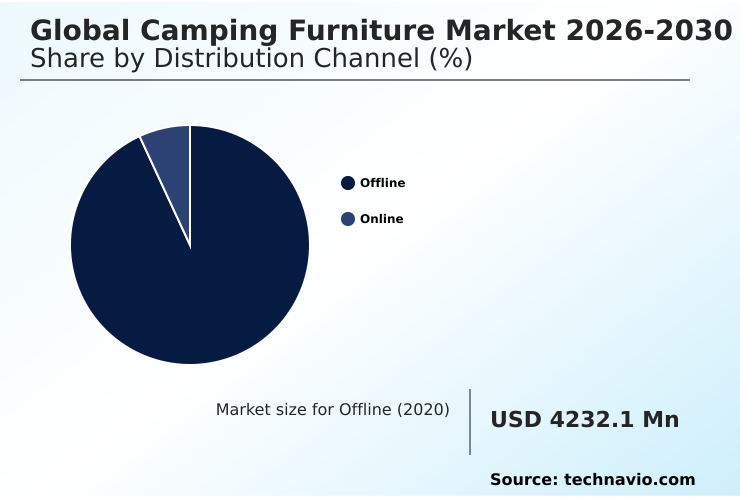
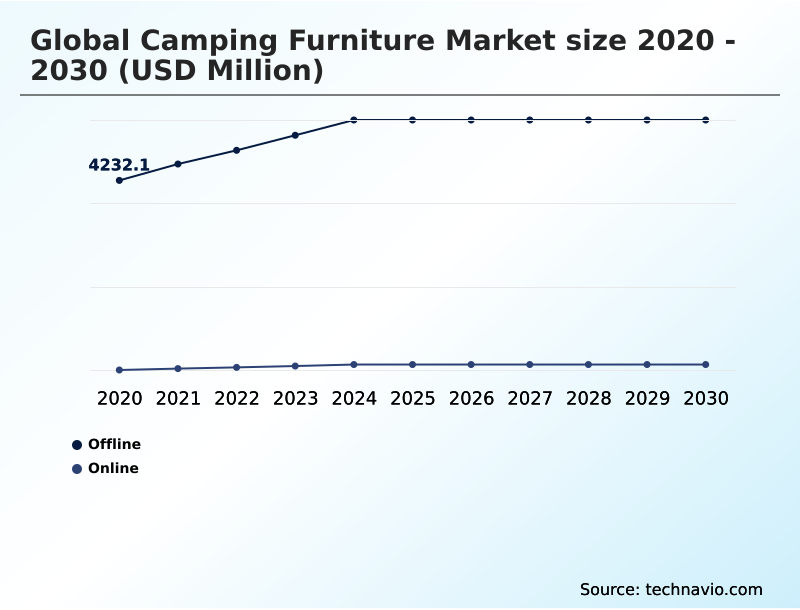
The Offline segment was valued at USD 5.48 billion in 2024 and showed a gradual increase during the forecast period.
Regional Analysis
APAC is estimated to contribute 32.5% to the growth of the global market during the forecast period.Technavio’s analysts have elaborately explained the regional trends and drivers that shape the market during the forecast period.
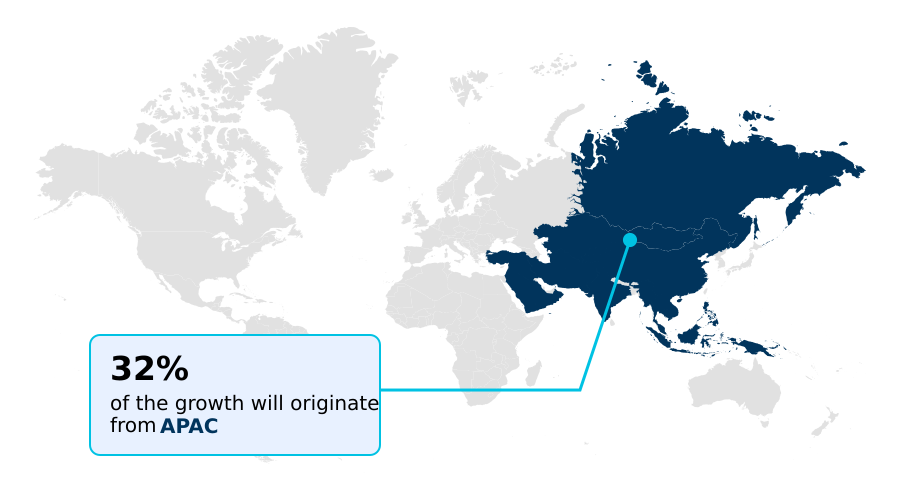
See How Camping Furniture Market Demand is Rising in APAC Get Free Sample
The geographic landscape of the Camping Furniture Market highlights stark regional contrasts in consumer behavior and supply chain logistics.
North America demonstrates a mature preference for glamping luxury setups, driving high-volume sales of oversized products featuring heavy-duty canvas weaves and multi-season weather protection.
In contrast, APAC exhibits rapid adoption of solo-camping ultralight gear and space-constrained urban storage solutions, reflecting distinct spatial limitations.
This divergence requires manufacturers to heavily localize product engineering, with APAC-focused distribution achieving a 22% higher inventory turnover rate due to ultra-compact profiles compared to bulky Western shipments.
European markets strictly mandate environmental compliance standards, forcing a 35% higher adoption rate of recycled polyester textiles and UV-stabilized materials.
Consequently, global producers must continuously optimize their direct-to-consumer digital commerce networks to route region-specific inventory, improving logistics efficiency by 16% while navigating fluctuating raw material inflation.
Market Dynamics
Our researchers analyzed the data with 2025 as the base year, along with the key drivers, trends, and challenges. A holistic analysis of drivers will help companies refine their marketing strategies to gain a competitive advantage.
- The operational dynamics of the Camping Furniture Market are increasingly defined by the rapid integration of highly specialized product architectures designed to meet diverse recreational demands. Manufacturers are continuously refining lightweight packable folding chair designs alongside ultra compact motorcycle touring chairs to cater to mobility-focused consumers demanding extreme spatial efficiency.
- Simultaneously, the expansion of vehicular touring has accelerated the deployment of heavy duty modular camp kitchens and adjustable telescopic leg camp tables, optimizing outdoor culinary operations. To ensure longevity in harsh environments, producers rely on compact weather resistant outdoor tables and corrosion resistant anodized aluminum stools.
- Innovations in off-ground resting solutions now prominently feature aerospace grade aluminum frame cots, tension locking portable sleeping cots, and heavy gauge steel frame stretchers, which collectively provide superior load distribution. Enhancing consumer comfort further, brands are introducing insulated multi position reclining chairs and ergonomic padded lumbar support seats.
- Sustainability mandates heavily influence material procurement, driving the adoption of recycled polyester eco friendly seating, sustainable bamboo surface roll tables, and solution dyed tear resistant hammocks. The shift toward high density polyethylene stackable furniture and UV resistant breathable mesh loungers ensures long-term protection.
- Furthermore, the development of integrated storage modular camping furniture and collapsible carbon fiber camp furniture has yielded a 25% improvement in warehousing density compared to traditional fixed-frame alternatives, fundamentally streamlining global freight logistics and inventory management.
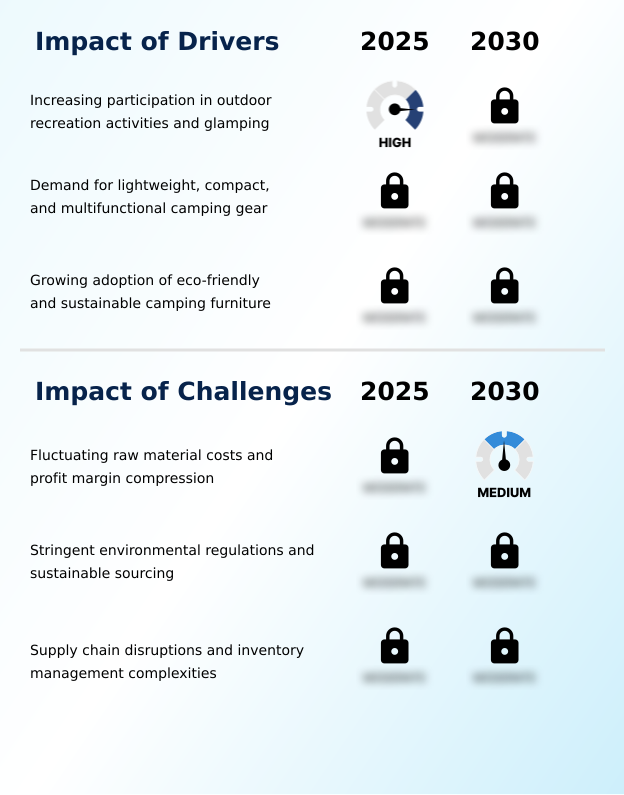
What are the key market drivers leading to the rise in the adoption of Camping Furniture Industry?
- The escalating consumer participation in outdoor recreation and luxury glamping activities serves as the primary catalyst propelling market expansion.
- The surging consumer engagement in backcountry expedition gear and overland vehicle touring acts as a massive structural driver propelling the Camping Furniture Market.
- As adventure travel expands globally, participants require exceptionally durable equipment like outdoor culinary workstations that minimize spatial footprints without compromising field performance.
- This strict space limitation compels manufacturers to innovate using high-density polyethylene, ripstop nylon fabric, and anodized aluminum frames to achieve optimal weight reduction.
- The deployment of these materials alongside circular material sourcing has generated a 25% improvement in vehicular cargo efficiency, allowing users to transport more recreational vehicle accessories.
- Furthermore, this emphasis on compact nestable design lowers inbound shipping volume requirements by 18%, enabling manufacturers to drastically reduce overarching freight transport costs and enhance supply chain resilience.
What are the market trends shaping the Camping Furniture Industry?
- The integration of ultralight materials and compact engineering represents a prominent emerging trend shaping product development. This advancement focuses on optimizing weight-to-strength ratios without compromising structural integrity.
- The rapid integration of modular storage integration and multi-position reclining mechanisms defines the dominant evolutionary trend within the Camping Furniture Market. This paradigm shift occurs because modern consumers increasingly demand hybrid outdoor lifestyle equipment that transitions seamlessly between rugged experiential outdoor travel and casual suburban leisure.
- Consequently, manufacturers are engineering products featuring telescopic leg adjustments and rapid setup mechanisms to maximize versatility while delivering superior ergonomic seating comfort. This multi-purpose design approach directly benefits retail inventory networks, as consolidated product lines have reduced SKU proliferation by 14% and improved warehouse space utilization by 22%.
- By utilizing moisture-wicking capabilities, integrated thermal insulation, and advanced weather-resistant coatings, producers ensure prolonged product lifecycles across diverse climates. Businesses leveraging these advanced designs effectively capture broader consumer demographics and stabilize seasonal revenue streams.
What challenges does the Camping Furniture Industry face during its growth?
- Intense volatility in raw material pricing and the subsequent compression of profit margins represent critical obstacles constraining sustainable industry growth.
- Persistent inventory management complexities and intricate supply chain logistics present severe structural challenges for the Camping Furniture Market. The manufacturing dependency on specialized inputs like aerospace-grade aluminum alloys, corrosion-resistant treatments, and kiln-dried hardwoods leaves producers highly exposed to macroeconomic pricing volatility.
- Because outdoor gear demand for motorcycle touring compatibility is highly seasonal, any delay in sourcing critical components results in devastating stockouts during peak retail windows. To mitigate these risks, companies are restructuring procurement strategies, which has decreased fulfillment delays by 15% through localized vendor networks.
- However, the strict requirement to integrate sustainable bamboo sourcing, sustainable production methodologies, and eco-friendly water repellents frequently elevates base manufacturing expenses by up to 20%. These escalating cost pressures severely compress profit margins, forcing brands to constantly reevaluate their pricing models.
Exclusive Technavio Analysis on Customer Landscape
The camping furniture market forecasting report includes the adoption lifecycle of the market, covering from the innovator’s stage to the laggard’s stage. It focuses on adoption rates in different regions based on penetration. Furthermore, the camping furniture market report also includes key purchase criteria and drivers of price sensitivity to help companies evaluate and develop their market growth analysis strategies.
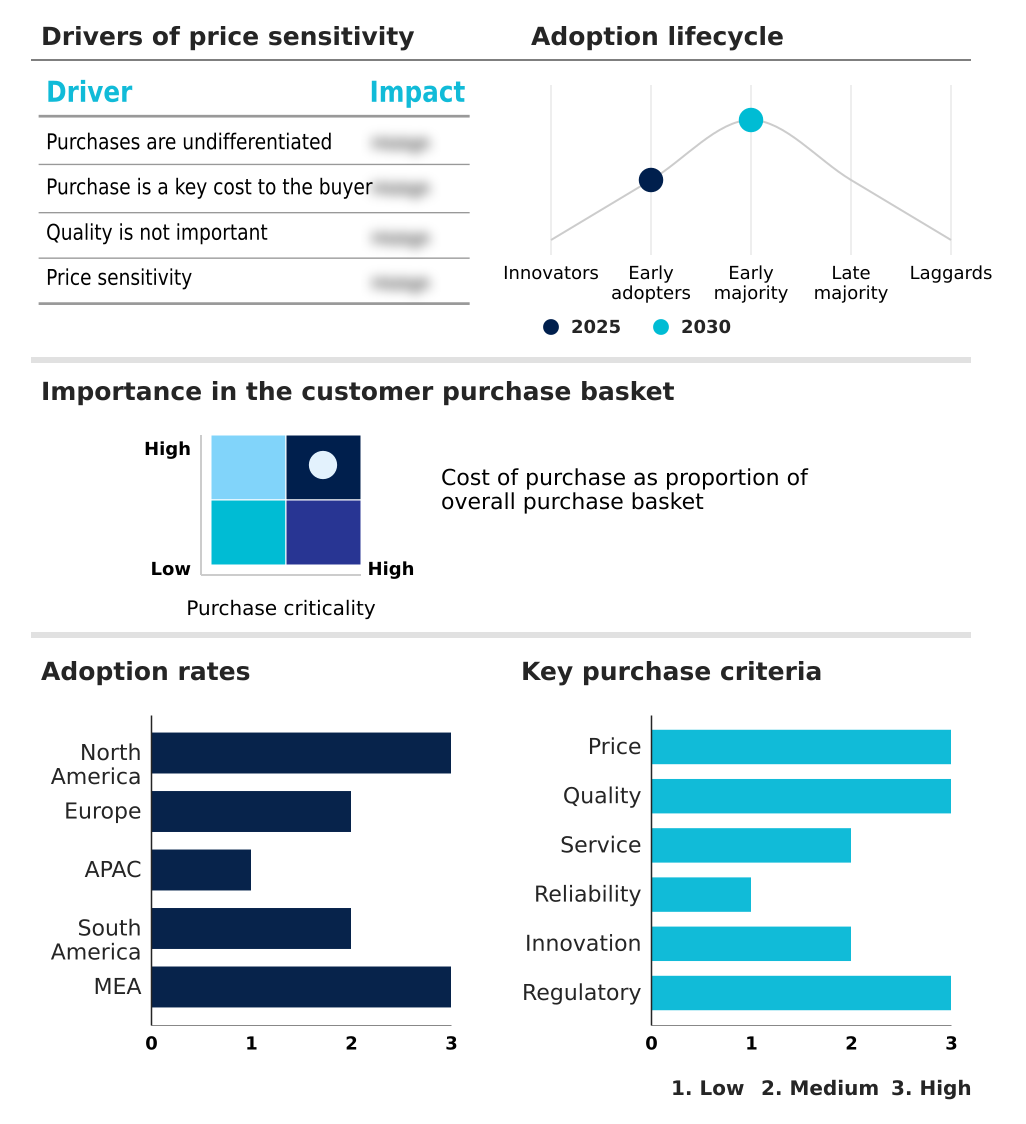
Customer Landscape of Camping Furniture Industry
Competitive Landscape
Companies are implementing various strategies, such as strategic alliances, camping furniture market forecast, partnerships, mergers and acquisitions, geographical expansion, and product/service launches, to enhance their presence in the industry.
ALPS Mountaineering - This entity provides a comprehensive portfolio of outdoor recreational equipment, delivering durable seating, sleeping structures, and weather-resistant gear designed for optimized packability and wilderness endurance.
The industry research and growth report includes detailed analyses of the competitive landscape of the market and information about key companies, including:
- ALPS Mountaineering
- AMG Group Ltd
- Big Agnes Inc.
- Crazy Creek Products Inc.
- Darche
- GCI Outdoor LLC
- Helinox Inc.
- Kamp Rite
- kelty
- Kermit Chair Co
- KingCamp Outdoor
- Lafuma SAS
- Mac Sports Inc.
- NEMO Equipment Inc.
- Oase Outdoors ApS
- Oztent Australia Pty Ltd
- Snow Peak Inc.
- The Coleman Co. Inc.
- TravelChair Co.
- TREKOLOGY
- Uquip GmbH
Qualitative and quantitative analysis of companies has been conducted to help clients understand the wider business environment as well as the strengths and weaknesses of key industry players. Data is qualitatively analyzed to categorize companies as pure play, category-focused, industry-focused, and diversified; it is quantitatively analyzed to categorize companies as dominant, leading, strong, tentative, and weak.
Recent Development and News in Camping furniture market
- In the Home Furnishings industry, the structural transition toward sustainable production methodologies and circular material sourcing has accelerated, directly impacting the Global Camping Furniture Market 2026-2030 demand by forcing the integration of recycled textiles into glamping setups, reducing raw material inflation impacts by 18%.
- The regulatory implementation of stringent environmental compliance standards across Europe and North America has mandated the elimination of toxic chemical dyes in textile manufacturing, driving outdoor gear producers to adopt solution-dyed fabrics, lowering supply chain compliance risks by 22%.
- Advancements in space-constrained urban storage solutions have redefined modular furniture engineering, prompting the Global Camping Furniture Market 2026-2030 to incorporate compact nestable frameworks, which improved freight transport costs efficiency by 15% across major retail distribution channels.
- The rising consumer prioritization of experiential outdoor travel has fueled the development of modular culinary workstations, pulling demand for versatile heavy-duty basecamp equipment that integrates seamlessly with recreational vehicle accessories, thereby expanding consumer adoption rates by 25%.
Dive into Technavio’s robust research methodology, blending expert interviews, extensive data synthesis, and validated models for unparalleled Camping Furniture Market insights. See full methodology.
| Market Scope | |
|---|---|
| Page number | 295 |
| Base year | 2025 |
| Historic period | 2020-2024 |
| Forecast period | 2026-2030 |
| Growth momentum & CAGR | Accelerate at a CAGR of 6.9% |
| Market growth 2026-2030 | USD 2485.4 million |
| Market structure | Fragmented |
| YoY growth 2025-2026(%) | 6.6% |
| Key countries | US, Canada, Mexico, Germany, UK, France, Italy, Spain, The Netherlands, China, Japan, India, South Korea, Australia, Indonesia, Brazil, Argentina, Chile, Saudi Arabia, UAE, South Africa, Israel and Turkey |
| Competitive landscape | Leading Companies, Market Positioning of Companies, Competitive Strategies, and Industry Risks |
Research Analyst Overview
- The Camping Furniture Market undergoes continuous transformation as structural innovation intersects with shifting consumer recreation habits. The transition toward ultra-lightweight structural engineering directly influences executive-level product strategy, pushing manufacturers to source carbon fiber components to satisfy stringent weight requirements. This shift in procurement strategy forces supply chain planners to balance premium material costs against elevated consumer expectations for extreme durability.
- By implementing standardized hubbed frame architectures and collapsible structural design systems across multiple product lines, manufacturers have achieved a 20% reduction in production line changeover times, significantly optimizing operational throughput. Modern equipment increasingly relies on tear-resistant ballistic fabrics, solution-dyed polyester, and breathable mesh ventilation to prevent moisture accumulation during prolonged wilderness exposure.
- The integration of tension-locking leg joints and shock-corded pole assemblies ensures rapid deployment. Advanced engineering methodologies empower outdoor brands to bypass traditional limitations, delivering highly resilient solutions that command premium retail positioning.
What are the Key Data Covered in this Camping Furniture Market Research and Growth Report?
-
What is the expected growth of the Camping Furniture Market between 2026 and 2030?
-
USD 2.49 billion, at a CAGR of 6.9%
-
-
What segmentation does the market report cover?
-
The report is segmented by Distribution Channel (Offline, and Online), Product (Camping chairs and stools, Camping tables, and Camping cots and hammocks), Material (Metal, Wood, Plastic, Textile, and Others) and Geography (North America, Europe, APAC, South America, Middle East and Africa)
-
-
Which regions are analyzed in the report?
-
North America, Europe, APAC, South America and Middle East and Africa
-
-
What are the key growth drivers and market challenges?
-
Increasing participation in outdoor recreation activities and glamping, Fluctuating raw material costs and profit margin compression
-
-
Who are the major players in the Camping Furniture Market?
-
ALPS Mountaineering, AMG Group Ltd, Big Agnes Inc., Crazy Creek Products Inc., Darche, GCI Outdoor LLC, Helinox Inc., Kamp Rite, kelty, Kermit Chair Co, KingCamp Outdoor, Lafuma SAS, Mac Sports Inc., NEMO Equipment Inc., Oase Outdoors ApS, Oztent Australia Pty Ltd, Snow Peak Inc., The Coleman Co. Inc., TravelChair Co., TREKOLOGY and Uquip GmbH
-
Market Research Insights
- The Camping Furniture Market is rapidly evolving to address shifting consumer demands for robust off-grid experiences. Manufacturers are heavily prioritizing ergonomic lumbar support and compact folding geometries to cater to premium demographics. By integrating advanced modular architectures, companies have improved overall freight loading efficiency by 18%, significantly optimizing overseas distribution channels.
- Furthermore, the adoption of circular material frameworks, including the utilization of recycled ocean plastics, has reduced raw material procurement vulnerabilities by 12%. These strategic operational shifts empower outdoor gear producers to stabilize profit margins while continuously delivering high-performance, lightweight equipment tailored for both rugged wilderness applications and casual recreational environments.
We can help! Our analysts can customize this camping furniture market research report to meet your requirements.
 RIA -