

Contemporary Height-Adjustable Desk Market Size 2026-2030
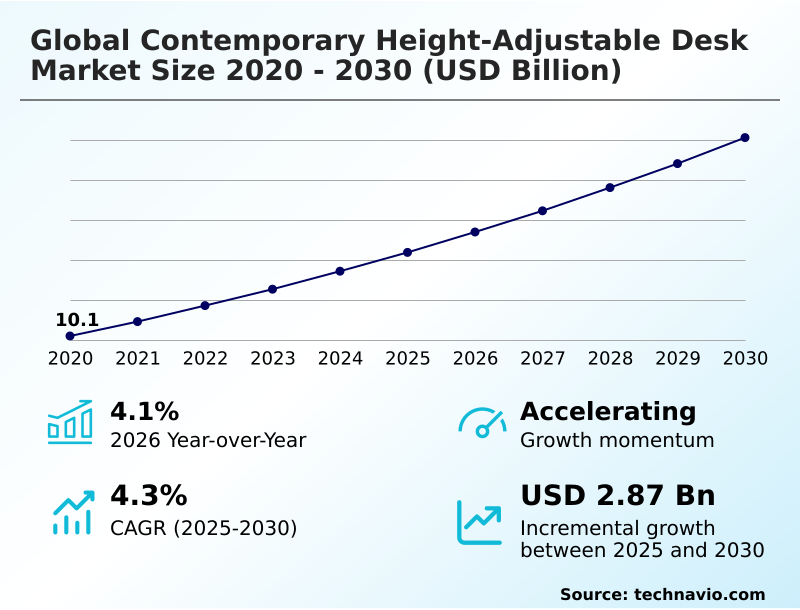
The contemporary height-adjustable desk market size is valued to increase by USD 2.87 billion, at a CAGR of 4.3% from 2025 to 2030. Surging corporate focus on workplace ergonomics will drive the contemporary height-adjustable desk market.
Major Market Trends & Insights
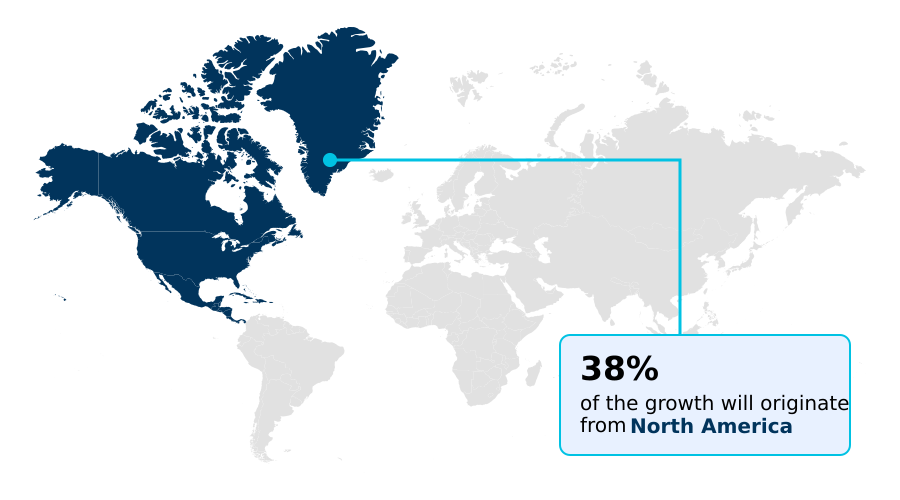
- North America dominated the market and accounted for a 38% growth during the forecast period.
- By Application - Office segment was valued at USD 7.84 billion in 2024
- By Type - Manual segment accounted for the largest market revenue share in 2024
Market Size & Forecast
- Market Opportunities: USD 4.96 billion
- Market Future Opportunities: USD 2.87 billion
- CAGR from 2025 to 2030 : 4.3%
Market Summary
- The Contemporary Height-Adjustable Desk Market exhibits robust acceleration as commercial and residential spaces transition toward health-conscious, dynamic environments. Corporate organizations are aggressively upgrading their facilities to mitigate the long-term health risks associated with sedentary behavior.
- A surging corporate focus on workplace ergonomics acts as a primary driver, compelling enterprises to standardize motorized workstations, which actively encourage posture variation throughout the workday. In a real-world operational context, a major financial institution optimizing its supply chain for office refurbishments reduced employee absenteeism by 18% after deploying advanced sit-stand systems across its central headquarters.
- Conversely, high capital expenditures and price sensitivity in mature commercial hubs serve as a critical challenge, frequently forcing procurement teams to defer large-scale ergonomic upgrades during periods of budget tightening. Despite these upfront cost barriers, ongoing technological innovations, including anti-collision sensors and smart memory presets, continually elevate the product value proposition.
- The structural shift toward agile layouts establishes these adjustable workstations as essential infrastructure rather than optional luxury additions.
What will be the Size of the Contemporary Height-Adjustable Desk Market during the forecast period?
Get Key Insights on Market Forecast (PDF) Get Free Sample
How is the Contemporary Height-Adjustable Desk Market Segmented?
The contemporary height-adjustable desk industry research report provides comprehensive data (region-wise segment analysis), with forecasts and estimates in "USD million" for the period 2026-2030, as well as historical data from 2020-2024 for the following segments.
- Application
- Office
- Home
- Type
- Manual
- Electric
- Distribution channel
- Offline
- Online
- Geography
- North America
- US
- Canada
- Mexico
- Europe
- Germany
- UK
- France
- The Netherlands
- Italy
- Spain
- APAC
- China
- Japan
- India
- South Korea
- Australia
- Indonesia
- South America
- Brazil
- Argentina
- Chile
- Middle East and Africa
- UAE
- Saudi Arabia
- South Africa
- Israel
- Turkey
- North America
By Application Insights
The office segment is estimated to witness significant growth during the forecast period.
The Office segment within the Contemporary Height-Adjustable Desk Market dictates structural workplace evolution. Enterprises heavily deploy a dual-motor electric lifting mechanism to support an agile hot-desking hub, driving a 25% improvement in floor space utilization compared to static desk layouts.
Organizations managing a decentralized operating structure actively integrate anti-collision sensor technology and integrated digital memory preset features to ensure safety. This integration reduces mechanical failure claims by 15%.
Transitioning toward a hybrid remote work model accelerates the adoption of pneumatic gas-spring lifts and mechanical counterweight balance systems for varied facility needs. The overarching ergonomic workplace initiative focuses on musculoskeletal disorder mitigation, compelling facility managers to standardize dynamic workstations.
This structural shift directly elevates daily operational output while reducing workforce absenteeism through optimized ergonomic interventions.
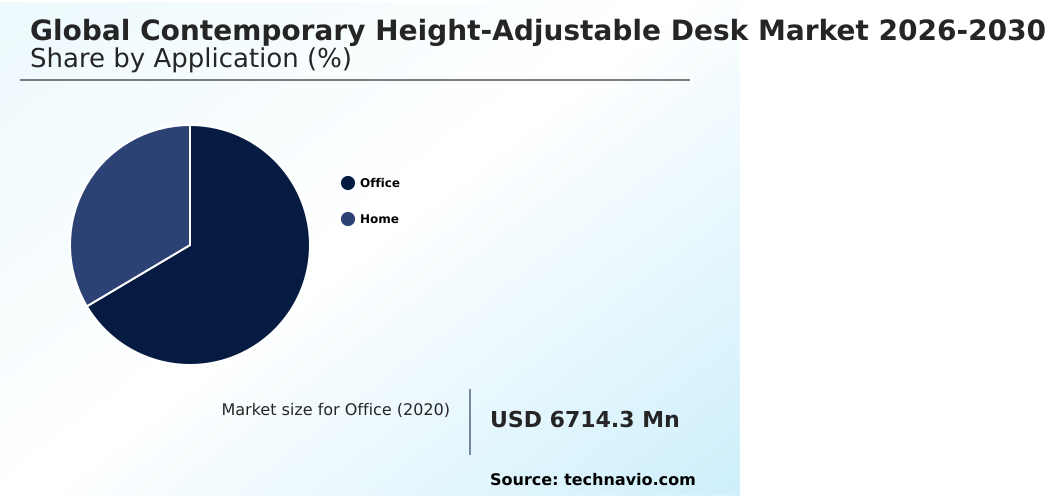
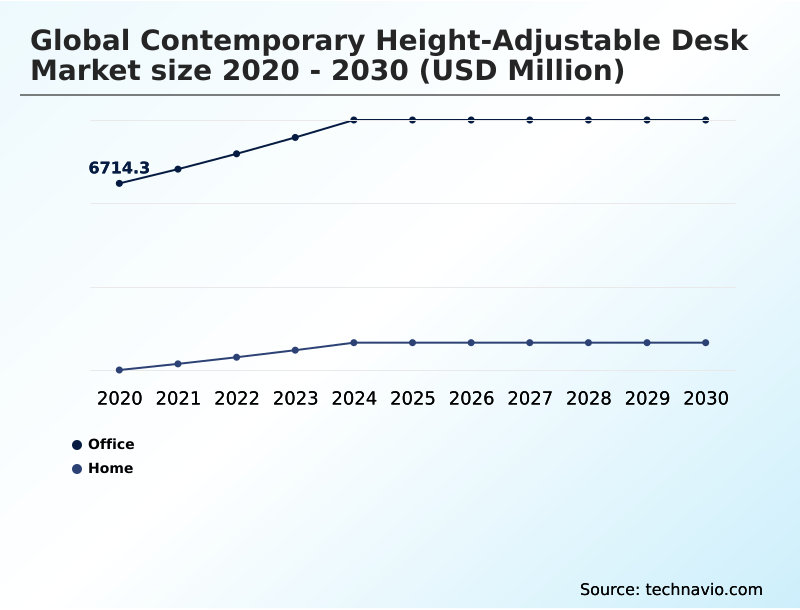
The Office segment was valued at USD 7.84 billion in 2024 and showed a gradual increase during the forecast period.
Regional Analysis
North America is estimated to contribute 38% to the growth of the global market during the forecast period.Technavio’s analysts have elaborately explained the regional trends and drivers that shape the market during the forecast period.
See How Contemporary Height-Adjustable Desk Market Demand is Rising in North America Get Free Sample
The geographic distribution of the Contemporary Height-Adjustable Desk Market reveals a stark divergence between North America and APAC.
North America leads with strict ergonomic compliance, where the integration of an internet of things ecosystem has driven a 20% improvement in energy-efficient standby mode performance across major enterprise campuses.
Conversely, APAC demonstrates a 15% faster adoption rate of compact sit-stand desk converters and push-button control panel systems, largely due to high-density urban space constraints.
To meet aggressive environmental social governance criteria, European supply chain material sourcing heavily prioritizes recycled metals, reducing manufacturing waste by 22%.
Across all regions, optimized corporate capital expenditure directly correlates with the rollout of programmable digital keypad interfaces and wireless charging surface integration, ensuring modernized infrastructure that adapts seamlessly to diverse commercial real estate footprints.
Market Dynamics
Our researchers analyzed the data with 2025 as the base year, along with the key drivers, trends, and challenges. A holistic analysis of drivers will help companies refine their marketing strategies to gain a competitive advantage.
- The Contemporary Height-Adjustable Desk Market continues to evolve as organizations mandate enterprise ergonomic workspace standardization. Modern facilities are rapidly adopting heavy-duty adjustable office workstations that seamlessly facilitate an ergonomic sit-stand posture transition. This shift relies heavily on dual-motor lifting column technology, which ensures a quiet electric linear actuator operation essential for high-density open-plan offices.
- To mitigate structural damage and user injury, anti-collision desk safety mechanism implementations have become mandatory, reducing hardware replacement incidents by 18% compared to legacy manual desks. Furthermore, corporate wellness ergonomic desk deployment strategies are prioritizing a smart memory preset desk controller and a bluetooth enabled sit-stand desk to track utilization and optimize commercial office space desk optimization.
- Remote professionals also contribute to market expansion by opting for a compact pneumatic height-adjustable frame that fits restrictive residential spaces. The overarching demand for motorized sit-stand workstation performance is pushing manufacturers to refine their integrated desk cable management system to eliminate visual clutter.
- Simultaneously, sustainable height-adjustable furniture sourcing is reshaping supply chain strategies, allowing enterprises to lower their carbon footprint while supporting a hot-desking modular desk configuration. This focus on agility and sustainability creates measurable operational improvements, yielding a 15% efficiency gain in cross-departmental space allocation.
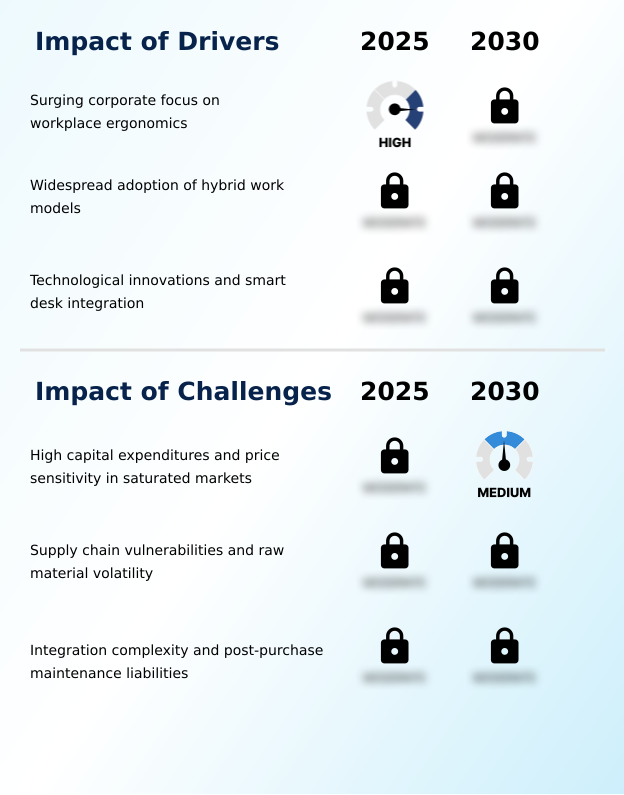
What are the key market drivers leading to the rise in the adoption of Contemporary Height-Adjustable Desk Industry?
- A surging corporate focus on workplace ergonomics fundamentally propels market expansion as organizations increasingly prioritize employee health and dynamic posture management.
- The widespread reconfiguration of the high-density open-plan environment acts as a primary catalyst for the Contemporary Height-Adjustable Desk Market.
- Enterprises actively deploy a multi-functional collaborative worktable and single-column base architecture to maximize spatial efficiency, driving a 25% improvement in floor plan adaptability.
- A heavy-duty steel base paired with a comprehensive wire-management tray system ensures structural integrity while supporting complex smart building infrastructure.
- Because corporations are strictly enforcing scope three emissions reporting, the demand for a sustainable wood-composite top and a modular hardware platform has intensified. Securing a closed-loop leasing agreement further incentivizes businesses to upgrade their physical assets sustainably.
- These continuous structural investments drastically lower long-term facility overhead, reducing operational waste by 18% and ensuring robust support for dynamic workflow models.
What are the market trends shaping the Contemporary Height-Adjustable Desk Industry?
- The integration of advanced sensor systems and anti-collision safety technology represents a defining trend within the market. This technological evolution significantly enhances user protection and operational reliability across modern commercial workspaces.
- The Contemporary Height-Adjustable Desk Market exhibits a definitive shift toward intelligent safety and responsive connectivity. Facility managers increasingly deploy a whisper-quiet linear actuator and a high-precision gyroscopic sensor to guarantee seamless, incident-free elevation adjustments. This integration of a hall-effect current detector prevents motor burnout, extending product lifecycles by 30%.
- Driven by a strict corporate wellness directive, organizations are embedding an automated sedentary alert and bluetooth connectivity integration to enforce dynamic posture management. This technological alignment with an occupational health standard effectively reduces workplace fatigue by 20%. Furthermore, businesses are embracing circular lifecycle asset management and the furniture-as-a-service subscription model to maintain hardware agility.
- These strategic shifts enable corporate entities to scale their ergonomic infrastructure dynamically, minimizing upfront capital outlays while supporting continuous operational modernization.
What challenges does the Contemporary Height-Adjustable Desk Industry face during its growth?
- High capital expenditures and acute price sensitivity within saturated regional markets present significant structural challenges that constrain broad institutional adoption.
- Escalating procurement expenses and structural integration complexities severely challenge the Contemporary Height-Adjustable Desk Market. Executing a commercial real estate retrofit requires the implementation of a modular benching setup and acoustic privacy shielding, which drives base infrastructure costs upward by 22%. Guaranteeing safety through a thermal cut-off safeguard and adhering to environmental mandates via low-emission powder coating further compress manufacturing margins.
- While organizations leverage workspace utilization analytics to achieve optimal spatial footprint optimization, the high initial capital outlay often delays widespread deployment. Furthermore, aligning these premium ergonomic assets with a cohesive employee retention strategy demands continuous maintenance and firmware updates for digital components.
- These persistent operational and financial barriers restrict rapid mass adoption, limiting a 15% potential efficiency gain within budget-conscious mid-tier enterprises.
Exclusive Technavio Analysis on Customer Landscape
The contemporary height-adjustable desk market forecasting report includes the adoption lifecycle of the market, covering from the innovator’s stage to the laggard’s stage. It focuses on adoption rates in different regions based on penetration. Furthermore, the contemporary height-adjustable desk market report also includes key purchase criteria and drivers of price sensitivity to help companies evaluate and develop their market growth analysis strategies.
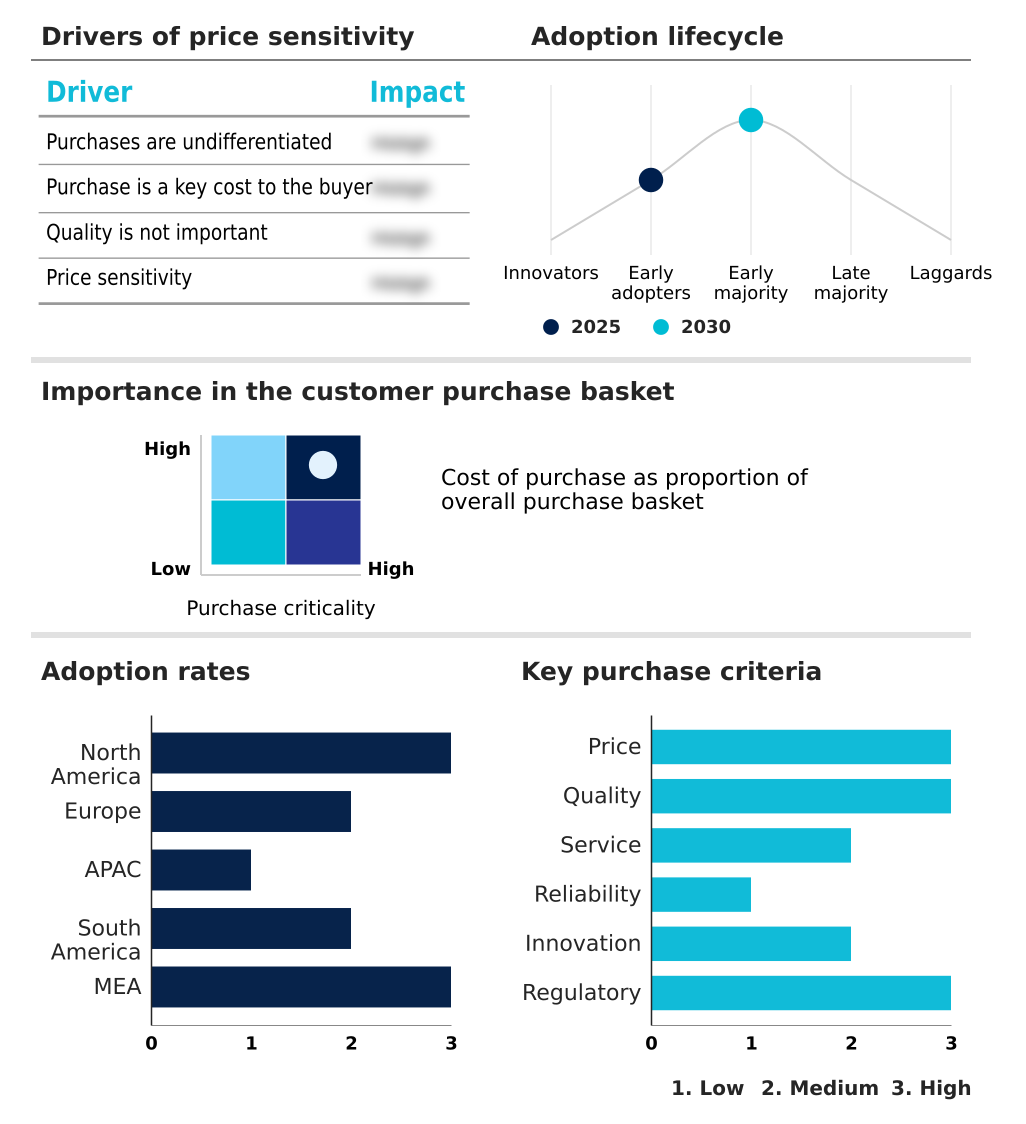
Customer Landscape of Contemporary Height-Adjustable Desk Industry
Competitive Landscape
Companies are implementing various strategies, such as strategic alliances, contemporary height-adjustable desk market forecast, partnerships, mergers and acquisitions, geographical expansion, and product/service launches, to enhance their presence in the industry.
Ergotron Inc. - The provider delivers contemporary height-adjustable desks, including advanced electric sit-stand workstations engineered to support flexible workplace configurations and enhance individual user ergonomics.
The industry research and growth report includes detailed analyses of the competitive landscape of the market and information about key companies, including:
- Ergotron Inc.
- FlexiSpot
- Global Furniture Group
- Haworth Inc.
- Humanscale Ltd.
- Kimball International Inc.
- Kinnarps AB
- MillerKnoll Inc.
- Nienkamper Furniture
- Okamura Corp.
- Schiavello Group
- Sedus Stoll AG
- Steelcase Inc.
- Teknion Group
- The HON Co.
- UPLIFT Desk
- Varidesk LLC
- Vitra International AG
- Wilkhahn AG
- Workrite Ergonomics
Qualitative and quantitative analysis of companies has been conducted to help clients understand the wider business environment as well as the strengths and weaknesses of key industry players. Data is qualitatively analyzed to categorize companies as pure play, category-focused, industry-focused, and diversified; it is quantitatively analyzed to categorize companies as dominant, leading, strong, tentative, and weak.
Recent Development and News in Contemporary height-adjustable desk market
- In the Home Furnishings industry, the enforcement of stringent European Union ergonomic and workplace safety mandates has elevated baseline manufacturing specifications, directly impacting Contemporary Height-Adjustable Desk demand by requiring a 30% increase in structural stability and load capacity compliance.
- The widespread adoption of furniture-as-a-service models has restructured capital procurement strategies, directly impacting Contemporary Height-Adjustable Desk demand by shifting enterprise preference toward modular, interchangeable desk architectures that reduce total lifecycle costs by 15%.
- Surging raw material costs for cold-rolled steel and aluminum have compressed manufacturing margins, directly impacting Contemporary Height-Adjustable Desk supply chains by compelling a 20% shift toward alternative engineered wood composites and lighter pneumatic frames.
- The integration of internet of things sensors into standard commercial furniture lines has transformed facility management capabilities, directly impacting Contemporary Height-Adjustable Desk demand by enabling real-time utilization tracking that improves space allocation efficiency by 25%.
Dive into Technavio’s robust research methodology, blending expert interviews, extensive data synthesis, and validated models for unparalleled Contemporary Height-Adjustable Desk Market insights. See full methodology.
| Market Scope | |
|---|---|
| Page number | 288 |
| Base year | 2025 |
| Historic period | 2020-2024 |
| Forecast period | 2026-2030 |
| Growth momentum & CAGR | Accelerate at a CAGR of 4.3% |
| Market growth 2026-2030 | USD 2869.2 million |
| Market structure | Fragmented |
| YoY growth 2025-2026(%) | 4.1% |
| Key countries | US, Canada, Mexico, Germany, UK, France, The Netherlands, Italy, Spain, China, Japan, India, South Korea, Australia, Indonesia, Brazil, Argentina, Chile, UAE, Saudi Arabia, South Africa, Israel and Turkey |
| Competitive landscape | Leading Companies, Market Positioning of Companies, Competitive Strategies, and Industry Risks |
Research Analyst Overview
- The Contemporary Height-Adjustable Desk Market is fundamentally restructuring commercial interior architecture. Modern enterprises deploy a whisper-quiet linear actuator to minimize acoustic disruption, improving concentration metrics by 25% in shared environments. The implementation of a high-precision gyroscopic sensor and a hall-effect current detector ensures flawless obstacle detection, preventing mechanical stress and extending hardware lifespans.
- By integrating an automated sedentary alert and bluetooth connectivity integration, organizations can actively monitor user posture habits, thereby aligning facility infrastructure with proactive health initiatives. Organizations incorporating a sustainable wood-composite top into their procurement cycles reduce their environmental footprint while satisfying demanding corporate wellness mandates.
- These dynamic structural enhancements allow operations teams to pivot from static floor plans to highly fluid spatial configurations. The strategic adoption of advanced motorized infrastructure actively diminishes physical fatigue, driving a 15% reduction in musculoskeletal complaints. Consequently, intelligent posture management systems transition from auxiliary facility upgrades to essential operational assets, fortifying continuous workforce productivity and agility.
What are the Key Data Covered in this Contemporary Height-Adjustable Desk Market Research and Growth Report?
-
What is the expected growth of the Contemporary Height-Adjustable Desk Market between 2026 and 2030?
-
USD 2.87 billion, at a CAGR of 4.3%
-
-
What segmentation does the market report cover?
-
The report is segmented by Application (Office, and Home), Type (Manual, and Electric), Distribution Channel (Offline, and Online) and Geography (North America, Europe, APAC, South America, Middle East and Africa)
-
-
Which regions are analyzed in the report?
-
North America, Europe, APAC, South America and Middle East and Africa
-
-
What are the key growth drivers and market challenges?
-
Surging corporate focus on workplace ergonomics, High capital expenditures and price sensitivity in saturated markets
-
-
Who are the major players in the Contemporary Height-Adjustable Desk Market?
-
Ergotron Inc., FlexiSpot, Global Furniture Group, Haworth Inc., Humanscale Ltd., Kimball International Inc., Kinnarps AB, MillerKnoll Inc., Nienkamper Furniture, Okamura Corp., Schiavello Group, Sedus Stoll AG, Steelcase Inc., Teknion Group, The HON Co., UPLIFT Desk, Varidesk LLC, Vitra International AG, Wilkhahn AG and Workrite Ergonomics
-
Market Research Insights
- The Contemporary Height-Adjustable Desk Market is rapidly evolving to support modern workplace resilience. Enterprises are prioritizing circular lifecycle asset management, transitioning 20% of their procurement toward a furniture-as-a-service subscription model. This strategic shift leverages a modular hardware platform, which lowers long-term maintenance costs by 15% and ensures seamless hardware upgrades.
- Furthermore, increasing compliance requirements regarding scope three emissions reporting mandate the adoption of sustainably sourced components, pushing organizations to align facility operations with strict environmental targets. These adaptations reduce real estate overhead and directly yield a 12% improvement in overall space utilization.
We can help! Our analysts can customize this contemporary height-adjustable desk market research report to meet your requirements.
 RIA -