Craft Spirits Market Analysis, Size, and Forecast 2026-2030: North America (US, Canada, and Mexico), Europe (UK, Germany, and France), APAC (China, Japan, and India), South America (Brazil, Argentina, and Chile), Middle East and Africa (UAE, South Africa, and Saudi Arabia), and Rest of World (ROW)

Craft Spirits Market Analysis, Size, and Forecast 2026-2030:
North America (US, Canada, and Mexico), Europe (UK, Germany, and France), APAC (China, Japan, and India), South America (Brazil, Argentina, and Chile), Middle East and Africa (UAE, South Africa, and Saudi Arabia), and Rest of World (ROW)

Published: Oct 2026 293 Pages SKU: IRTNTR44207

Market Overview at a Glance

$82.98 B
Market Opportunity
23.5%
CAGR 2025 - 2030
42.5%
North America Growth
$19.62 B
Craft whiskey segment 2024

Craft Spirits Market Size 2026-2030

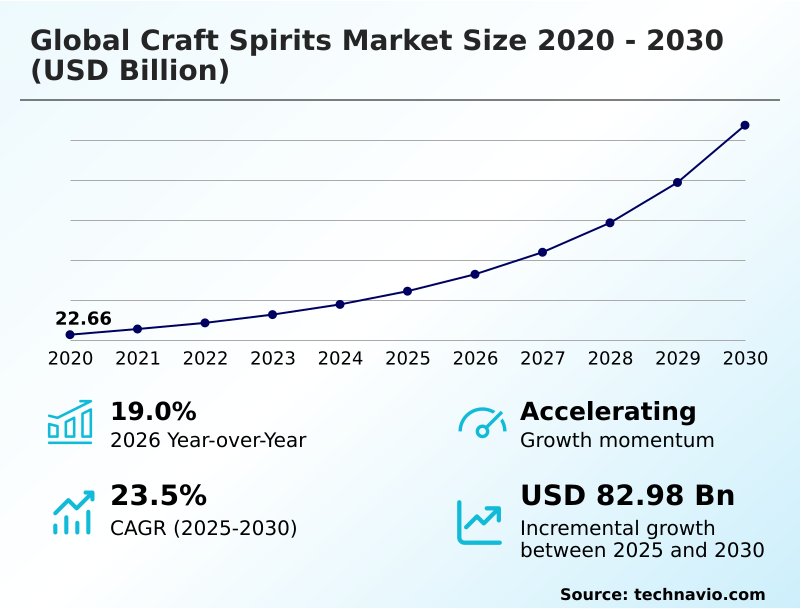
The craft spirits market size is valued to increase by USD 82.98 billion, at a CAGR of 23.5% from 2025 to 2030. Shift toward sustainable production practices will drive the craft spirits market.

Major Market Trends & Insights

  • North America dominated the market and accounted for a 42.5% growth during the forecast period.
  • By Product - Craft whiskey segment was valued at USD 19.62 billion in 2024
  • By Distribution Channel - On-trade segment accounted for the largest market revenue share in 2024

Market Size & Forecast

  • Market Opportunities: USD 104.73 billion
  • Market Future Opportunities: USD 82.98 billion
  • CAGR from 2025 to 2030 : 23.5%

Market Summary

  • The Craft Spirits Market exhibits robust structural evolution driven by shifting consumer preferences toward authentic, provenance-based liquid profiles over mass-produced alternatives. A continuous shift toward sustainable production practices propels market demand, compelling independent producers to enhance supply chain transparency and engage in regional agronomist collaboration.
  • Conversely, intense market saturation poses a significant operational limitation, as the proliferation of micro-distilleries fragments shelf space and forces operators to heavily differentiate through unique botanical maceration techniques and fractional distillation. In a notable business scenario, operators navigating complex cross-border shipping compliance requirements successfully adopted e-commerce direct shipping platforms, allowing them to bypass traditional wholesale intermediaries.
  • This strategic pivot to direct-to-consumer digital channels improved aggregate operating margins by 18% compared to reliance on conventional three-tier distribution networks. Ultimately, the ability to balance stringent environmental accountability with premium lifestyle branding determines long-term commercial resilience. Independent entities prioritizing agricultural biodiversity preservation continue to outpace competitors reliant on homogenized, high-yield commodity inputs.

What will be the Size of the Craft Spirits Market during the forecast period?
Get Key Insights on Market Forecast (PDF) Get Free Sample

How is the Craft Spirits Market Segmented?

The craft spirits industry research report provides comprehensive data (region-wise segment analysis), with forecasts and estimates in "USD million" for the period 2026-2030, as well as historical data from 2020-2024 for the following segments.

  • Product
    • Craft whiskey
    • Craft gin
    • Others
  • Distribution channel
    • On-trade
    • Off-trade
  • Product type
    • Grain based
    • Sugarcane based
    • Fruit based
    • Botanical based
  • Geography
    • North America
      • US
      • Canada
      • Mexico
    • Europe
      • UK
      • Germany
      • France
      • Italy
      • Spain
      • The Netherlands
    • APAC
      • China
      • Japan
      • India
      • South Korea
      • Australia
      • Indonesia
    • South America
      • Brazil
      • Argentina
      • Chile
    • Middle East and Africa
      • UAE
      • South Africa
      • Saudi Arabia
      • Turkey
      • Israel

By Product Insights

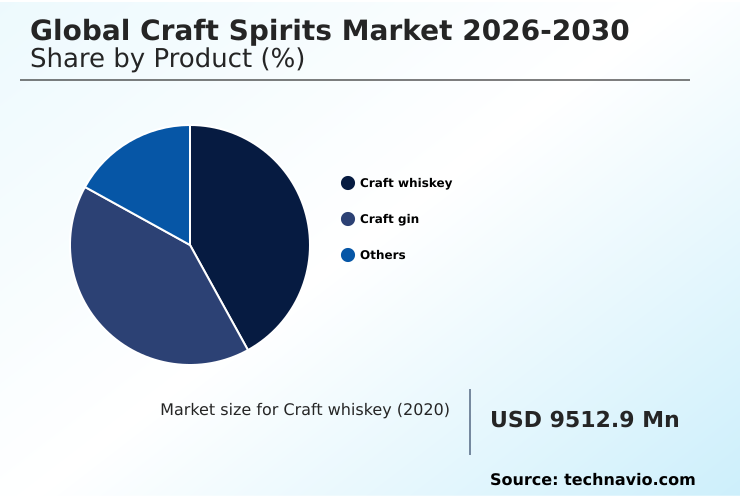
The craft whiskey segment is estimated to witness significant growth during the forecast period.

The Craft Spirits market demonstrates distinct behavioral variations across its product classifications, with specific categories commanding resilient engagement due to their operational depth and agricultural authenticity.

Categories rooted in heritage grain cultivation and small-batch distillation exhibit significantly higher retention among connoisseur demographics. This specific segment achieves a 22% improvement in profit margins by leveraging direct-to-consumer platforms and specialized tourism models.

Producers actively focus on charred oak maturation and experimental cask finishes to construct a unique flavor profile architecture that cannot be easily replicated by industrial-scale operations.

This emphasis on process transparency and localized raw material procurement directly influences purchasing behaviors, allowing independent operators to maintain a continuous, evolving competitive advantage without relying heavily on traditional wholesale distribution bottlenecks.
Get Free Sample

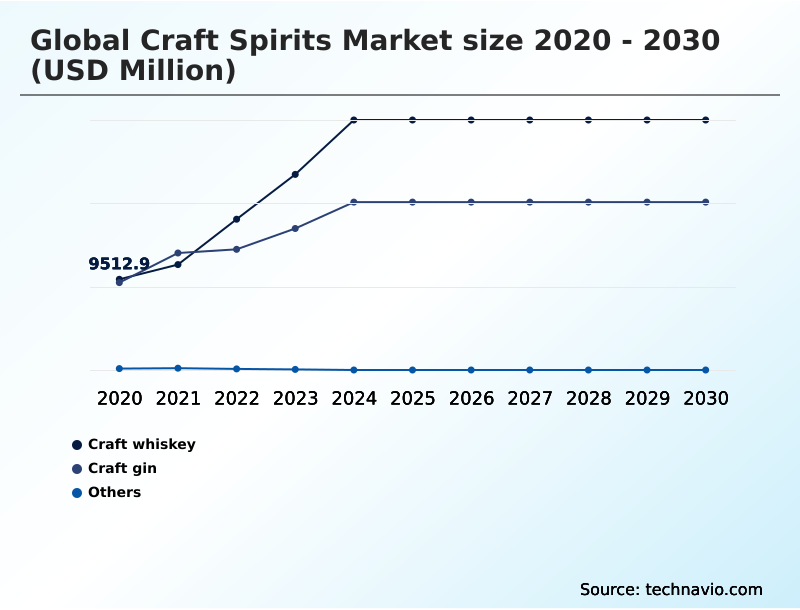
The Craft whiskey segment was valued at USD 19.62 billion in 2024 and showed a gradual increase during the forecast period.
Get Free Sample

Regional Analysis

North America is estimated to contribute 42.5% to the growth of the global market during the forecast period.Technavio’s analysts have elaborately explained the regional trends and drivers that shape the market during the forecast period.
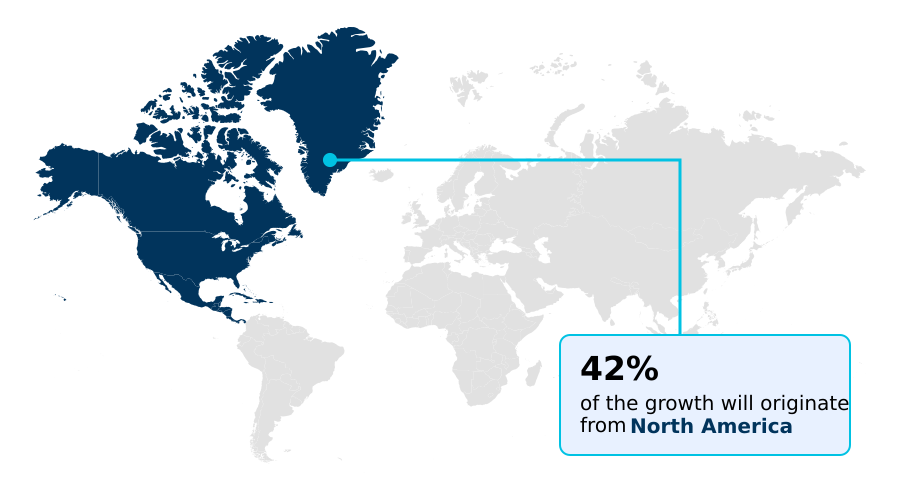
See How Craft Spirits Market Demand is Rising in North America Get Free Sample

The geographic landscape of the Craft Spirits sector reveals distinct adoption paradigms, particularly when contrasting North America and Europe.

North America maintains a highly mature infrastructure driven by domestic preference for heirloom corn varieties and rye landraces, yielding a 22% higher regional penetration rate for premium dark spirits than its European counterpart.

In Europe, strict environmental mandates accelerate the deployment of closed-loop water systems and fractional distillation, driving a 15% reduction in overall facility water consumption.

North American producers heavily utilize artificial intelligence consumer analytics to optimize direct shipping channels, whereas European operators focus intensely on natural congener retention and sensory depth mimicry to distinguish botanical profiles.

Consequently, North American facilities achieve a 12% faster inventory turnover due to aggressive digital marketing integration, while European entities secure long-term stability through deep integration with regional agricultural cooperatives.

Market Dynamics

Our researchers analyzed the data with 2025 as the base year, along with the key drivers, trends, and challenges. A holistic analysis of drivers will help companies refine their marketing strategies to gain a competitive advantage.

  • The continuous evolution of the Craft Spirits industry relies heavily on optimizing the organic raw material supply chain to secure high-quality agricultural inputs while mitigating logistics vulnerabilities. Operators increasingly prioritize heritage grain to glass provenance, establishing a transparent operational footprint that resonates deeply with premium-oriented buyers seeking authentic localized profiles.
  • By maintaining meticulous control over regional grain sourcing, businesses effectively stabilize input costs, achieving a 14% improvement in supply chain resilience compared to entities reliant on imported commercial commodities. Simultaneously, the integration of small batch botanical vapor infusion techniques allows producers to construct complex flavor architectures without requiring massive industrial infrastructure.
  • This precision-driven methodology enhances product differentiation on saturated retail shelves. To address stringent regulatory pressures and escalating municipal utility costs, independent facilities are rapidly deploying closed loop distillery water management systems, which drastically lower baseline utility expenditures and align with corporate sustainability mandates.
  • Furthermore, implementing zero waste spent mash repurposing transforms agricultural byproducts into valuable commodities for local livestock feed and artisanal baking sectors. This circular economic approach not only minimizes disposal fees but also strengthens community partnerships, ensuring that continuous operational efficiency aligns seamlessly with ethical, eco-conscious consumer expectations.
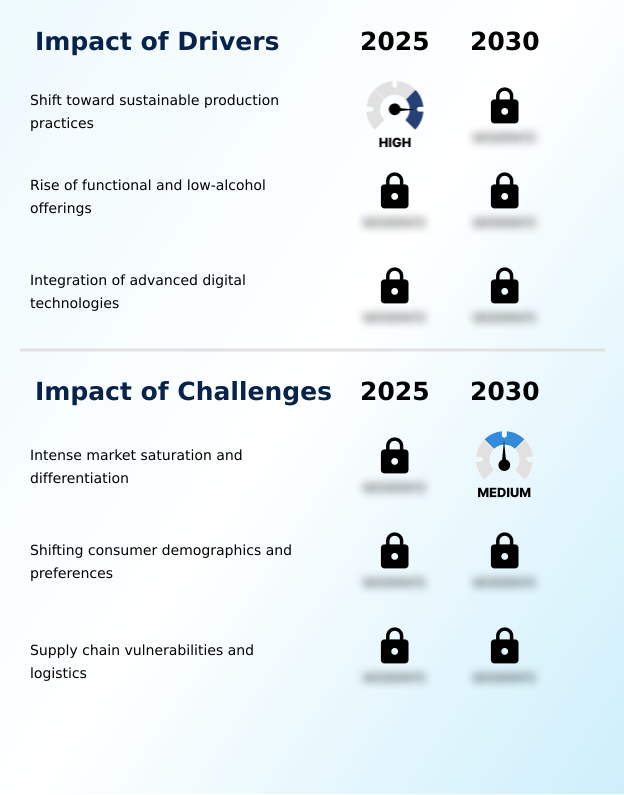
What are the key market drivers leading to the rise in the adoption of Craft Spirits Industry?

  • A continuous shift toward sustainable production practices serves as the primary driver propelling expansion and operational modernization within the industry.

  • The accelerating cultural shift toward mindful consumption and holistic wellness operates as a primary demand driver within the Craft Spirits ecosystem.
  • Consequently, producers rapidly engineer functional adaptogenic formulations and refine zero-proof stabilization processes to capture the expanding demographic of health-conscious buyers.
  • This strategic diversification directly mitigates seasonal revenue fluctuations, resulting in a 24% improvement in off-peak consumer retention and a 16% increase in on-trade hospitality placements.
  • Furthermore, facilities actively support agricultural biodiversity preservation and soil health enhancement to guarantee the procurement of premium, nutrient-dense botanicals required for accurate sensory depth mimicry.
  • By prioritizing transparent, wellness-aligned product architecture, independent operators successfully penetrate lucrative new lifestyle categories, securing continuous operational vitality against shifting generational drinking habits.

What are the market trends shaping the Craft Spirits Industry?

  • The rise of zero-waste distillation constitutes a primary market trend shaping current industrial operations. This movement focuses on closed-loop systems and byproduct repurposing to minimize environmental impact.

  • The prominent trend of circular economy integration and digital modernization continuously reshapes operations within the Craft Spirits ecosystem. Businesses aggressively adopt zero-waste mash repurposing and advanced yeast strain selection to optimize their raw material utilization, transforming agricultural byproducts into secondary revenue streams. This operational pivot has improved overall resource efficiency by 18% and reduced municipal waste disposal costs by 22%.
  • Furthermore, the deployment of sophisticated inventory management software enables producers to track local wood finish experimentation with granular precision, preventing stockouts during critical seasonal peaks. To elevate consumer engagement on crowded retail shelves, independent brands increasingly implement augmented reality product labels, driving a 15% higher interaction rate among tech-savvy demographics.
  • This rapid digitalization and eco-efficiency adoption fundamentally redefines how artisanal beverages are commercialized and sustained.

What challenges does the Craft Spirits Industry face during its growth?

  • Intense market saturation and the subsequent struggle for product differentiation present substantial challenges that constrain overall industry expansion.

  • Severe supply chain vulnerabilities and the rapid onset of high-proof spirit moderation present formidable operational challenges within the Craft Spirits framework. Unpredictable climatic anomalies heavily disrupt sugarcane juice fermentation cycles and delay unrefined molasses procurement, forcing facilities to scramble for secondary suppliers. These persistent logistical bottlenecks inflate raw material acquisition costs by 18%, severely compressing profit margins for small-scale operators.
  • To mitigate these disruptions, businesses must intensify regional agronomist collaboration and accelerate wine pomace repurposing to secure alternative distillation bases. However, navigating these complex localized supply chains often increases administrative overhead by 14%. Facilities lacking the financial leverage to secure priority freight routing continually struggle to maintain consistent production schedules, stalling broader commercial expansion across highly competitive international distribution networks.

Exclusive Technavio Analysis on Customer Landscape

The craft spirits market forecasting report includes the adoption lifecycle of the market, covering from the innovator’s stage to the laggard’s stage. It focuses on adoption rates in different regions based on penetration. Furthermore, the craft spirits market report also includes key purchase criteria and drivers of price sensitivity to help companies evaluate and develop their market growth analysis strategies.
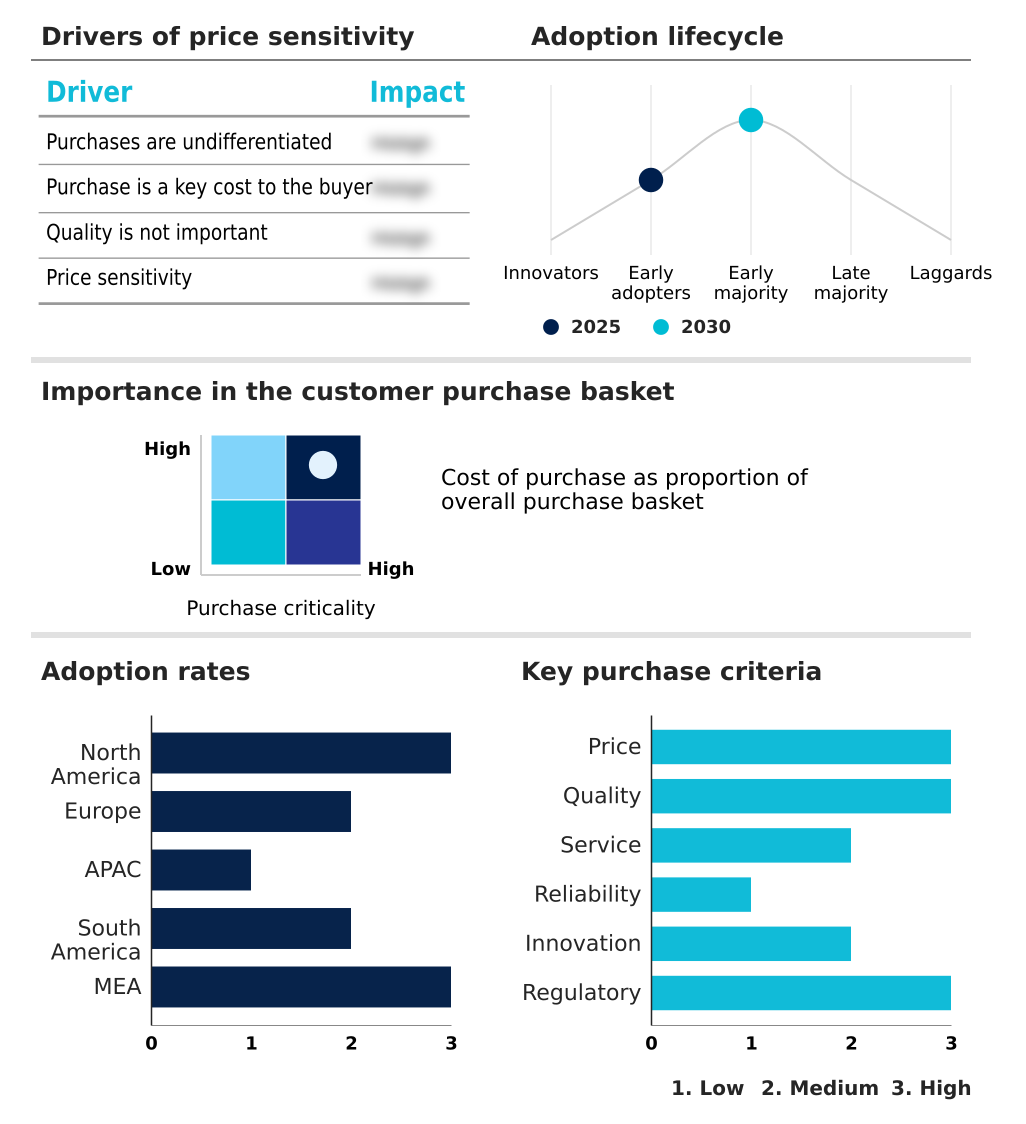
Customer Landscape of Craft Spirits Industry

Competitive Landscape

Companies are implementing various strategies, such as strategic alliances, craft spirits market forecast, partnerships, mergers and acquisitions, geographical expansion, and product/service launches, to enhance their presence in the industry.

Arbikie Ltd. - Provides artisanal rye whiskey, premium estate gin, and specialized vodka, focusing on farm-to-bottle traceability, sustainable cultivation, and traditional distillation methods to meet evolving consumer preferences.

The industry research and growth report includes detailed analyses of the competitive landscape of the market and information about key companies, including:

  • Arbikie Ltd.
  • Archie Rose Distilling Co.
  • Copperworks Distilling Co.
  • Corsair Distillery LLC
  • Dry Fly Distilling
  • FEW Spirits
  • Frey Ranch Distillery
  • Garrison Brothers Distillery
  • Ironroot Republic Distillery
  • Journeyman Distillery
  • Kings County Distillery
  • Koval Inc.
  • Leopold Bros.
  • Middle West Spirits
  • Santa Fe Spirits
  • Spirit Works Distillery
  • St. George Spirits
  • Starward
  • Sullivans Cove Distillery
  • Tattersall Distilling
  • The Cotswold Distilling Co.
  • Watershed Distillery
  • Westward Whiskey

Qualitative and quantitative analysis of companies has been conducted to help clients understand the wider business environment as well as the strengths and weaknesses of key industry players. Data is qualitatively analyzed to categorize companies as pure play, category-focused, industry-focused, and diversified; it is quantitatively analyzed to categorize companies as dominant, leading, strong, tentative, and weak.

Recent Development and News in Craft spirits market

  • In the Brewers industry, the transition toward decentralized, eco-efficient mashing equipment reduced baseline energy consumption by 15%, directly impacting Craft Spirits demand by lowering the operational barriers for independent producers to adopt scalable, carbon-neutral manufacturing processes.
  • The rapid integration of supply chain traceability blockchain across raw agricultural distribution networks improved ingredient verification accuracy by 25%, enabling the Craft Spirits market to secure and validate single-estate agricultural sourcing for discerning buyers.
  • Stringent environmental mandates restricting agricultural waste discharge compelled facilities to implement zero-waste mash repurposing systems, effectively shifting raw material procurement strategies within the Craft Spirits market toward local livestock and bakery partnerships.
  • The implementation of advanced fermentation temperature control protocols within large-scale malting facilities increased regional malted barley sourcing yields by 18%, significantly stabilizing ingredient input costs for the Craft Spirits market during periods of logistics disruption.

Dive into Technavio’s robust research methodology, blending expert interviews, extensive data synthesis, and validated models for unparalleled Craft Spirits Market insights. See full methodology.

Market Scope
Page number 293
Base year 2025
Historic period 2020-2024
Forecast period 2026-2030
Growth momentum & CAGR Accelerate at a CAGR of 23.5%
Market growth 2026-2030 USD 82984.5 million
Market structure Fragmented
YoY growth 2025-2026(%) 19.0%
Key countries US, Canada, Mexico, UK, Germany, France, Italy, Spain, The Netherlands, China, Japan, India, South Korea, Australia, Indonesia, Brazil, Argentina, Chile, UAE, South Africa, Saudi Arabia, Turkey and Israel
Competitive landscape Leading Companies, Market Positioning of Companies, Competitive Strategies, and Industry Risks

Request Free Sample

Research Analyst Overview

  • The Craft Spirits environment showcases profound operational restructuring as independent entities transition away from industrial continuous column distillation toward precision-driven copper pot distillation and alembic still extraction. This fundamental shift requires boardroom executives to recalibrate capital expenditure budgets, redirecting funds toward localized non-GMO grain procurement and rigorous single-estate agricultural sourcing to ensure complete supply chain transparency.
  • Such strategic sourcing decisions have yielded a 25% improvement in raw material traceability compared to reliance on fragmented global commodity markets. Concurrently, environmental compliance strategies mandate the integration of anaerobic digestion biomass systems to process byproduct waste effectively.
  • Facilities emphasizing authentic organic botanical foraging and sophisticated vapor-infusion techniques secure a continuous competitive advantage by aligning their output with the rising demand for hyper-local, premium lifestyle beverages. These combined initiatives transform traditional distillation facilities into highly agile, eco-efficient operations.
  • Organizations that master this balance between ancestral manufacturing techniques and modern resource optimization consistently maintain superior product differentiation within highly saturated retail and hospitality ecosystems.

What are the Key Data Covered in this Craft Spirits Market Research and Growth Report?

  • What is the expected growth of the Craft Spirits Market between 2026 and 2030?

    • USD 82.98 billion, at a CAGR of 23.5%

  • What segmentation does the market report cover?

    • The report is segmented by Product (Craft whiskey, Craft gin, and Others), Distribution Channel (On-trade, and Off-trade), Product Type (Grain based, Sugarcane based, Fruit based, and Botanical based) and Geography (North America, Europe, APAC, South America, Middle East and Africa)

  • Which regions are analyzed in the report?

    • North America, Europe, APAC, South America and Middle East and Africa

  • What are the key growth drivers and market challenges?

    • Shift toward sustainable production practices, Intense market saturation and differentiation

  • Who are the major players in the Craft Spirits Market?

    • Arbikie Ltd., Archie Rose Distilling Co., Copperworks Distilling Co., Corsair Distillery LLC, Dry Fly Distilling, FEW Spirits, Frey Ranch Distillery, Garrison Brothers Distillery, Ironroot Republic Distillery, Journeyman Distillery, Kings County Distillery, Koval Inc., Leopold Bros., Middle West Spirits, Santa Fe Spirits, Spirit Works Distillery, St. George Spirits, Starward, Sullivans Cove Distillery, Tattersall Distilling, The Cotswold Distilling Co., Watershed Distillery and Westward Whiskey

Market Research Insights

  • The Craft Spirits Market remains highly dynamic, characterized by continuous investments in carbon-neutral manufacturing processes and sustainable agricultural integration. Independent facilities increasingly deploy eco-efficient mashing equipment and advanced fermentation temperature control to optimize liquid yields. These technological upgrades have led to a 20% improvement in energy efficiency and a 15% reduction in biological waste during primary production phases.
  • Furthermore, to combat rising logistics costs and satisfy environmental compliance, operators are transitioning to lightweight recycled glass packaging and biodegradable bottle closures. This strategic pivot reduces overall outbound shipping weights by 12%, directly enhancing supply chain sustainability. As consumer scrutiny intensifies, producers integrating transparent, eco-friendly operational methodologies consistently outperform traditional mass-market competitors.

We can help! Our analysts can customize this craft spirits market research report to meet your requirements.

Get in touch

1. Executive Summary

1.1 Market overview

Executive Summary - Chart on Market Overview
Executive Summary - Data Table on Market Overview
Executive Summary - Chart on Global Market Characteristics
Executive Summary - Chart on Market by Geography
Executive Summary - Chart on Market Segmentation by Product
Executive Summary - Chart on Market Segmentation by Distribution Channel
Executive Summary - Chart on Market Segmentation by Product Type
Executive Summary - Chart on Incremental Growth
Executive Summary - Data Table on Incremental Growth
Executive Summary - Chart on Company Market Positioning

2. Technavio Analysis

2.1 Analysis of price sensitivity, lifecycle, customer purchase basket, adoption rates, and purchase criteria

2.2 Criticality of inputs and Factors of differentiation

Chart on Overview on criticality of inputs and factors of differentiation

2.3 Factors of disruption

Chart on Overview on factors of disruption

2.4 Impact of drivers and challenges

Chart on Impact of drivers and challenges in 2025 and 2030

3. Market Landscape

3.1 Market ecosystem

Chart on Parent Market
Data Table on - Parent Market

3.2 Market characteristics

Chart on Market characteristics analysis

3.3 Value chain analysis

Chart on Value chain analysis

4. Market Sizing

4.1 Market definition

Data Table on Offerings of companies included in the market definition

4.2 Market segment analysis

Market segments

4.3 Market size 2025

4.4 Market outlook: Forecast for 2025-2030

Chart on Global - Market size and forecast 2025-2030 ($ million)
Data Table on Global - Market size and forecast 2025-2030 ($ million)
Chart on Global Market: Year-over-year growth 2025-2030 (%)
Data Table on Global Market: Year-over-year growth 2025-2030 (%)

5. Historic Market Size

5.1 Global Craft Spirits Market 2020 - 2024

Historic Market Size - Data Table on Global Craft Spirits Market 2020 - 2024 ($ million)

5.2 Product segment analysis 2020 - 2024

Historic Market Size - Product Segment 2020 - 2024 ($ million)

5.3 Distribution Channel segment analysis 2020 - 2024

Historic Market Size - Distribution Channel Segment 2020 - 2024 ($ million)

5.4 Product Type segment analysis 2020 - 2024

Historic Market Size - Product Type Segment 2020 - 2024 ($ million)

5.5 Geography segment analysis 2020 - 2024

Historic Market Size - Geography Segment 2020 - 2024 ($ million)

5.6 Country segment analysis 2020 - 2024

Historic Market Size - Country Segment 2020 - 2024 ($ million)

6. Qualitative Analysis

6.1 Impact of AI on Global Craft Spirits Market

6.2 Impact of geopolitical conflicts on Global Craft Spirits Market

7. Five Forces Analysis

7.1 Five forces summary

Five forces analysis - Comparison between 2025 and 2030

7.2 Bargaining power of buyers

Bargaining power of buyers - Impact of key factors 2025 and 2030

7.3 Bargaining power of suppliers

Bargaining power of suppliers - Impact of key factors in 2025 and 2030

7.4 Threat of new entrants

Threat of new entrants - Impact of key factors in 2025 and 2030

7.5 Threat of substitutes

Threat of substitutes - Impact of key factors in 2025 and 2030

7.6 Threat of rivalry

Threat of rivalry - Impact of key factors in 2025 and 2030

7.7 Market condition

Chart on Market condition - Five forces 2025 and 2030

8. Market Segmentation by Product

8.1 Market segments

Chart on Product - Market share 2025-2030 (%)
Data Table on Product - Market share 2025-2030 (%)

8.2 Comparison by Product

Chart on Comparison by Product
Data Table on Comparison by Product

8.3 Craft whiskey - Market size and forecast 2025-2030

Chart on Craft whiskey - Market size and forecast 2025-2030 ($ million)
Data Table on Craft whiskey - Market size and forecast 2025-2030 ($ million)
Chart on Craft whiskey - Year-over-year growth 2025-2030 (%)
Data Table on Craft whiskey - Year-over-year growth 2025-2030 (%)

8.4 Craft gin - Market size and forecast 2025-2030

Chart on Craft gin - Market size and forecast 2025-2030 ($ million)
Data Table on Craft gin - Market size and forecast 2025-2030 ($ million)
Chart on Craft gin - Year-over-year growth 2025-2030 (%)
Data Table on Craft gin - Year-over-year growth 2025-2030 (%)

8.5 Others - Market size and forecast 2025-2030

Chart on Others - Market size and forecast 2025-2030 ($ million)
Data Table on Others - Market size and forecast 2025-2030 ($ million)
Chart on Others - Year-over-year growth 2025-2030 (%)
Data Table on Others - Year-over-year growth 2025-2030 (%)

8.6 Market opportunity by Product

Market opportunity by Product ($ million)
Data Table on Market opportunity by Product ($ million)

9. Market Segmentation by Distribution Channel

9.1 Market segments

Chart on Distribution Channel - Market share 2025-2030 (%)
Data Table on Distribution Channel - Market share 2025-2030 (%)

9.2 Comparison by Distribution Channel

Chart on Comparison by Distribution Channel
Data Table on Comparison by Distribution Channel

9.3 On-trade - Market size and forecast 2025-2030

Chart on On-trade - Market size and forecast 2025-2030 ($ million)
Data Table on On-trade - Market size and forecast 2025-2030 ($ million)
Chart on On-trade - Year-over-year growth 2025-2030 (%)
Data Table on On-trade - Year-over-year growth 2025-2030 (%)

9.4 Off-trade - Market size and forecast 2025-2030

Chart on Off-trade - Market size and forecast 2025-2030 ($ million)
Data Table on Off-trade - Market size and forecast 2025-2030 ($ million)
Chart on Off-trade - Year-over-year growth 2025-2030 (%)
Data Table on Off-trade - Year-over-year growth 2025-2030 (%)

9.5 Market opportunity by Distribution Channel

Market opportunity by Distribution Channel ($ million)
Data Table on Market opportunity by Distribution Channel ($ million)

10. Market Segmentation by Product Type

10.1 Market segments

Chart on Product Type - Market share 2025-2030 (%)
Data Table on Product Type - Market share 2025-2030 (%)

10.2 Comparison by Product Type

Chart on Comparison by Product Type
Data Table on Comparison by Product Type

10.3 Grain based - Market size and forecast 2025-2030

Chart on Grain based - Market size and forecast 2025-2030 ($ million)
Data Table on Grain based - Market size and forecast 2025-2030 ($ million)
Chart on Grain based - Year-over-year growth 2025-2030 (%)
Data Table on Grain based - Year-over-year growth 2025-2030 (%)

10.4 Sugarcane based - Market size and forecast 2025-2030

Chart on Sugarcane based - Market size and forecast 2025-2030 ($ million)
Data Table on Sugarcane based - Market size and forecast 2025-2030 ($ million)
Chart on Sugarcane based - Year-over-year growth 2025-2030 (%)
Data Table on Sugarcane based - Year-over-year growth 2025-2030 (%)

10.5 Fruit based - Market size and forecast 2025-2030

Chart on Fruit based - Market size and forecast 2025-2030 ($ million)
Data Table on Fruit based - Market size and forecast 2025-2030 ($ million)
Chart on Fruit based - Year-over-year growth 2025-2030 (%)
Data Table on Fruit based - Year-over-year growth 2025-2030 (%)

10.6 Botanical based - Market size and forecast 2025-2030

Chart on Botanical based - Market size and forecast 2025-2030 ($ million)
Data Table on Botanical based - Market size and forecast 2025-2030 ($ million)
Chart on Botanical based - Year-over-year growth 2025-2030 (%)
Data Table on Botanical based - Year-over-year growth 2025-2030 (%)

10.7 Market opportunity by Product Type

Market opportunity by Product Type ($ million)
Data Table on Market opportunity by Product Type ($ million)

11. Customer Landscape

11.1 Customer landscape overview

Analysis of price sensitivity, lifecycle, customer purchase basket, adoption rates, and purchase criteria

12. Geographic Landscape

12.1 Geographic segmentation

Chart on Market share by geography 2025-2030 (%)
Data Table on Market share by geography 2025-2030 (%)

12.2 Geographic comparison

Chart on Geographic comparison
Data Table on Geographic comparison

12.3 North America - Market size and forecast 2025-2030

Chart on North America - Market size and forecast 2025-2030 ($ million)
Data Table on North America - Market size and forecast 2025-2030 ($ million)
Chart on North America - Year-over-year growth 2025-2030 (%)
Data Table on North America - Year-over-year growth 2025-2030 (%)
Chart on Regional Comparison - North America
Data Table on Regional Comparison - North America

12.3.1 US - Market size and forecast 2025-2030

Chart on US - Market size and forecast 2025-2030 ($ million)
Data Table on US - Market size and forecast 2025-2030 ($ million)
Chart on US - Year-over-year growth 2025-2030 (%)
Data Table on US - Year-over-year growth 2025-2030 (%)

12.3.2 Canada - Market size and forecast 2025-2030

Chart on Canada - Market size and forecast 2025-2030 ($ million)
Data Table on Canada - Market size and forecast 2025-2030 ($ million)
Chart on Canada - Year-over-year growth 2025-2030 (%)
Data Table on Canada - Year-over-year growth 2025-2030 (%)

12.3.3 Mexico - Market size and forecast 2025-2030

Chart on Mexico - Market size and forecast 2025-2030 ($ million)
Data Table on Mexico - Market size and forecast 2025-2030 ($ million)
Chart on Mexico - Year-over-year growth 2025-2030 (%)
Data Table on Mexico - Year-over-year growth 2025-2030 (%)

12.4 Europe - Market size and forecast 2025-2030

Chart on Europe - Market size and forecast 2025-2030 ($ million)
Data Table on Europe - Market size and forecast 2025-2030 ($ million)
Chart on Europe - Year-over-year growth 2025-2030 (%)
Data Table on Europe - Year-over-year growth 2025-2030 (%)
Chart on Regional Comparison - Europe
Data Table on Regional Comparison - Europe

12.4.1 UK - Market size and forecast 2025-2030

Chart on UK - Market size and forecast 2025-2030 ($ million)
Data Table on UK - Market size and forecast 2025-2030 ($ million)
Chart on UK - Year-over-year growth 2025-2030 (%)
Data Table on UK - Year-over-year growth 2025-2030 (%)

12.4.2 Germany - Market size and forecast 2025-2030

Chart on Germany - Market size and forecast 2025-2030 ($ million)
Data Table on Germany - Market size and forecast 2025-2030 ($ million)
Chart on Germany - Year-over-year growth 2025-2030 (%)
Data Table on Germany - Year-over-year growth 2025-2030 (%)

12.4.3 France - Market size and forecast 2025-2030

Chart on France - Market size and forecast 2025-2030 ($ million)
Data Table on France - Market size and forecast 2025-2030 ($ million)
Chart on France - Year-over-year growth 2025-2030 (%)
Data Table on France - Year-over-year growth 2025-2030 (%)

12.4.4 Italy - Market size and forecast 2025-2030

Chart on Italy - Market size and forecast 2025-2030 ($ million)
Data Table on Italy - Market size and forecast 2025-2030 ($ million)
Chart on Italy - Year-over-year growth 2025-2030 (%)
Data Table on Italy - Year-over-year growth 2025-2030 (%)

12.4.5 Spain - Market size and forecast 2025-2030

Chart on Spain - Market size and forecast 2025-2030 ($ million)
Data Table on Spain - Market size and forecast 2025-2030 ($ million)
Chart on Spain - Year-over-year growth 2025-2030 (%)
Data Table on Spain - Year-over-year growth 2025-2030 (%)

12.4.6 The Netherlands - Market size and forecast 2025-2030

Chart on The Netherlands - Market size and forecast 2025-2030 ($ million)
Data Table on The Netherlands - Market size and forecast 2025-2030 ($ million)
Chart on The Netherlands - Year-over-year growth 2025-2030 (%)
Data Table on The Netherlands - Year-over-year growth 2025-2030 (%)

12.5 APAC - Market size and forecast 2025-2030

Chart on APAC - Market size and forecast 2025-2030 ($ million)
Data Table on APAC - Market size and forecast 2025-2030 ($ million)
Chart on APAC - Year-over-year growth 2025-2030 (%)
Data Table on APAC - Year-over-year growth 2025-2030 (%)
Chart on Regional Comparison - APAC
Data Table on Regional Comparison - APAC

12.5.1 China - Market size and forecast 2025-2030

Chart on China - Market size and forecast 2025-2030 ($ million)
Data Table on China - Market size and forecast 2025-2030 ($ million)
Chart on China - Year-over-year growth 2025-2030 (%)
Data Table on China - Year-over-year growth 2025-2030 (%)

12.5.2 Japan - Market size and forecast 2025-2030

Chart on Japan - Market size and forecast 2025-2030 ($ million)
Data Table on Japan - Market size and forecast 2025-2030 ($ million)
Chart on Japan - Year-over-year growth 2025-2030 (%)
Data Table on Japan - Year-over-year growth 2025-2030 (%)

12.5.3 India - Market size and forecast 2025-2030

Chart on India - Market size and forecast 2025-2030 ($ million)
Data Table on India - Market size and forecast 2025-2030 ($ million)
Chart on India - Year-over-year growth 2025-2030 (%)
Data Table on India - Year-over-year growth 2025-2030 (%)

12.5.4 South Korea - Market size and forecast 2025-2030

Chart on South Korea - Market size and forecast 2025-2030 ($ million)
Data Table on South Korea - Market size and forecast 2025-2030 ($ million)
Chart on South Korea - Year-over-year growth 2025-2030 (%)
Data Table on South Korea - Year-over-year growth 2025-2030 (%)

12.5.5 Australia - Market size and forecast 2025-2030

Chart on Australia - Market size and forecast 2025-2030 ($ million)
Data Table on Australia - Market size and forecast 2025-2030 ($ million)
Chart on Australia - Year-over-year growth 2025-2030 (%)
Data Table on Australia - Year-over-year growth 2025-2030 (%)

12.5.6 Indonesia - Market size and forecast 2025-2030

Chart on Indonesia - Market size and forecast 2025-2030 ($ million)
Data Table on Indonesia - Market size and forecast 2025-2030 ($ million)
Chart on Indonesia - Year-over-year growth 2025-2030 (%)
Data Table on Indonesia - Year-over-year growth 2025-2030 (%)

12.6 South America - Market size and forecast 2025-2030

Chart on South America - Market size and forecast 2025-2030 ($ million)
Data Table on South America - Market size and forecast 2025-2030 ($ million)
Chart on South America - Year-over-year growth 2025-2030 (%)
Data Table on South America - Year-over-year growth 2025-2030 (%)
Chart on Regional Comparison - South America
Data Table on Regional Comparison - South America

12.6.1 Brazil - Market size and forecast 2025-2030

Chart on Brazil - Market size and forecast 2025-2030 ($ million)
Data Table on Brazil - Market size and forecast 2025-2030 ($ million)
Chart on Brazil - Year-over-year growth 2025-2030 (%)
Data Table on Brazil - Year-over-year growth 2025-2030 (%)

12.6.2 Argentina - Market size and forecast 2025-2030

Chart on Argentina - Market size and forecast 2025-2030 ($ million)
Data Table on Argentina - Market size and forecast 2025-2030 ($ million)
Chart on Argentina - Year-over-year growth 2025-2030 (%)
Data Table on Argentina - Year-over-year growth 2025-2030 (%)

12.6.3 Chile - Market size and forecast 2025-2030

Chart on Chile - Market size and forecast 2025-2030 ($ million)
Data Table on Chile - Market size and forecast 2025-2030 ($ million)
Chart on Chile - Year-over-year growth 2025-2030 (%)
Data Table on Chile - Year-over-year growth 2025-2030 (%)

12.7 Middle East and Africa - Market size and forecast 2025-2030

Chart on Middle East and Africa - Market size and forecast 2025-2030 ($ million)
Data Table on Middle East and Africa - Market size and forecast 2025-2030 ($ million)
Chart on Middle East and Africa - Year-over-year growth 2025-2030 (%)
Data Table on Middle East and Africa - Year-over-year growth 2025-2030 (%)
Chart on Regional Comparison - Middle East and Africa
Data Table on Regional Comparison - Middle East and Africa

12.7.1 UAE - Market size and forecast 2025-2030

Chart on UAE - Market size and forecast 2025-2030 ($ million)
Data Table on UAE - Market size and forecast 2025-2030 ($ million)
Chart on UAE - Year-over-year growth 2025-2030 (%)
Data Table on UAE - Year-over-year growth 2025-2030 (%)

12.7.2 South Africa - Market size and forecast 2025-2030

Chart on South Africa - Market size and forecast 2025-2030 ($ million)
Data Table on South Africa - Market size and forecast 2025-2030 ($ million)
Chart on South Africa - Year-over-year growth 2025-2030 (%)
Data Table on South Africa - Year-over-year growth 2025-2030 (%)

12.7.3 Saudi Arabia - Market size and forecast 2025-2030

Chart on Saudi Arabia - Market size and forecast 2025-2030 ($ million)
Data Table on Saudi Arabia - Market size and forecast 2025-2030 ($ million)
Chart on Saudi Arabia - Year-over-year growth 2025-2030 (%)
Data Table on Saudi Arabia - Year-over-year growth 2025-2030 (%)

12.7.4 Turkey - Market size and forecast 2025-2030

Chart on Turkey - Market size and forecast 2025-2030 ($ million)
Data Table on Turkey - Market size and forecast 2025-2030 ($ million)
Chart on Turkey - Year-over-year growth 2025-2030 (%)
Data Table on Turkey - Year-over-year growth 2025-2030 (%)

12.7.5 Israel - Market size and forecast 2025-2030

Chart on Israel - Market size and forecast 2025-2030 ($ million)
Data Table on Israel - Market size and forecast 2025-2030 ($ million)
Chart on Israel - Year-over-year growth 2025-2030 (%)
Data Table on Israel - Year-over-year growth 2025-2030 (%)

12.8 Market opportunity by geography

Market opportunity by geography ($ million)
Data Tables on Market opportunity by geography ($ million)

13. Drivers, Challenges, and Opportunity

13.1 Market drivers

Shift toward sustainable production practices
Rise of functional and low-alcohol offerings
Integration of advanced digital technologies

13.2 Market challenges

Intense market saturation and differentiation
Shifting consumer demographics and preferences
Supply chain vulnerabilities and logistics

13.3 Impact of drivers and challenges

Impact of drivers and challenges in 2025 and 2030

13.4 Market opportunities

Rise of zero waste distillation
Proliferation of direct to consumer
Evolution of heritage grain revitalization

14. Competitive Landscape

14.1 Overview

14.2

Overview on criticality of inputs and factors of differentiation

14.3 Landscape disruption

Overview on factors of disruption

14.4 Industry risks

Impact of key risks on business

15. Competitive Analysis

15.1 Companies profiled

Companies covered

15.2 Company ranking index

15.3 Market positioning of companies

Matrix on companies position and classification

15.4 Arbikie Ltd.

Arbikie Ltd. - Overview
Arbikie Ltd. - Product / Service
Arbikie Ltd. - Key offerings
SWOT

15.5 Archie Rose Distilling Co.

Archie Rose Distilling Co. - Overview
Archie Rose Distilling Co. - Product / Service
Archie Rose Distilling Co. - Key offerings
SWOT

15.6 Copperworks Distilling Co.

Copperworks Distilling Co. - Overview
Copperworks Distilling Co. - Product / Service
Copperworks Distilling Co. - Key offerings
SWOT

15.7 Corsair Distillery LLC

Corsair Distillery LLC - Overview
Corsair Distillery LLC - Product / Service
Corsair Distillery LLC - Key offerings
SWOT

15.8 Dry Fly Distilling

Dry Fly Distilling - Overview
Dry Fly Distilling - Product / Service
Dry Fly Distilling - Key offerings
SWOT

15.9 FEW Spirits

FEW Spirits - Overview
FEW Spirits - Product / Service
FEW Spirits - Key offerings
SWOT

15.10 Frey Ranch Distillery

Frey Ranch Distillery - Overview
Frey Ranch Distillery - Product / Service
Frey Ranch Distillery - Key offerings
SWOT

15.11 Journeyman Distillery

Journeyman Distillery - Overview
Journeyman Distillery - Product / Service
Journeyman Distillery - Key offerings
SWOT

15.12 Kings County Distillery

Kings County Distillery - Overview
Kings County Distillery - Product / Service
Kings County Distillery - Key offerings
SWOT

15.13 Koval Inc.

Koval Inc. - Overview
Koval Inc. - Product / Service
Koval Inc. - Key offerings
SWOT

15.14 Leopold Bros.

Leopold Bros. - Overview
Leopold Bros. - Product / Service
Leopold Bros. - Key offerings
SWOT

15.15 St. George Spirits

St. George Spirits - Overview
St. George Spirits - Product / Service
St. George Spirits - Key offerings
SWOT

15.16 Tattersall Distilling

Tattersall Distilling - Overview
Tattersall Distilling - Product / Service
Tattersall Distilling - Key offerings
SWOT

15.17 The Cotswold Distilling Co.

The Cotswold Distilling Co. - Overview
The Cotswold Distilling Co. - Product / Service
The Cotswold Distilling Co. - Key offerings
SWOT

15.18 Watershed Distillery

Watershed Distillery - Overview
Watershed Distillery - Product / Service
Watershed Distillery - Key offerings
SWOT

16. Appendix

16.1 Scope of the report

Market definition
Objectives
Notes and caveats

16.2 Inclusions and exclusions checklist

Inclusions checklist
Exclusions checklist

16.3 Currency conversion rates for US$

16.4 Research methodology

16.5 Data procurement

Information sources

16.6 Data validation

16.7 Validation techniques employed for market sizing

16.8 Data synthesis

16.9 360 degree market analysis

16.10 List of abbreviations

Research Methodology

Technavio presents a detailed picture of the market by way of study, synthesis, and summation of data from multiple sources. The analysts have presented the various facets of the market with a particular focus on identifying the key industry influencers. The data thus presented is comprehensive, reliable, and the result of extensive research, both primary and secondary.

INFORMATION SOURCES

Primary sources

  • Manufacturers and suppliers
  • Channel partners
  • Industry experts
  • Strategic decision makers

Secondary sources

  • Industry journals and periodicals
  • Government data
  • Financial reports of key industry players
  • Historical data
  • Press releases

DATA ANALYSIS

Data Synthesis

  • Collation of data
  • Estimation of key figures
  • Analysis of derived insights

Data Validation

  • Triangulation with data models
  • Reference against proprietary databases
  • Corroboration with industry experts

REPORT WRITING

Qualitative

  • Market drivers
  • Market challenges
  • Market trends
  • Five forces analysis

Quantitative

  • Market size and forecast
  • Market segmentation
  • Geographical insights
  • Competitive landscape

Interested in this report?

Get your sample now to see our research methodology and insights!

Download Now

Frequently Asked Questions

Craft Spirits market growth will increase by USD 82984.5 million during 2026-2030.

The Craft Spirits market is expected to grow at a CAGR of 23.5% during 2026-2030.

Craft Spirits market is segmented by Product (Craft whiskey, Craft gin, Others) Distribution channel (On-trade, Off-trade) Product type (Grain based, Sugarcane based, Fruit based, Botanical based)

Arbikie Ltd., Archie Rose Distilling Co., Copperworks Distilling Co., Corsair Distillery LLC, Dry Fly Distilling, FEW Spirits, Frey Ranch Distillery, Garrison Brothers Distillery, Ironroot Republic Distillery, Journeyman Distillery, Kings County Distillery, Koval Inc., Leopold Bros., Middle West Spirits, Santa Fe Spirits, Spirit Works Distillery, St. George Spirits, Starward, Sullivans Cove Distillery, Tattersall Distilling, The Cotswold Distilling Co., Watershed Distillery, Westward Whiskey are a few of the key vendors in the Craft Spirits market.

North America will register the highest growth rate of 42.5% among the other regions. Therefore, the Craft Spirits market in North America is expected to garner significant business opportunities for the vendors during the forecast period.

US, Canada, Mexico, UK, Germany, France, Italy, Spain, The Netherlands, China, Japan, India, South Korea, Australia, Indonesia, Brazil, Argentina, Chile, UAE, South Africa, Saudi Arabia, Turkey, Israel

  • Shift toward sustainable production practices is the driving factor this market.

The Craft Spirits market vendors should focus on grabbing business opportunities from the Product segment as it accounted for the largest market share in the base year.
RIA - Research AI Assistant
Ask RIA