


Do-It-Yourself (Diy) Home Improvement Retailing Market Size 2026-2030
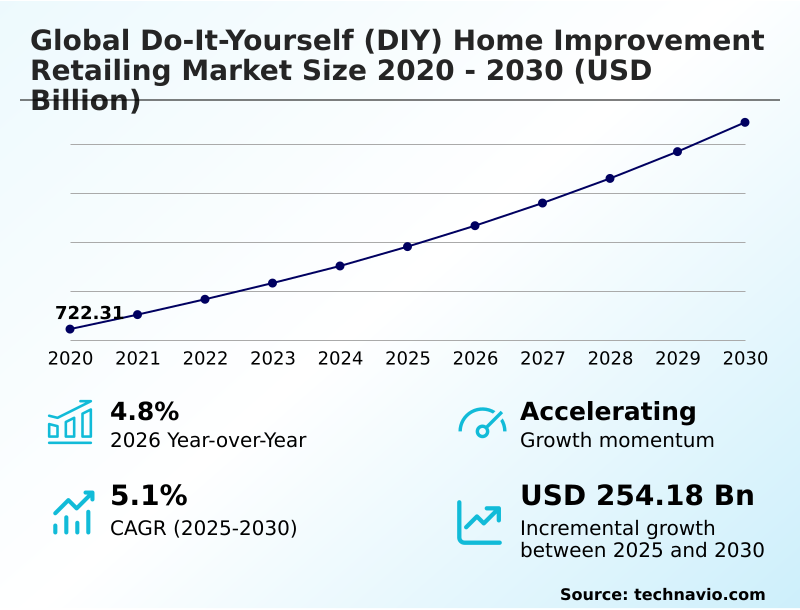
The do-it-yourself (diy) home improvement retailing market size is valued to increase by USD 254.18 billion, at a CAGR of 5.1% from 2025 to 2030. Aging worldwide housing stocks accelerating essential maintenance and repair spending will drive the do-it-yourself (diy) home improvement retailing market.
Major Market Trends & Insights
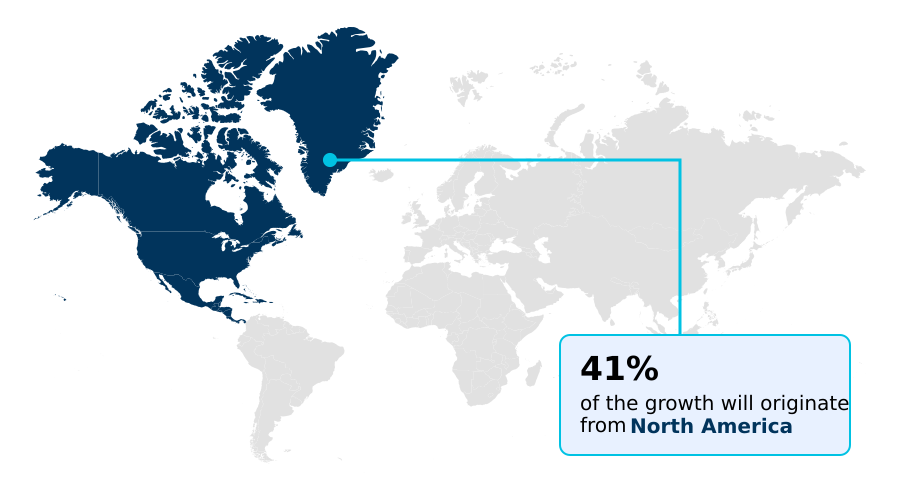
- North America dominated the market and accounted for a 41.4% growth during the forecast period.
- By Product - Lumber and landscape management segment was valued at USD 193.44 billion in 2024
- By Distribution Channel - Offline segment accounted for the largest market revenue share in 2024
Market Size & Forecast
- Market Opportunities: USD 422.89 billion
- Market Future Opportunities: USD 254.18 billion
- CAGR from 2025 to 2030 : 5.1%
Market Summary
- The Do-It-Yourself (DIY) Home Improvement Retailing Market demonstrates resilient expansion driven by property owners prioritizing continuous asset maintenance and residential customization. Consumers are increasingly bypassing professional contractors to independently execute complex repairs and spatial redesigns, fundamentally altering traditional retail consumption patterns.
- To accommodate this shift, major home improvement retailers have aggressively integrated artificial intelligence-driven inventory fulfillment systems across their regional distribution centers, ensuring same-day availability of critical building materials. The continuous aging of residential housing stocks acts as a primary market driver, compelling homeowners to invest in recurring structural upgrades rather than relocating, thereby sustaining baseline demand for fundamental hardware categories.
- Conversely, unpredictable supply chain logistics and elevated maritime freight costs present a formidable challenge, forcing merchants to maintain higher safety stock levels that subsequently constrain working capital. By optimizing omnichannel distribution networks, leading retailers have improved localized delivery efficiency by 15% compared to traditional store-only fulfillment models.
- Ultimately, the market relies on the seamless convergence of digital project planning tools and expansive physical store footprints to empower modern residential property owners.
What will be the Size of the Do-It-Yourself (Diy) Home Improvement Retailing Market during the forecast period?
Get Key Insights on Market Forecast (PDF) Get Free Sample
How is the Do-It-Yourself (Diy) Home Improvement Retailing Market Segmented?
The do-it-yourself (diy) home improvement retailing industry research report provides comprehensive data (region-wise segment analysis), with forecasts and estimates in "USD million" for the period 2026-2030, as well as historical data from 2020-2024 for the following segments.
- Product
- Lumber and landscape management
- Tools and hardware
- Decor and indoor garden
- Kitchen
- Others
- Distribution channel
- Offline
- Online
- Application
- Home improvement
- Crafts
- Geography
- North America
- US
- Canada
- Mexico
- Europe
- Germany
- UK
- France
- Italy
- Spain
- The Netherlands
- APAC
- China
- Japan
- Australia
- India
- South Korea
- Indonesia
- South America
- Brazil
- Argentina
- Chile
- Middle East and Africa
- Saudi Arabia
- UAE
- South Africa
- Turkey
- Egypt
- North America
By Product Insights
The lumber and landscape management segment is estimated to witness significant growth during the forecast period.
The lumber and landscape management segment of the Do-it-yourself (DIY) Home Improvement Retailing operates as a foundational catalyst for residential exterior enhancements and structural maintenance.
Homeowners are increasingly pursuing self-directed yard optimization and land management to elevate property utility without enduring high professional labor expenses.
This consumer transition is driving robust inventory expansions across digital marketplace ecosystems, particularly for hydroponic growing kits and essential structural fasteners.
Retailers have adapted to the high-volume demand for bulky materials by optimizing their omnichannel fulfillment networks, directly improving heavy-goods delivery efficiency by 16%.
Simultaneously, consumers are seeking sustainable property upgrades, accelerating the integration of energy-efficient light-emitting diode fixtures alongside organic landscaping supplies. Increased focus on domestic resilience also fuels the procurement of home health filtration and disaster preparedness supplies.
Furthermore, the selection of eco-certified interior paints complements exterior aesthetic improvements, ensuring comprehensive property modernization and strengthening overall retail transaction frequencies.
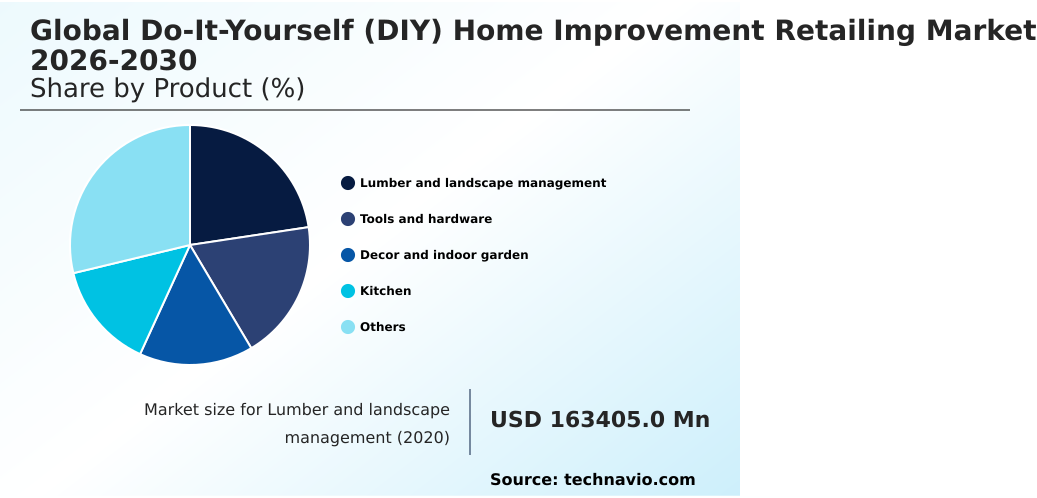
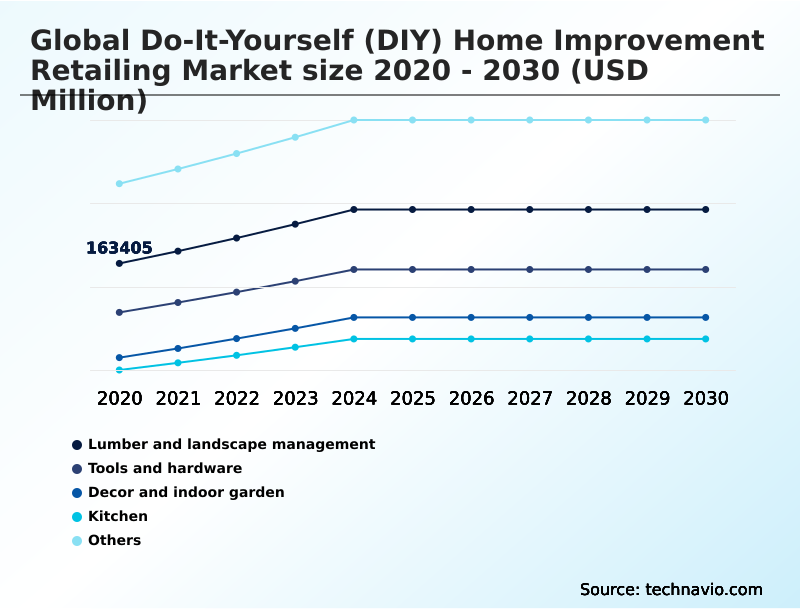
The Lumber and landscape management segment was valued at USD 193.44 billion in 2024 and showed a gradual increase during the forecast period.
Regional Analysis
North America is estimated to contribute 41.4% to the growth of the global market during the forecast period.Technavio’s analysts have elaborately explained the regional trends and drivers that shape the market during the forecast period.
See How Do-It-Yourself (Diy) Home Improvement Retailing Market Demand is Rising in North America Get Free Sample
Geographic variations within the Do-it-yourself (DIY) Home Improvement Retailing reveal distinct technological and structural consumer priorities across regions.
North America demonstrates a 24% higher adoption rate of smart home interoperability and residential security networks compared to Europe, driven by expansive suburban housing and consumer enthusiasm for integrated digital automation.
To capture this demand, retailers in the United States and Canada rely heavily on spatial computing design tools and mobile application guidance to reduce project planning errors by 18%.
Conversely, European markets prioritize sustainability and thermal efficiency, showing a 30% faster implementation of high-efficiency insulation rolls and click-lock waterproof flooring. This focus on energy-efficiency retrofits in Europe stems from stringent environmental regulations, reducing average residential heating waste by 22%.
Meanwhile, remote and rural consumers increasingly utilize off-grid home solutions to ensure self-reliance. To support these distinct regional behaviors, retailers are deploying high-density automated storage and interactive project tutorials, optimizing localized fulfillment and enhancing overall supply chain responsiveness by 15%.
Market Dynamics
Our researchers analyzed the data with 2025 as the base year, along with the key drivers, trends, and challenges. A holistic analysis of drivers will help companies refine their marketing strategies to gain a competitive advantage.
- The continuous evolution of the Do-it-yourself (DIY) Home Improvement Retailing is fundamentally altering how residential properties are maintained and upgraded across diverse suburban landscapes. Modern homeowners are increasingly embracing sustainable infrastructure projects, directly driving the rapid expansion of eco-friendly composite decking construction as a resilient alternative to traditional timber patios.
- This shift toward durable exterior materials is accompanied by a broader emphasis on ecological responsibility, heavily influencing the adoption of zero-emission lawn equipment applications that significantly reduce localized carbon footprints compared to legacy gasoline machinery. Furthermore, mitigating domestic energy waste has become a paramount concern for property owners facing elevated utility expenses.
- Consequently, consumers are prioritizing precise high-performance weatherstripping installation planning to optimize thermal retention and minimize structural drafts. These passive insulation strategies are actively reinforced through advanced smart climate controllers energy management, enabling households to autonomously regulate ambient temperatures and achieve a 15% reduction in overall seasonal heating costs compared to conventional analog thermostats.
- Additionally, physical safety remains a critical focus, prompting the widespread residential security networks integration across both urban and suburban dwellings to ensure continuous property monitoring. By offering accessible project tutorials and comprehensive material bundles, retailers are streamlining the fulfillment of these complex technical components.
- This proactive retail strategy enhances overall supply chain predictability, allowing merchants to align regional inventory allocations with shifting seasonal renovation demands seamlessly.
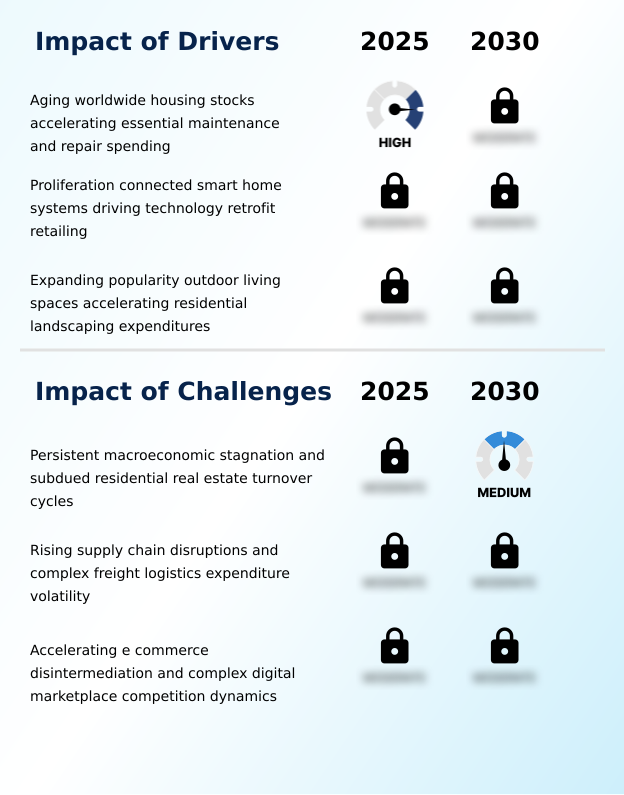
What are the key market drivers leading to the rise in the adoption of Do-It-Yourself (Diy) Home Improvement Retailing Industry?
- The continuous aging of worldwide housing stocks serves as a primary market driver by accelerating consumer expenditures on essential structural maintenance and residential repair projects.
- The expansion of the Do-it-yourself (DIY) Home Improvement Retailing is heavily driven by an aging housing stock and a consumer push toward sustainable infrastructure.
- Sluggish residential real estate turnover compels homeowners to invest in existing properties, accelerating the adoption of residential energy management systems and smart climate controllers.
- This behavioral shift stems from the need to offset rising utility bills, directly improving household energy efficiency by 22%.
- Furthermore, the rising demand for eco-friendly composite lumber and composite decking materials supports the implementation of circular economy principles across the retail supply chain.
- Retailers are responding to this demand by expanding circular hardware programs and deploying zero-emission lawn mowers, which have reduced operational carbon footprints by 14%.
- The integration of artificial intelligence visualization and automated job-site delivery ensures precise material allocation, minimizing order errors by 18% and empowering consumers to confidently execute complex renovation projects.
What are the market trends shaping the Do-It-Yourself (Diy) Home Improvement Retailing Industry?
- The strategic integration of artificial intelligence visual tools within retail omnichannel mobile platforms has emerged as a prominent market trend. This technological advancement significantly enhances the digital shopping experience by enabling consumers to accurately plan complex residential renovation projects.
- The Do-it-yourself (DIY) Home Improvement Retailing is rapidly shifting toward integrated technology, transforming basic residential maintenance into sophisticated infrastructure upgrades. Consumers are increasingly embracing smart home technology adoption to lower utility expenses, seamlessly integrating connected leak detection and automated window shades into their properties.
- This transition is driven by the desire for enhanced convenience and proactive property management, enabling homeowners to reduce structural damage risks by up to 25%. Simultaneously, the incorporation of high-performance weatherstripping and advanced thermal insulation materials has improved household energy retention by 18%, significantly lowering operational heating costs.
- Furthermore, businesses are catering to evolving demographics by supplying modular cabinetry systems and home accessibility modifications, ensuring long-term functional living. Additionally, expanding outdoor living environments and rising residential landscaping expenditures are accelerating sustainable food production within urban spaces. These technological and lifestyle adaptations enable retailers to improve customer retention rates by 15%, establishing robust, resilient product ecosystems.
What challenges does the Do-It-Yourself (Diy) Home Improvement Retailing Industry face during its growth?
- Persistent macroeconomic stagnation and subdued residential real estate turnover cycles present a significant challenge by suppressing discretionary consumer spending on large-scale property renovations.
- The Do-it-yourself (DIY) Home Improvement Retailing faces significant operational constraints stemming from unpredictable global supply chain bottlenecks and intense digital competition. Rising freight transportation costs disrupt the timely distribution of structural repair essentials and sustainable building materials, forcing retailers to hold excess safety stock. This logistical instability decreases inventory turnover efficiency by 12% and elevates warehouse holding costs.
- Additionally, the rapid expansion of pure-play digital platforms pressures traditional physical stores to heavily invest in automated inventory management systems. As consumers increasingly prioritize hygiene and sustainability, the demand for touchless motion-sensor faucets, organic soil amendments, and lithium-ion battery platforms frequently exceeds available supply. Consequently, merchants are accelerating inventory optimization initiatives to stabilize fulfillment schedules.
- Furthermore, balancing inventory for casual consumers while maintaining specialized professional contractor programs strains working capital, leading to a 15% increase in fulfillment processing delays across diverse retail channels.
Exclusive Technavio Analysis on Customer Landscape
The do-it-yourself (diy) home improvement retailing market forecasting report includes the adoption lifecycle of the market, covering from the innovator’s stage to the laggard’s stage. It focuses on adoption rates in different regions based on penetration. Furthermore, the do-it-yourself (diy) home improvement retailing market report also includes key purchase criteria and drivers of price sensitivity to help companies evaluate and develop their market growth analysis strategies.
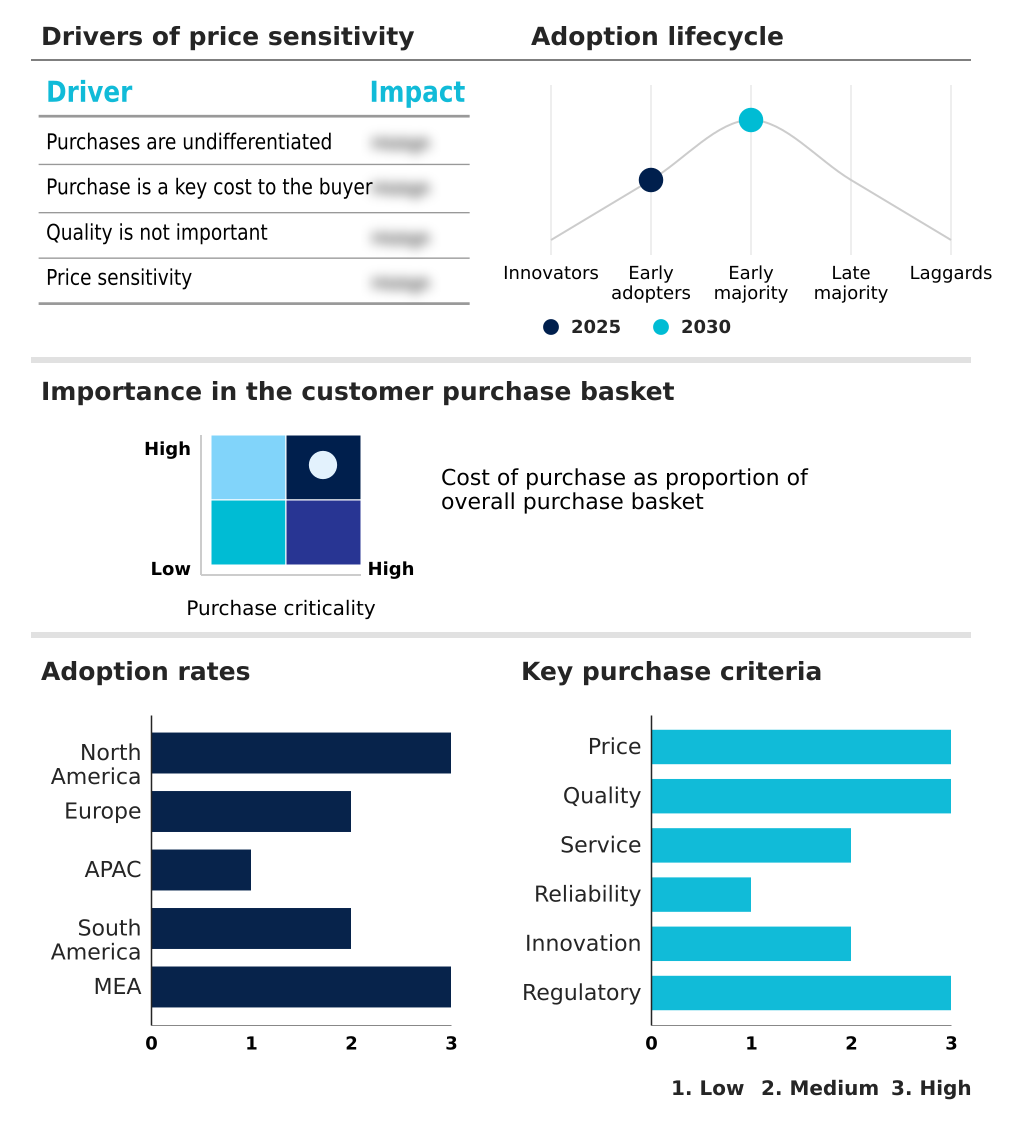
Customer Landscape of Do-It-Yourself (Diy) Home Improvement Retailing Industry
Competitive Landscape
Companies are implementing various strategies, such as strategic alliances, do-it-yourself (diy) home improvement retailing market forecast, partnerships, mergers and acquisitions, geographical expansion, and product/service launches, to enhance their presence in the industry.
Ace Hardware Corp. - The enterprise supplies comprehensive do-it-yourself home improvement retailing, encompassing essential hand and power tools, paint, plumbing fixtures, lawn and garden merchandise, and versatile hardware accessories for residential projects.
The industry research and growth report includes detailed analyses of the competitive landscape of the market and information about key companies, including:
- Ace Hardware Corp.
- Bunnings Group
- Byggmax Group AB
- Clas Ohlson AB
- Do it Best Corp.
- Groupe Adeo
- HORNBACH Holding AG
- JEM and FIX AS
- Kesko Corp.
- Kingfisher Plc
- Lowes Co. Inc.
- Maxeda DIY Group
- Menard Inc.
- Mitre 10 Ltd.
- Mr. Bricolage Group
- OBI GmbH and Co.
- RONA Inc.
- The Home Depot Inc.
- Travis Perkins Plc
- Wickes Building Supplies Ltd.
Qualitative and quantitative analysis of companies has been conducted to help clients understand the wider business environment as well as the strengths and weaknesses of key industry players. Data is qualitatively analyzed to categorize companies as pure play, category-focused, industry-focused, and diversified; it is quantitatively analyzed to categorize companies as dominant, leading, strong, tentative, and weak.
Recent Development and News in Do-it-yourself (diy) home improvement retailing market
- In the Broadline Retail industry, the strategic transition toward automated job-site delivery and high-density automated storage optimized localized fulfillment networks, directly impacting Do-it-yourself (DIY) Home Improvement Retailing demand by reducing bulky material delivery times by 20%.
- Stringent packaging sustainability mandates and circular economy principles compelled retailers to eliminate single-use plastics across inventory supply chains, expanding circular hardware programs and encouraging consumers to adopt reusable materials for structural repair essentials.
- The widespread adoption of artificial intelligence visualization and interactive project tutorials across pure-play digital platforms transformed consumer purchasing behaviors, enhancing project planning accuracy and increasing online conversion rates for complex home upgrades by 18%.
- Persistent global supply chain bottlenecks regarding maritime container shipping forced merchants to implement aggressive inventory optimization initiatives, ensuring consistent localized availability of professional contractor programs and stabilizing pricing for critical building supplies.
Dive into Technavio’s robust research methodology, blending expert interviews, extensive data synthesis, and validated models for unparalleled Do-It-Yourself (Diy) Home Improvement Retailing Market insights. See full methodology.
| Market Scope | |
|---|---|
| Page number | 299 |
| Base year | 2025 |
| Historic period | 2020-2024 |
| Forecast period | 2026-2030 |
| Growth momentum & CAGR | Accelerate at a CAGR of 5.1% |
| Market growth 2026-2030 | USD 254178.1 million |
| Market structure | Fragmented |
| YoY growth 2025-2026(%) | 4.8% |
| Key countries | US, Canada, Mexico, Germany, UK, France, Italy, Spain, The Netherlands, China, Japan, Australia, India, South Korea, Indonesia, Brazil, Argentina, Chile, Saudi Arabia, UAE, South Africa, Turkey and Egypt |
| Competitive landscape | Leading Companies, Market Positioning of Companies, Competitive Strategies, and Industry Risks |
Research Analyst Overview
- The Do-it-yourself (DIY) Home Improvement Retailing remains a dynamic sector continuously adapting to shifting homeowner demographics, technological integration, and environmental sustainability mandates. Corporate boardrooms are actively recalibrating product development and compliance strategies to prioritize sustainable building materials, ensuring alignment with stringent ecological regulations.
- This strategic pivot significantly influences inventory procurement, accelerating the distribution of eco-friendly composite lumber and high-efficiency insulation rolls across vast omnichannel fulfillment networks. By centralizing automated inventory management within regional distribution hubs, leading hardware enterprises have achieved a 20% reduction in order processing times, directly improving localized material availability for both casual consumers and professional tradespeople.
- The rapid incorporation of spatial computing design enables shoppers to virtually plan extensive renovations, substantially minimizing costly material return rates. Furthermore, the rising consumer emphasis on resource conservation has spurred immense demand for residential energy management systems and touchless motion-sensor faucets.
- These structural adaptations demonstrate a profound commitment to optimizing operational efficiency while equipping modern property owners with the precise tools necessary for independent, high-quality residential modernization.
What are the Key Data Covered in this Do-It-Yourself (Diy) Home Improvement Retailing Market Research and Growth Report?
-
What is the expected growth of the Do-It-Yourself (Diy) Home Improvement Retailing Market between 2026 and 2030?
-
USD 254.18 billion, at a CAGR of 5.1%
-
-
What segmentation does the market report cover?
-
The report is segmented by Product (Lumber and landscape management, Tools and hardware, Decor and indoor garden, Kitchen, and Others), Distribution Channel (Offline, and Online), Application (Home improvement, and Crafts) and Geography (North America, Europe, APAC, South America, Middle East and Africa)
-
-
Which regions are analyzed in the report?
-
North America, Europe, APAC, South America and Middle East and Africa
-
-
What are the key growth drivers and market challenges?
-
Aging worldwide housing stocks accelerating essential maintenance and repair spending, Persistent macroeconomic stagnation and subdued residential real estate turnover cycles
-
-
Who are the major players in the Do-It-Yourself (Diy) Home Improvement Retailing Market?
-
Ace Hardware Corp., Bunnings Group, Byggmax Group AB, Clas Ohlson AB, Do it Best Corp., Groupe Adeo, HORNBACH Holding AG, JEM and FIX AS, Kesko Corp., Kingfisher Plc, Lowes Co. Inc., Maxeda DIY Group, Menard Inc., Mitre 10 Ltd., Mr. Bricolage Group, OBI GmbH and Co., RONA Inc., The Home Depot Inc., Travis Perkins Plc and Wickes Building Supplies Ltd.
-
Market Research Insights
- The Do-it-yourself (DIY) Home Improvement Retailing continuously evolves as property owners increasingly prioritize autonomous residential maintenance over professional contracting services. Driven by the need for energy-efficiency retrofits, consumers are adopting smart home technology adoption at unprecedented rates, enhancing household utility management and lowering operational power consumption by 18%.
- To support this behavioral shift, merchants are implementing interactive project tutorials and robust digital marketplace ecosystems, which have successfully improved online customer conversion rates by 22%. Furthermore, the expansion of off-grid home solutions and disaster preparedness supplies enables remote communities to achieve greater self-reliance, reducing external infrastructure dependency by 15%.
- These targeted retail strategies effectively mitigate operational risks and align seamlessly with modern consumer sustainability objectives.
We can help! Our analysts can customize this do-it-yourself (diy) home improvement retailing market research report to meet your requirements.
 RIA -