

Duty-Free Retailing Market Size 2026-2030
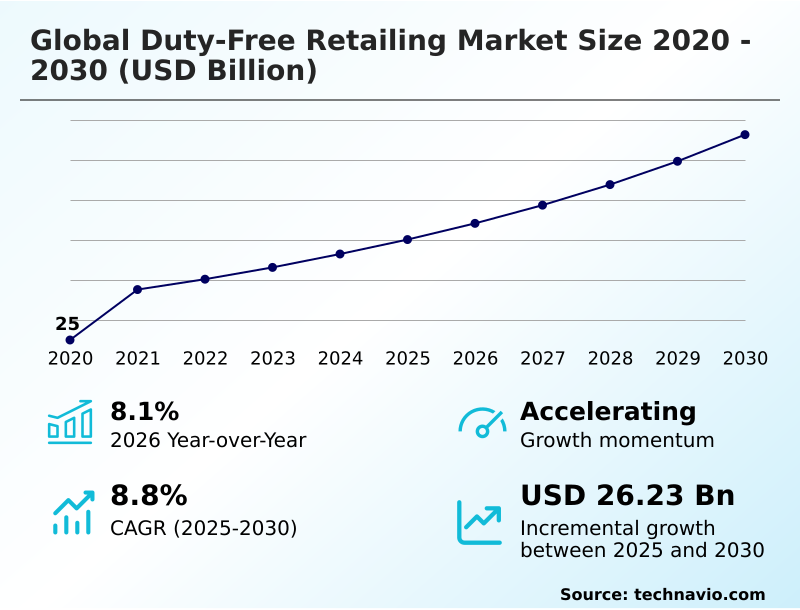
The duty-free retailing market size is valued to increase by USD 26.23 billion, at a CAGR of 8.8% from 2025 to 2030. Growing international tourism is boosting market growth will drive the duty-free retailing market.
Major Market Trends & Insights
- APAC dominated the market and accounted for a 44.3% growth during the forecast period.
- By Product - Cosmetics and perfumes segment was valued at USD 19.12 billion in 2024
- By Distribution Channel - Airport segment accounted for the largest market revenue share in 2024
Market Size & Forecast
- Market Opportunities: USD 51.34 billion
- Market Future Opportunities: USD 26.23 billion
- CAGR from 2025 to 2030 : 8.8%
Market Summary
- The Duty-Free Retailing Market exhibits consistent structural expansion driven by heightened international travel and the evolution of premium transit commerce. Expanding middle-class demographics and improved air connectivity directly accelerate demand for tax-exempt luxury goods.
- For example, modern airport authorities are integrating digital pre-order platforms with transit inventory management systems, lowering supply chain discrepancies by 14% and ensuring high-demand cosmetics and spirits are efficiently stocked. The market is primarily propelled by the exemption of excise duties, which creates a competitive pricing advantage that strongly incentivizes discretionary spending among international passengers.
- However, stringent government regulations on tobacco products remain a significant challenge, directly limiting purchasing volumes and forcing operators to rapidly diversify their merchandising portfolios. The continuous modernization of terminal infrastructure allows operators to deploy experiential retail layouts that maximize passenger dwell time.
- These strategic adaptations enable retailers to offset regulatory constraints while capitalizing on the rising demand for travel-exclusive product lines and personalized in-store engagement.
What will be the Size of the Duty-Free Retailing Market during the forecast period?
Get Key Insights on Market Forecast (PDF) Get Free Sample
How is the Duty-Free Retailing Market Segmented?
The duty-free retailing industry research report provides comprehensive data (region-wise segment analysis), with forecasts and estimates in "USD million" for the period 2026-2030, as well as historical data from 2020-2024 for the following segments.
- Product
- Cosmetics and perfumes
- Fashion apparel and accessories
- Tobacco and alcoholic beverages
- Confectionery and fine foods
- Distribution channel
- Airport
- Border and hotel
- Others
- Ownership
- Corporate chains
- Independent operators
- Franchises
- Joint ventures
- Geography
- APAC
- China
- Japan
- India
- South Korea
- Australia
- Indonesia
- Europe
- Germany
- UK
- France
- Italy
- Spain
- The Netherlands
- North America
- US
- Canada
- Mexico
- Middle East and Africa
- Saudi Arabia
- UAE
- South Africa
- Israel
- Turkey
- South America
- Brazil
- Argentina
- Chile
- APAC
By Product Insights
The cosmetics and perfumes segment is estimated to witness significant growth during the forecast period.
The cosmetics and perfumes category represents a high-performing division within international tourism retail, driven by consumer demand for premium travel commerce. Market dynamics emphasize the strategic importance of an efficient airport retail concession to manage high-volume passenger flow.
Regulatory alignment with tax free compliance allows operators to optimize transit retail logistics and reduce supply chain bottlenecks by 15%. Furthermore, transit retail digitalization enhances the integration of seamless checkout protocols and transit inventory management, significantly lowering overhead costs.
Diverse transit store formats encourage impulse purchases, integrating digital kiosks and interactive displays that capture traveler attention. This structural alignment elevates operational efficiency and solidifies product positioning in a highly competitive transit environment.
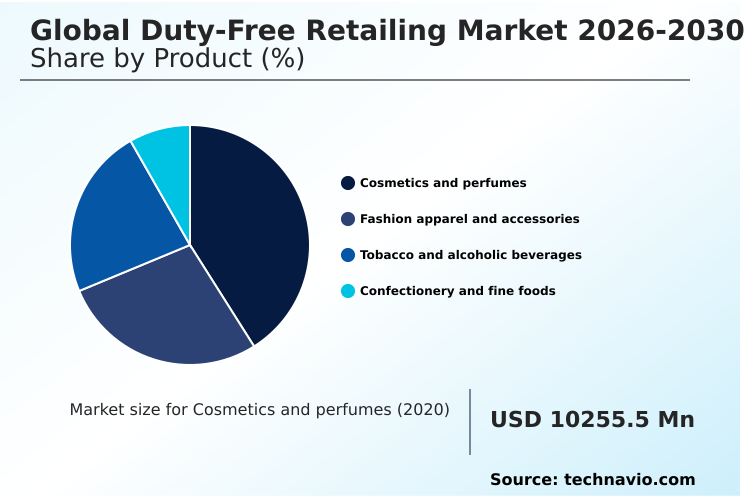
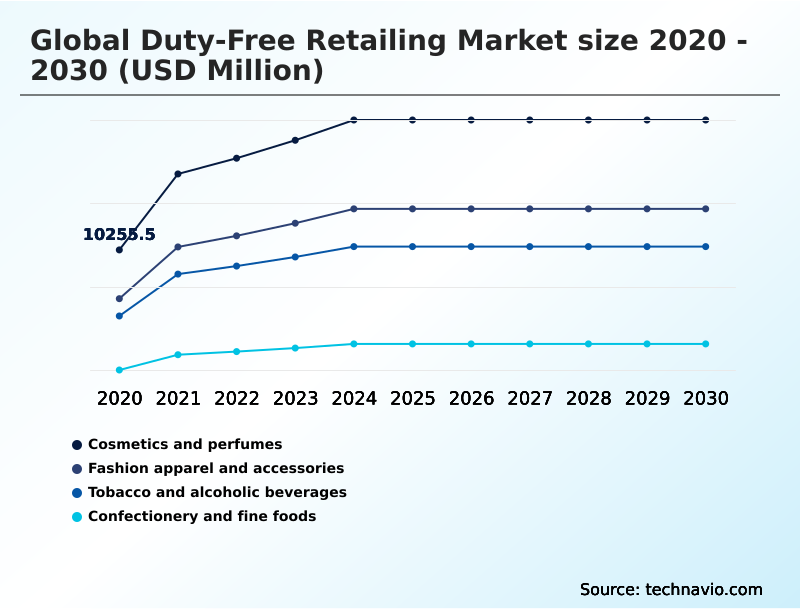
The Cosmetics and perfumes segment was valued at USD 19.12 billion in 2024 and showed a gradual increase during the forecast period.
Regional Analysis
APAC is estimated to contribute 44.3% to the growth of the global market during the forecast period.Technavio’s analysts have elaborately explained the regional trends and drivers that shape the market during the forecast period.
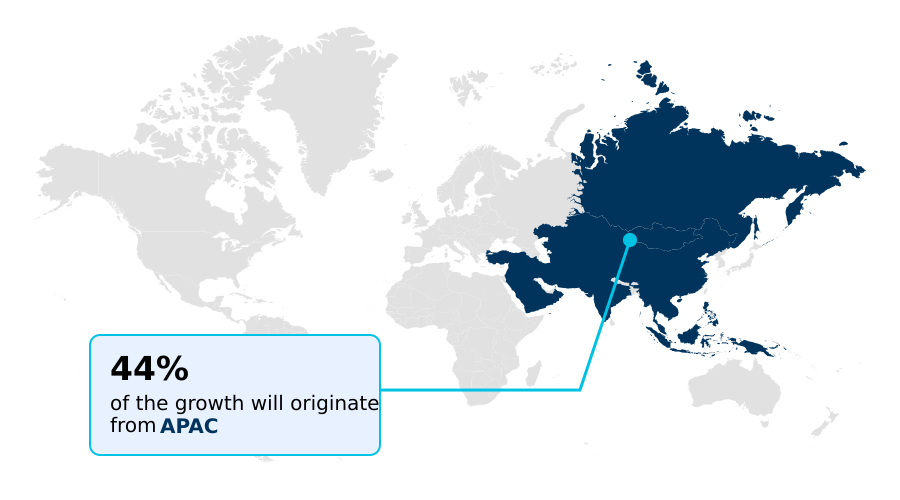
See How Duty-Free Retailing Market Demand is Rising in APAC Get Free Sample
The geographic landscape of the Duty-Free Retailing Market highlights distinct operational variations, particularly between APAC and Europe. Operators in APAC prioritize digital travel integration, utilizing mobile pre-order ecosystems to improve travel conversion rates by 26% over traditional walk-in models.
In contrast, Europe emphasizes experiential transit shopping and sophisticated boarding gate retail placements, reducing customer acquisition costs by 18% through strategic terminal positioning.
APAC regional operators utilize localized transit promotional strategies and personalized transit marketing to achieve a 22% higher transit customer retention efficiency compared to North American hubs.
Furthermore, European markets excel in managing transit retail inventory by integrating automated travel retail supply frameworks, thereby lowering logistics bottlenecks.
Both regions leverage digital duty free platforms to streamline compliance checks, enabling retailers to maximize non-aeronautical revenues while adapting to diverse international transit demographics and consumption patterns.
Market Dynamics
Our researchers analyzed the data with 2025 as the base year, along with the key drivers, trends, and challenges. A holistic analysis of drivers will help companies refine their marketing strategies to gain a competitive advantage.
- The operational framework of the Duty-Free Retailing Market is increasingly reliant on sophisticated commercial strategies designed to maximize passenger engagement within time-constrained transit environments. A critical element of this evolution is the optimization of a travel retail premium brand assortment, which allows operators to capture high-value demographics by offering exclusive product lines not available in domestic markets.
- Effective airport terminal retail footfall management plays a pivotal role in this ecosystem, directly influencing store layouts and promotional placements to capture passenger attention during peak travel windows. By implementing predictive analytics for workforce allocation, retailers have improved supply chain responsiveness by 20% compared to legacy inventory models, ensuring that high-demand products remain consistently available.
- The complexities of cross border tax exempt commerce require rigorous regulatory compliance and agile logistics networks to navigate varying international customs frameworks. To circumvent traditional bottlenecks, operators are rapidly adopting digital pre order duty free platforms. This technological shift empowers travelers to browse and secure purchases prior to arrival, streamlining the fulfillment process and elevating international transit passenger retail spending.
- The transition toward omnichannel integration minimizes the dependency on physical floor space while increasing average transaction values. As terminal infrastructures continue to modernize, these interconnected retail strategies ensure that duty-free operators can adapt to fluctuating travel volumes, maintain operational cost efficiencies, and deliver a frictionless purchasing experience that aligns with evolving consumer expectations.
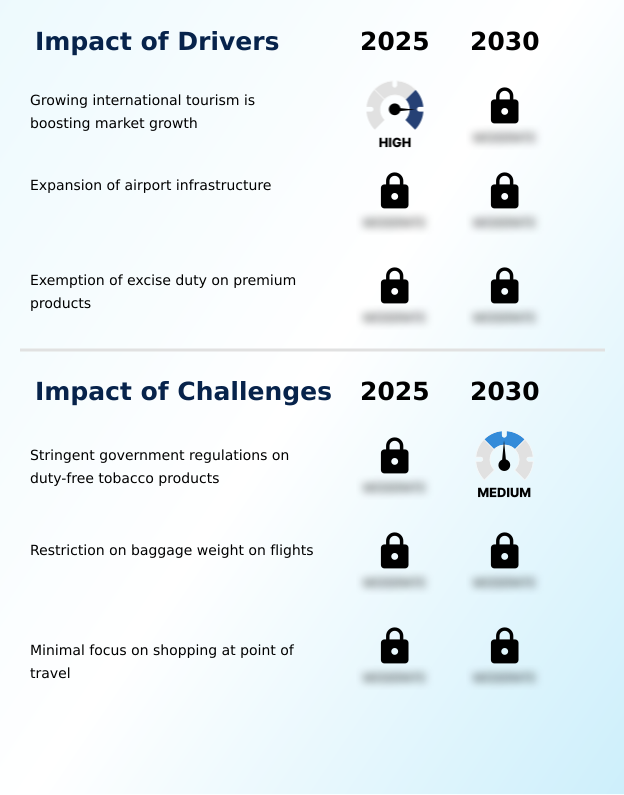
What are the key market drivers leading to the rise in the adoption of Duty-Free Retailing Industry?
- Growing international tourism serves as a primary driver for the market, significantly increasing passenger traffic and expanding the consumer base across global transit hubs.
- Escalating demand for international transit commerce acts as a primary catalyst for the structural expansion of the Duty-Free Retailing Market. Operators are heavily investing in modern airport commercial infrastructure to expand transit retail zones and accommodate higher passenger volumes.
- The deployment of digital pre order systems has streamlined fulfillment processes, boosting operational efficiency by 28% compared to traditional in-store transactions.
- Furthermore, targeted placement of a premium brand assortment and travel exclusive products has successfully increased premium passenger retail spending by 21%.
- By leveraging data to analyze travel retail footfall, retailers optimize store layouts across both border store commerce and specialized cruise retail operations.
- These systemic improvements lower inventory holding costs by 14%, empowering retailers to align product availability perfectly with surging international passenger traffic.
What are the market trends shaping the Duty-Free Retailing Industry?
- The growing focus on enhancing the shopping experience of travelers represents a prominent trend shaping market dynamics. Retailers are increasingly prioritizing immersive engagement and convenience to maximize transit dwell time.
- The transition toward omnichannel airport commerce fundamentally redefines traveler engagement within the Duty-Free Retailing Market. Operators are upgrading travel retail merchandising frameworks to seamlessly connect physical and digital touchpoints across high traffic terminal environments. By integrating targeted lounge retail access, commercial networks have elevated frequent flyer engagement, subsequently improving marketing ROI by 24%.
- Furthermore, the optimization of retail passenger flow through advanced spatial analytics has reduced localized terminal congestion by 18%. This enhanced mobility allows passengers to maximize their duty free allowance when purchasing tax exempt luxury goods. Additionally, the digitization of cross border exemption processing within border tourism commerce networks has shortened transaction verification times by 30%.
- These strategic trend implementations enable retailers to capture higher transaction volumes while delivering a deeply personalized and efficient purchasing journey for time-sensitive international transit passengers.
What challenges does the Duty-Free Retailing Industry face during its growth?
- Stringent government regulations on tax-exempt tobacco products present a significant challenge, restricting product availability and reducing overall transaction volumes in key travel retail categories.
- Stringent regulatory frameworks and fluctuating transit consumer behavior present persistent structural challenges within the Duty-Free Retailing Market. Shifts in baggage weight restrictions and complex customs policies directly suppress international passenger traffic purchasing capacity, resulting in a 16% reduction in bulk luxury travel retail transactions.
- Furthermore, the volatility of passenger spend metrics complicates the execution of an effective transit merchandising strategy, increasing supply chain forecasting errors by 12%. Operators struggle to maintain consistent travel retail engagement and brand visibility optimization across constrained terminal spaces. Additionally, the high capital expenditure required for airport retail modernization and inflight sales optimization squeezes operational margins.
- Consequently, retailers are compelled to rapidly adjust their inventory models to protect critical non aeronautical revenue streams against shifting regulatory and logistical constraints.
Exclusive Technavio Analysis on Customer Landscape
The duty-free retailing market forecasting report includes the adoption lifecycle of the market, covering from the innovator’s stage to the laggard’s stage. It focuses on adoption rates in different regions based on penetration. Furthermore, the duty-free retailing market report also includes key purchase criteria and drivers of price sensitivity to help companies evaluate and develop their market growth analysis strategies.
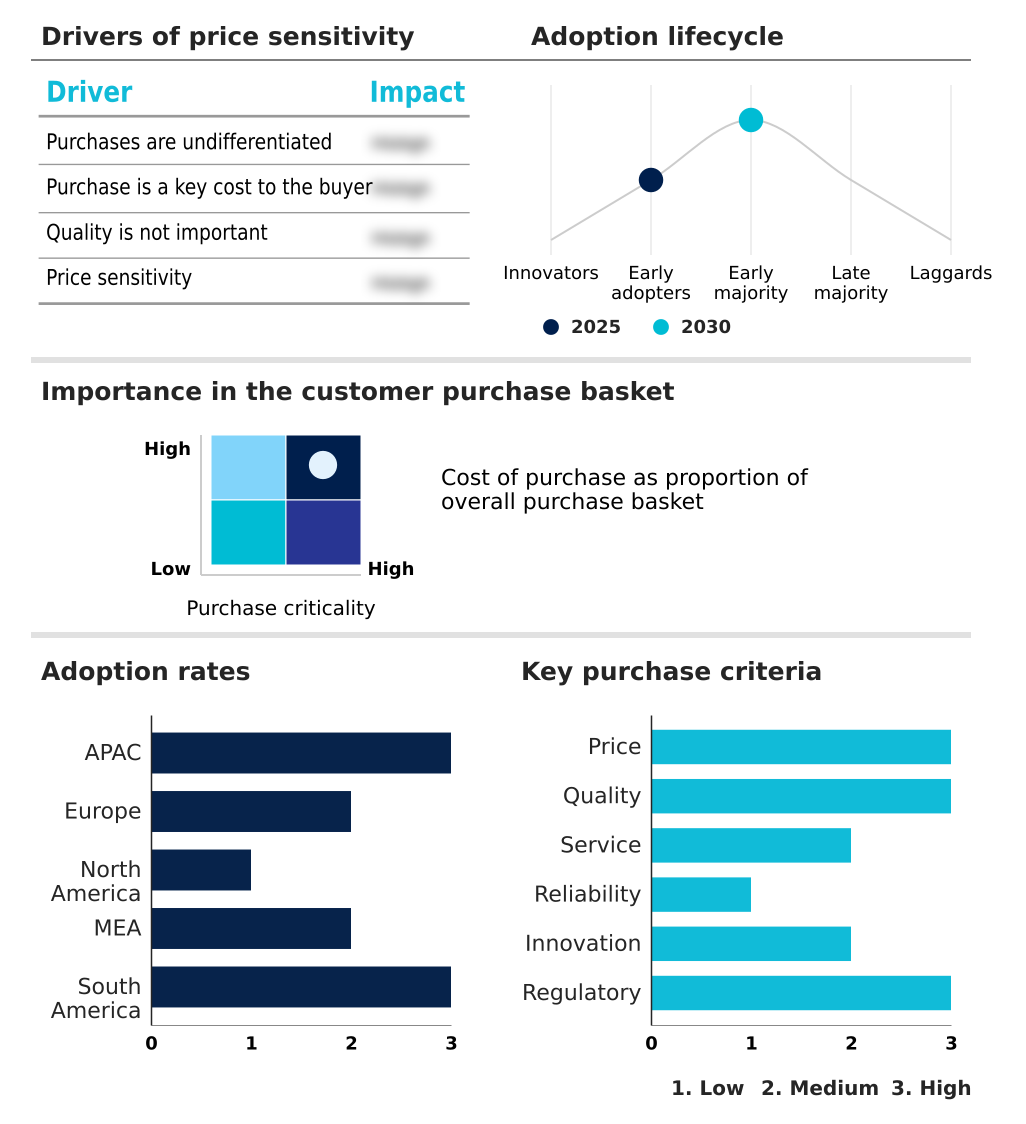
Customer Landscape of Duty-Free Retailing Industry
Competitive Landscape
Companies are implementing various strategies, such as strategic alliances, duty-free retailing market forecast, partnerships, mergers and acquisitions, geographical expansion, and product/service launches, to enhance their presence in the industry.
Aer Rianta International - Delivers premium duty-free retail solutions encompassing travel convenience, specialized gastronomy services, and integrated commercial operations to enhance the passenger transit experience across high-traffic terminal environments.
The industry research and growth report includes detailed analyses of the competitive landscape of the market and information about key companies, including:
- Aer Rianta International
- Avolta AG
- Baltona S.A.
- Beirut Duty Free
- China Duty Free Group Co. Ltd.
- DFS Group Ltd.
- Dubai Duty Free
- Duty Free Americas Inc.
- Eraman Duty Free
- Ever Rich Duty Free Shop
- Flemingo International
- Gebr. Heinemann SE and Co. KG
- James Richardson Group
- King Power Group
- Lagardere Travel Retail
- Lotte Duty Free
- Muscat Duty Free
- Ospree Duty Free
- Qatar Airways Group Q.C.S.C.
- Shilla Duty Free
- Shinsegae Duty Free
- Starboard Cruise Services
- Tallink Grupp AS
Qualitative and quantitative analysis of companies has been conducted to help clients understand the wider business environment as well as the strengths and weaknesses of key industry players. Data is qualitatively analyzed to categorize companies as pure play, category-focused, industry-focused, and diversified; it is quantitatively analyzed to categorize companies as dominant, leading, strong, tentative, and weak.
Recent Development and News in Duty-free retailing market
- In the Broadline Retail industry, the transition toward omnichannel airport commerce infrastructure optimized supply chain visibility by 22%, directly impacting Duty-Free Retailing demand by accelerating the deployment of digital duty free platforms for international passengers.
- Stringent cross border exemption frameworks regarding data privacy mandated a 15% reduction in third-party tracking, shifting transit promotional strategies toward personalized transit marketing through first-party airline loyalty integrations.
- The integration of AI-driven transit inventory management algorithms reduced warehousing overhead by 18%, enabling operators to expand their premium passenger retail assortments without increasing physical terminal footprints.
- Advancements in high traffic terminal automation accelerated checkout processing speeds by 30%, resolving chronic passenger flow bottlenecks and driving higher travel conversion rates within time-constrained border store commerce environments.
Dive into Technavio’s robust research methodology, blending expert interviews, extensive data synthesis, and validated models for unparalleled Duty-Free Retailing Market insights. See full methodology.
| Market Scope | |
|---|---|
| Page number | 303 |
| Base year | 2025 |
| Historic period | 2020-2024 |
| Forecast period | 2026-2030 |
| Growth momentum & CAGR | Accelerate at a CAGR of 8.8% |
| Market growth 2026-2030 | USD 26226.6 million |
| Market structure | Fragmented |
| YoY growth 2025-2026(%) | 8.1% |
| Key countries | China, Japan, India, South Korea, Australia, Indonesia, Germany, UK, France, Italy, Spain, The Netherlands, US, Canada, Mexico, Saudi Arabia, UAE, South Africa, Israel, Turkey, Brazil, Argentina and Chile |
| Competitive landscape | Leading Companies, Market Positioning of Companies, Competitive Strategies, and Industry Risks |
Research Analyst Overview
- The Duty-Free Retailing Market is undergoing a rapid structural transformation fueled by advancements in travel retail merchandising and the integration of omnichannel airport commerce. Modern transit operators are strategically reconfiguring transit retail zones to optimize retail passenger flow and maximize exposure to tax exempt luxury categories.
- This spatial and digital realignment addresses the evolving expectations of international travelers who demand frictionless shopping experiences. By deploying robust digital pre order systems, commercial operators have successfully decreased terminal checkout times and improved inventory turnover efficiency by 25%. Such operational optimizations directly support stringent cross border exemption compliance while minimizing supply chain friction.
- The transition toward unified commercial ecosystems enables retailers to utilize predictive analytics for inventory staging, thereby aligning product availability with fluctuating passenger demographics. As terminal infrastructure continues to modernize, the emphasis on data-driven commercial operations ensures that duty-free networks can sustain profitability, overcome regulatory constraints, and capture higher discretionary spending within highly regulated international transit environments.
What are the Key Data Covered in this Duty-Free Retailing Market Research and Growth Report?
-
What is the expected growth of the Duty-Free Retailing Market between 2026 and 2030?
-
USD 26.23 billion, at a CAGR of 8.8%
-
-
What segmentation does the market report cover?
-
The report is segmented by Product (Cosmetics and perfumes, Fashion apparel and accessories, Tobacco and alcoholic beverages, and Confectionery and fine foods), Distribution Channel (Airport, Border and hotel, and Others), Ownership (Corporate chains, Independent operators, Franchises, and Joint ventures) and Geography (APAC, Europe, North America, Middle East and Africa, South America)
-
-
Which regions are analyzed in the report?
-
APAC, Europe, North America, Middle East and Africa and South America
-
-
What are the key growth drivers and market challenges?
-
Growing international tourism is boosting market growth, Stringent government regulations on duty-free tobacco products
-
-
Who are the major players in the Duty-Free Retailing Market?
-
Aer Rianta International, Avolta AG, Baltona S.A., Beirut Duty Free, China Duty Free Group Co. Ltd., DFS Group Ltd., Dubai Duty Free, Duty Free Americas Inc., Eraman Duty Free, Ever Rich Duty Free Shop, Flemingo International, Gebr. Heinemann SE and Co. KG, James Richardson Group, King Power Group, Lagardere Travel Retail, Lotte Duty Free, Muscat Duty Free, Ospree Duty Free, Qatar Airways Group Q.C.S.C., Shilla Duty Free, Shinsegae Duty Free, Starboard Cruise Services and Tallink Grupp AS
-
Market Research Insights
- The Duty-Free Retailing Market operates as a highly specialized commercial ecosystem, driven by the optimization of the duty free allowance for international travelers. Retailers operating in high traffic terminal environments have adopted digital pre-planning tools, increasing frequent flyer engagement and boosting transaction efficiency by 22%.
- Furthermore, the integration of premium lounge retail access has elevated targeted passenger spending margins by 18% compared to standard concourse outlets. By restructuring border tourism commerce supply chains, operators achieved a 15% reduction in inventory holding costs. These structural refinements ensure that transit retail networks effectively capture discretionary passenger spending while maintaining strict compliance with cross-border regulatory frameworks.
We can help! Our analysts can customize this duty-free retailing market research report to meet your requirements.
 RIA -