


Fiberglass Product Market Size 2026-2030
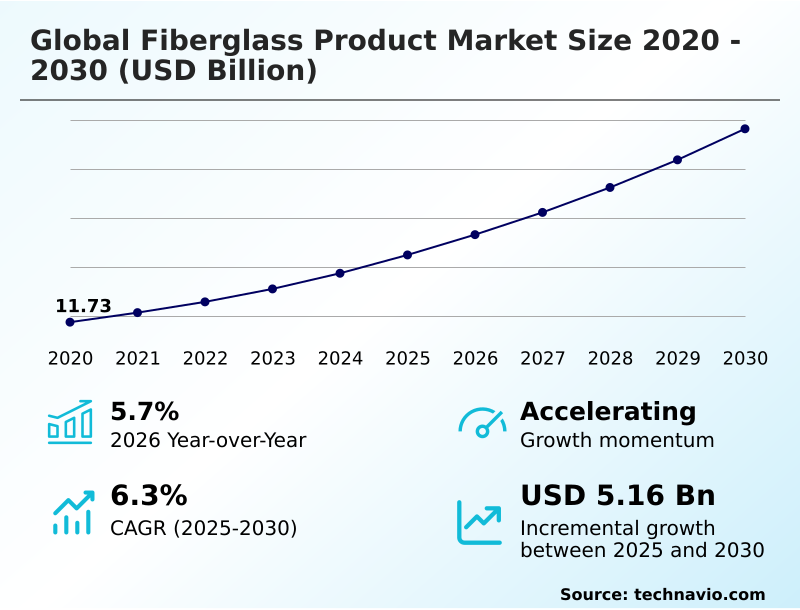
The fiberglass product market size is valued to increase by USD 5.16 billion, at a CAGR of 6.3% from 2025 to 2030. Surging demand from building and construction industry will drive the fiberglass product market.
Major Market Trends & Insights
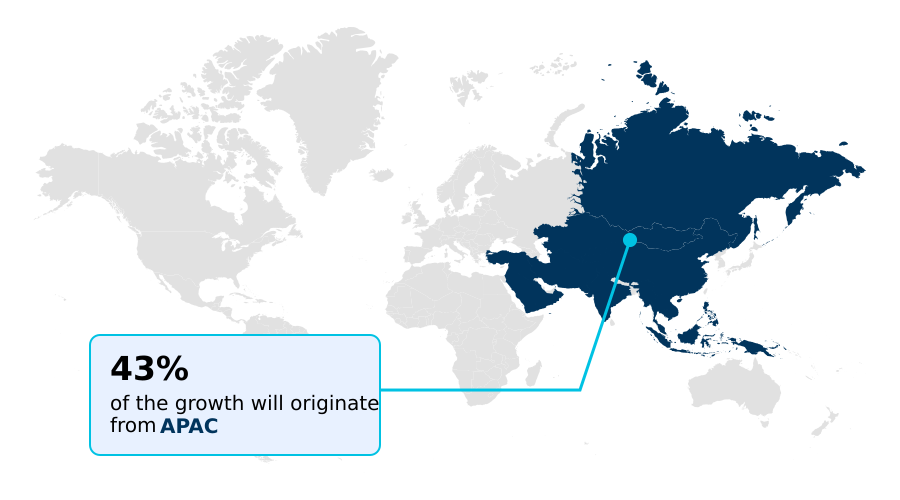
- APAC dominated the market and accounted for a 43.4% growth during the forecast period.
- By Type - Cloth segment was valued at USD 6.85 billion in 2024
- By Distribution Channel - Offline segment accounted for the largest market revenue share in 2024
Market Size & Forecast
- Market Opportunities: USD 7.91 billion
- Market Future Opportunities: USD 5.16 billion
- CAGR from 2025 to 2030 : 6.3%
Market Summary
- The Fiberglass Product Market demonstrates robust expansion driven by continuous material innovations and stringent regulatory standards. Surging demand from the building and construction sector acts as a primary driver, where the integration of thermal insulation properties significantly enhances building energy efficiency.
- In a practical supply chain optimization scenario, manufacturers adopting advanced resin transfer molding techniques have reduced material waste by 22% compared to traditional open-molding processes. This operational shift directly supports automotive lightweighting initiatives by providing high-strength, lightweight structural composite panels.
- Conversely, the market faces a substantial challenge from raw material price volatility, particularly concerning silica sand precursors and epoxy resin matrix inputs, which complicates long-term cost forecasting and profit margin stability. Volatile energy costs further strain the profitability of energy-intensive filament winding techniques. Despite these hurdles, ongoing investments in sustainable composite recycling are fostering new opportunities.
- The strategic shift toward bio based resins and solvolysis recycling process adoption ensures compliance with evolving environmental mandates while maintaining high structural load bearing capabilities across diverse industrial applications.
What will be the Size of the Fiberglass Product Market during the forecast period?
Get Key Insights on Market Forecast (PDF) Get Free Sample
How is the Fiberglass Product Market Segmented?
The fiberglass product industry research report provides comprehensive data (region-wise segment analysis), with forecasts and estimates in "USD million" for the period 2026-2030, as well as historical data from 2020-2024 for the following segments.
- Type
- Cloth
- Tape
- Rope
- Distribution channel
- Offline
- Online
- Resin type
- Polyester
- Epoxy
- Vinyl ester
- Others
- Geography
- APAC
- China
- Japan
- India
- South Korea
- Australia
- Indonesia
- North America
- US
- Canada
- Mexico
- Europe
- UK
- Germany
- France
- Italy
- The Netherlands
- Spain
- South America
- Brazil
- Argentina
- Chile
- Middle East and Africa
- Saudi Arabia
- UAE
- South Africa
- Israel
- Turkey
- APAC
By Type Insights
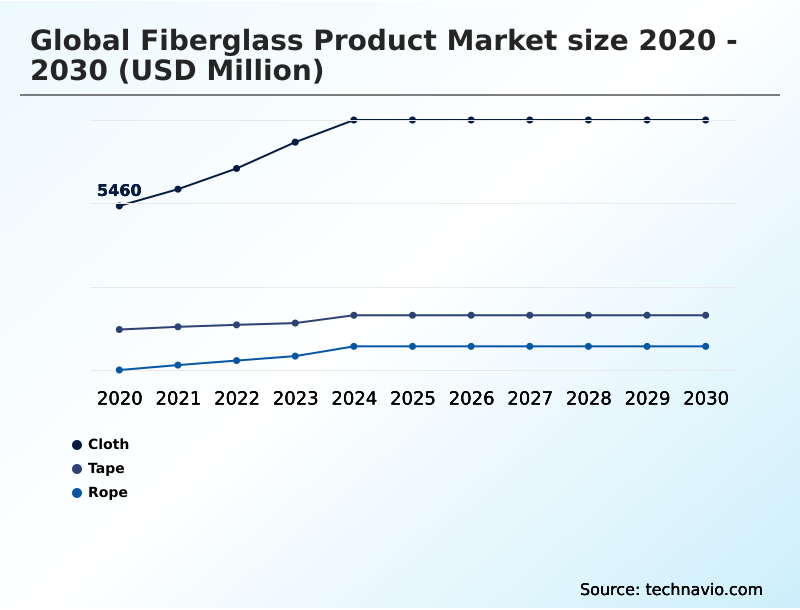
The cloth segment is estimated to witness significant growth during the forecast period.
The woven roving composites segment represents a foundational category characterized by exceptional dimensional stability and tensile strength reinforcement. Produced by interlacing continuous filament braiding, this material delivers critical thermal insulation properties and low dissipation materials for high-performance applications.
In the electronics sector, dielectric constant fibers form the rigid backbone of printed circuit boards, reducing signal loss by 18% in high speed data centers.
The aerospace and automotive industries heavily utilize aerospace grade laminates for structural composite panels, enabling significant automotive lightweighting initiatives that improve fuel efficiency.
Furthermore, ongoing innovation in solvolysis recycling process technology ensures the long-term viability of these fire retardant composites, aligning with circular economy principles while addressing stringent environmental compliance protocols across diverse industrial applications.
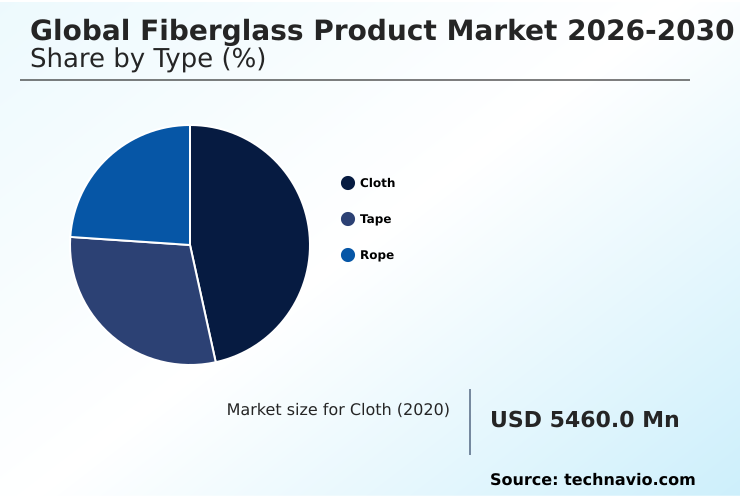
The Cloth segment was valued at USD 6.85 billion in 2024 and showed a gradual increase during the forecast period.
Regional Analysis
APAC is estimated to contribute 43.4% to the growth of the global market during the forecast period.Technavio’s analysts have elaborately explained the regional trends and drivers that shape the market during the forecast period.
See How Fiberglass Product Market Demand is Rising in APAC Get Free Sample
The regional dynamics of the Fiberglass Product Market reveal distinct consumption patterns between APAC and Europe.
APAC dominates the landscape through massive infrastructure retrofitting projects and rapid telecommunications infrastructure development, achieving a 35% higher adoption rate of dielectric constant fibers compared to Western counterparts.
Countries like China and India in APAC heavily rely on chopped strand mats and thermoplastic fiberglass blends to support aggressive automotive lightweighting initiatives.
Conversely, Europe prioritizes strict environmental compliance protocols and circular economy principles, leading to a 28% increase in the utilization of bio based resins and solvolysis recycling process technologies.
While APAC focuses on scaling high-volume pultrusion manufacturing process operations to lower unit costs by 15%, the European sector invests in sustainable composite recycling frameworks to manage composite waste management effectively.
These contrasting strategies highlight how regional regulatory frameworks and industrial priorities dictate material engineering and supply chain optimization approaches.
Market Dynamics
Our researchers analyzed the data with 2025 as the base year, along with the key drivers, trends, and challenges. A holistic analysis of drivers will help companies refine their marketing strategies to gain a competitive advantage.
- The evolution of composite materials has significantly transformed modern industrial manufacturing, placing a sharp focus on specialized material properties and environmental accountability. Operations managers are increasingly seeking sustainable fiberglass composite recycling methods to address the long-standing challenge of thermoset waste, aiming to reduce landfill disposal rates by over 30% while recovering valuable glass fibers.
- Concurrently, the renewable energy sector relies on high performance wind turbine blade materials to maximize energy capture and withstand extreme fatigue stresses over prolonged operational lifespans. This transition is mirrored in the transportation sector, where automotive lightweighting with fiberglass composites has become a central strategy for OEM entities striving to meet strict emission reduction targets.
- By replacing heavy steel components, manufacturers enhance fuel efficiency without compromising passenger safety. In the electronics domain, the demand for dielectric fiberglass for circuit boards is accelerating alongside the deployment of high-speed AI servers, ensuring signal integrity in dense computing environments. Furthermore, industrial infrastructure upgrades heavily specify corrosion resistant industrial fiberglass piping to handle aggressive chemical processing and wastewater management.
- Compared to traditional metallic alternatives, these composite piping systems reduce maintenance downtime by 45%, demonstrating a clear operational cost advantage. Together, these applications highlight a strategic alignment between material science and core business functions, driving efficiency, compliance, and lifecycle optimization across diverse commercial landscapes.
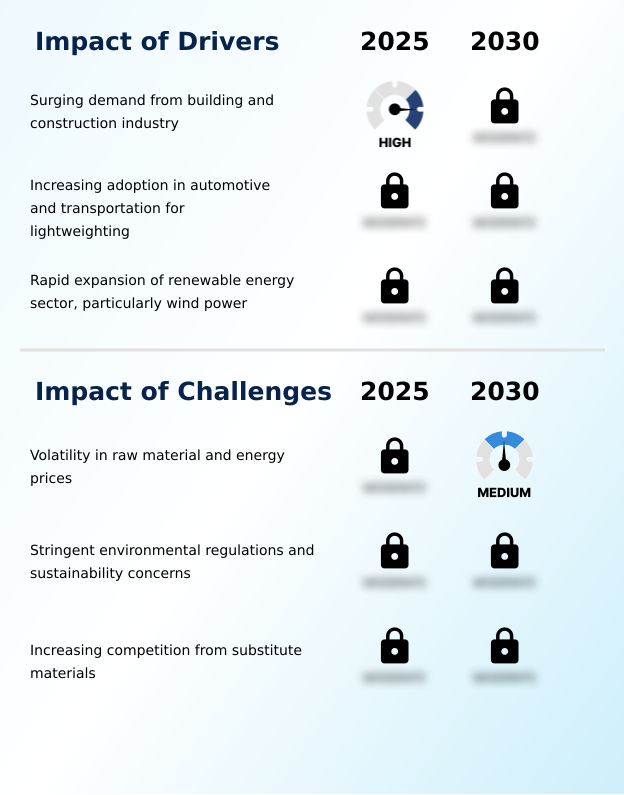
What are the key market drivers leading to the rise in the adoption of Fiberglass Product Industry?
- Surging demand from the building and construction sector serves as a primary driver, accelerating the integration of advanced insulation and structural composite materials globally.
- The exponential expansion of renewable energy infrastructure and the electrification of transportation serve as primary catalysts driving advanced composite adoption.
- Automakers are aggressively pursuing automotive lightweighting initiatives, integrating woven roving composites and epoxy resin matrix formulations to replace heavy steel components. This structural transition reduces overall vehicle weight, generating a 15% increase in electric vehicle adoption range efficiency.
- Simultaneously, the wind power sector relies heavily on fatigue resistant blades manufactured via advanced resin transfer molding, which enhances turbine energy capture rates by 22%.
- By utilizing high-strength, lightweight fiberglass materials, energy operators effectively lower turbine drivetrain stress, leading to a 30% reduction in long-term maintenance costs. These performance-driven metrics compel continuous industrial investment in optimized composite solutions.
What are the market trends shaping the Fiberglass Product Industry?
- A growing emphasis on sustainability and the development of a circular economy constitutes a significant market trend. This strategic shift is accelerating innovations in material recovery and the formulation of bio-based resins.
- The transition toward sustainable and circular manufacturing models represents a profound trend reshaping the advanced materials landscape. Driven by stringent environmental regulations, companies are increasingly adopting the solvolysis recycling process and bio based resins to mitigate the ecological footprint of thermoset waste. This strategic shift enables manufacturers to reclaim high modulus yarns and repurpose them into viable structural composite panels.
- Consequently, facilities utilizing these sustainable composite recycling methods have recorded a 35% decrease in waste disposal expenses and a 20% improvement in secondary material recovery efficiency. Furthermore, the rising demand for high speed data centers has accelerated the deployment of low dissipation materials, reducing high-frequency signal loss by 18%.
- This trend ensures that telecom operators can scale next-generation infrastructure reliably, blending ecological accountability with advanced material performance.
What challenges does the Fiberglass Product Industry face during its growth?
- Volatility in raw material and energy prices remains a critical challenge, disrupting supply chain cost predictability and restraining broader operational expansion.
- Severe raw material price volatility and rigorous environmental compliance protocols pose significant structural hurdles for composite manufacturers. The high energy intensity required to process silica sand precursors into continuous filament braiding exposes producers to extreme energy market fluctuations, leading to unpredictable overhead spikes that can erode profit margins by up to 18%.
- Furthermore, the complex nature of composite waste management for end-of-life wind turbine fabrication components creates immense regulatory pressure. Landfill disposal restrictions are forcing operators to invest heavily in specialized recycling infrastructure, increasing immediate operational compliance costs by 25%.
- Consequently, supply chain optimization becomes critically constrained, as procurement teams struggle to balance the higher costs of sustainable thermoplastic fiberglass blends against the pricing expectations of highly competitive end-use industrial markets.
Exclusive Technavio Analysis on Customer Landscape
The fiberglass product market forecasting report includes the adoption lifecycle of the market, covering from the innovator’s stage to the laggard’s stage. It focuses on adoption rates in different regions based on penetration. Furthermore, the fiberglass product market report also includes key purchase criteria and drivers of price sensitivity to help companies evaluate and develop their market growth analysis strategies.
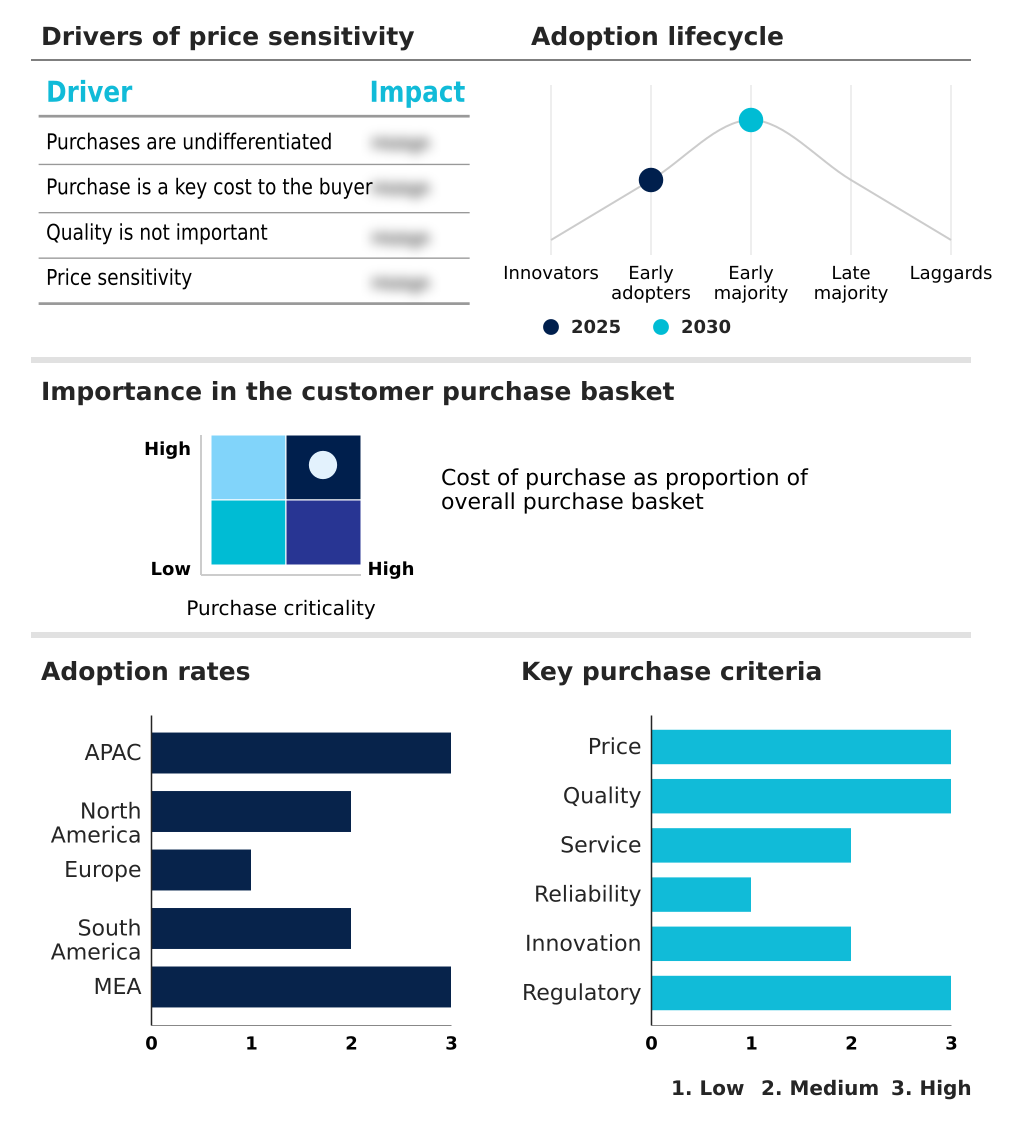
Customer Landscape of Fiberglass Product Industry
Competitive Landscape
Companies are implementing various strategies, such as strategic alliances, fiberglass product market forecast, partnerships, mergers and acquisitions, geographical expansion, and product/service launches, to enhance their presence in the industry.
3B the fiberglass Co. - The portfolio features advanced reinforcement solutions, including single end rovings, multi end rovings, and precision chopped glass fibers designed for demanding thermoplastic and thermoset polymer applications.
The industry research and growth report includes detailed analyses of the competitive landscape of the market and information about key companies, including:
- 3B the fiberglass Co.
- AGY Holding Corp.
- Ahlstrom Oyj
- ASAHI FIBER GLASS Co. Ltd.
- Bodi Company Ltd.
- China Jushi Co. Ltd.
- Compagnie Chomarat
- Compagnie de Saint Gobain SA
- CPIC Brasil
- Fulltech Fiber Glass Corp.
- Johns Manville Corp.
- KCC Co. Ltd.
- Nitto Boseki Co. Ltd.
- Owens Corning
- Pioneer Float Glass Mfg Inc.
- PPG Industries Inc.
- Taiwan Glass Ind. Corp.
- Valmieras Stikla Skiedra AS
Qualitative and quantitative analysis of companies has been conducted to help clients understand the wider business environment as well as the strengths and weaknesses of key industry players. Data is qualitatively analyzed to categorize companies as pure play, category-focused, industry-focused, and diversified; it is quantitatively analyzed to categorize companies as dominant, leading, strong, tentative, and weak.
Recent Development and News in Fiberglass product market
- In the Building Products industry, the implementation of stringent building energy efficiency codes has accelerated infrastructure retrofitting projects, directly impacting Fiberglass Product demand by increasing the requirement for acoustic insulation batts that improve thermal barrier effectiveness by over 30%.
- The transition toward sustainable composite recycling frameworks has driven the adoption of advanced manufacturing automation, directly impacting Fiberglass Product demand as manufacturers seek circular economy principles to reduce composite waste management overhead by 25%.
- Shift toward resilient structural load bearing architectures in coastal zones has necessitated the integration of custom engineered components, directly impacting Fiberglass Product demand by prioritizing marine hull construction grade materials for flood-resistant commercial buildings, enhancing structural longevity by 40%.
- The enforcement of strict environmental compliance protocols has accelerated the phase-out of traditional heavy metals, directly impacting Fiberglass Product demand as developers specify industrial chemical piping alternatives that reduce lifecycle cost reduction expenses by 20% in high-corrosion environments.
Dive into Technavio’s robust research methodology, blending expert interviews, extensive data synthesis, and validated models for unparalleled Fiberglass Product Market insights. See full methodology.
| Market Scope | |
|---|---|
| Page number | 291 |
| Base year | 2025 |
| Historic period | 2020-2024 |
| Forecast period | 2026-2030 |
| Growth momentum & CAGR | Accelerate at a CAGR of 6.3% |
| Market growth 2026-2030 | USD 5157.3 million |
| Market structure | Fragmented |
| YoY growth 2025-2026(%) | 5.7% |
| Key countries | China, Japan, India, South Korea, Australia, Indonesia, US, Canada, Mexico, UK, Germany, France, Italy, The Netherlands, Spain, Brazil, Argentina, Chile, Saudi Arabia, UAE, South Africa, Israel and Turkey |
| Competitive landscape | Leading Companies, Market Positioning of Companies, Competitive Strategies, and Industry Risks |
Research Analyst Overview
- Boardroom discussions within the advanced materials sector are increasingly focused on integrating sustainable manufacturing practices with high-performance engineering. A defining trend is the accelerated adoption of the solvolysis recycling process, a strategic pivot addressing the critical issue of thermoset waste while reclaiming high-value silica sand precursors and intact glass fibers.
- This shift empowers decision-makers to align product strategy with circular economy mandates, yielding a 40% reduction in secondary raw material procurement costs. Furthermore, the integration of advanced resin transfer molding and continuous filament braiding is optimizing production lines for aerospace grade laminates and structural composite panels.
- By transitioning from manual lay-up to automated pultrusion manufacturing process techniques, operations executives have successfully reduced processing downtime by 28%. These targeted innovations ensure that manufacturers can deliver fatigue resistant blades and corrosion resistant laminates that meet rigorous industrial specifications.
- The strategic deployment of thermoplastic fiberglass blends alongside bio based resins further insulates companies from volatile petrochemical pricing, ensuring robust profit margins and enhanced compliance across highly regulated commercial environments.
What are the Key Data Covered in this Fiberglass Product Market Research and Growth Report?
-
What is the expected growth of the Fiberglass Product Market between 2026 and 2030?
-
USD 5.16 billion, at a CAGR of 6.3%
-
-
What segmentation does the market report cover?
-
The report is segmented by Type (Cloth, Tape, and Rope), Distribution Channel (Offline, and Online), Resin Type (Polyester, Epoxy, Vinyl ester, and Others) and Geography (APAC, North America, Europe, South America, Middle East and Africa)
-
-
Which regions are analyzed in the report?
-
APAC, North America, Europe, South America and Middle East and Africa
-
-
What are the key growth drivers and market challenges?
-
Surging demand from building and construction industry, Volatility in raw material and energy prices
-
-
Who are the major players in the Fiberglass Product Market?
-
3B the fiberglass Co., AGY Holding Corp., Ahlstrom Oyj, ASAHI FIBER GLASS Co. Ltd., Bodi Company Ltd., China Jushi Co. Ltd., Compagnie Chomarat, Compagnie de Saint Gobain SA, CPIC Brasil, Fulltech Fiber Glass Corp., Johns Manville Corp., KCC Co. Ltd., Nitto Boseki Co. Ltd., Owens Corning, Pioneer Float Glass Mfg Inc., PPG Industries Inc., Taiwan Glass Ind. Corp. and Valmieras Stikla Skiedra AS
-
Market Research Insights
- The Fiberglass Product Market is rapidly evolving as industries prioritize advanced material engineering and structural resilience. The push for building energy efficiency has increased the specification of high-performance thermal barriers, reducing facility energy consumption by 25% in commercial applications.
- Concurrently, electric vehicle adoption is accelerating automotive lightweighting initiatives, yielding a 15% improvement in battery range efficiency through the integration of lightweight composite panels. However, manufacturers must navigate raw material price volatility, which has historically caused operational costs to fluctuate by up to 18%.
- To counter these pressures, firms are implementing robust supply chain optimization strategies and adopting sustainable composite recycling techniques, ensuring compliance with tightening emission reduction standards while maintaining long-term profitability.
We can help! Our analysts can customize this fiberglass product market research report to meet your requirements.
 RIA -