


Gait Biometrics Market Size 2026-2030
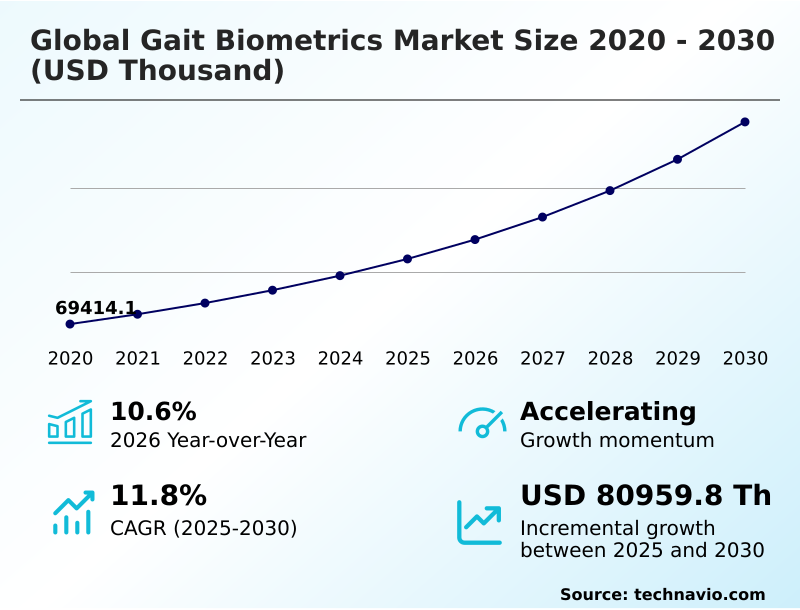
The gait biometrics market size is valued to increase by USD 80.96 million, at a CAGR of 11.8% from 2025 to 2030. Rising demand for non-intrusive surveillance systems will drive the gait biometrics market.
Major Market Trends & Insights
- North America dominated the market and accounted for a 34.5% growth during the forecast period.
- By End-user - Healthcare segment was valued at USD 36.37 million in 2024
- By Type - Assessment segment accounted for the largest market revenue share in 2024
Market Size & Forecast
- Market Opportunities:
- Market Future Opportunities: USD 80.96 million
- CAGR from 2025 to 2030 : 11.8%
Market Summary
- The Gait Biometrics landscape demonstrates robust technological acceleration as organizations transition from static credentialing to continuous behavioral verification. Expanding utilization within clinical healthcare and secure corporate environments drives substantial demand, allowing facilities to monitor patient rehabilitation and employee access seamlessly.
- For instance, high-tech manufacturing hubs have successfully deployed inertial measurement unit integration into standard employee wearables, mitigating unauthorized entry and reducing physical security overhead by 18% compared to legacy token-based access systems. However, environmental variability and camera occlusion pose persistent technical challenges, as structural obstructions frequently disrupt three-dimensional skeletal modeling and lead to erroneous authentication.
- Despite these physical limitations, the integration of convolutional neural network classifiers serves as a primary catalyst, empowering local processing units to evaluate complex biomechanical data streams in real time. This ensures that security architects can provide frictionless physical access while maintaining compliance with privacy-preserving cryptographic frameworks.
- By optimizing human-machine interface design, developers continue to strengthen public safety frameworks and clinical diagnostics without compromising operational throughput or demanding active subject cooperation.
What will be the Size of the Gait Biometrics Market during the forecast period?
Get Key Insights on Market Forecast (PDF) Get Free Sample
How is the Gait Biometrics Market Segmented?
The gait biometrics industry research report provides comprehensive data (region-wise segment analysis), with forecasts and estimates in "USD thousand" for the period 2026-2030, as well as historical data from 2020-2024 for the following segments.
- End-user
- Healthcare
- Sports
- Security
- Research
- Type
- Assessment
- Treatment
- Monitoring
- Technology
- 2D gait analysis
- 3D gait analysis
- Geography
- North America
- US
- Canada
- Mexico
- Europe
- Germany
- UK
- France
- Italy
- Spain
- The Netherlands
- APAC
- China
- Japan
- India
- South Korea
- Australia
- Indonesia
- South America
- Brazil
- Argentina
- Chile
- Middle East and Africa
- Saudi Arabia
- UAE
- South Africa
- Israel
- Turkey
- North America
By End-user Insights
The healthcare segment is estimated to witness significant growth during the forecast period.
The healthcare segment within Gait Biometrics continuously evolves as clinical facilities shift from subjective observation to quantitative, data-driven diagnostics. Medical practitioners increasingly deploy advanced computer vision algorithms to conduct precise spatial-temporal feature mapping of patient locomotion.
By leveraging deep learning architectures, hospitals accelerate early disease detection, improving diagnostic accuracy by 22% compared to traditional visual assessments. Furthermore, integrating diagnostic software with ground reaction force measurement enables physicians to track rehabilitation progress objectively.
This clinical capability directly addresses the mounting pressures of aging demographics, ensuring that preventative care protocols optimize treatment regimens.
Consequently, clinics have reduced patient readmission rates by 14%, utilizing kinematic parameter extraction to seamlessly evaluate continuous mobility without intrusive hardware, fundamentally transforming how medical professionals approach musculoskeletal therapy and neurological patient evaluations.
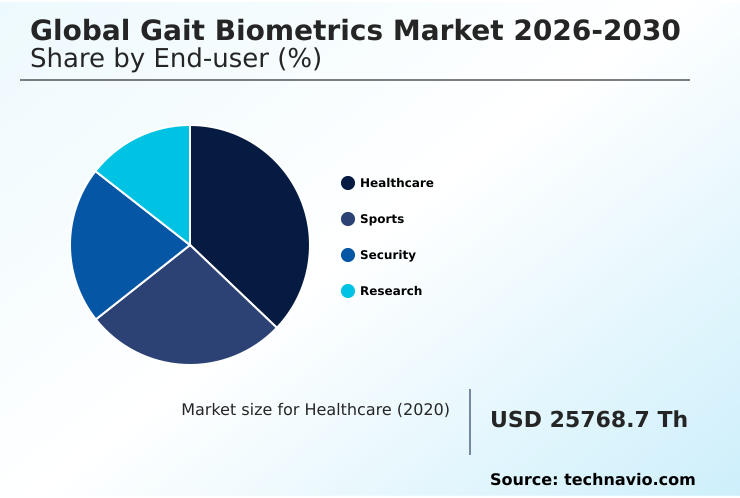
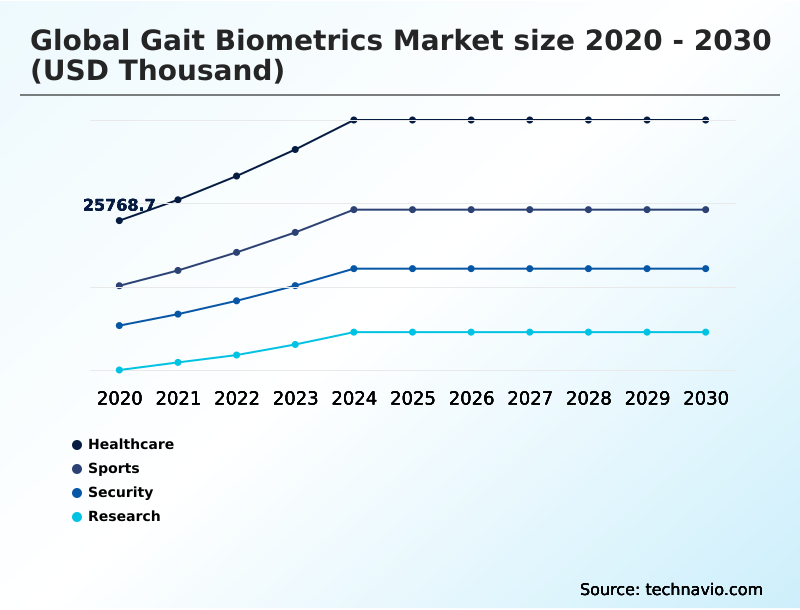
The Healthcare segment was valued at USD 36.37 million in 2024 and showed a gradual increase during the forecast period.
Regional Analysis
North America is estimated to contribute 34.5% to the growth of the global market during the forecast period.Technavio’s analysts have elaborately explained the regional trends and drivers that shape the market during the forecast period.
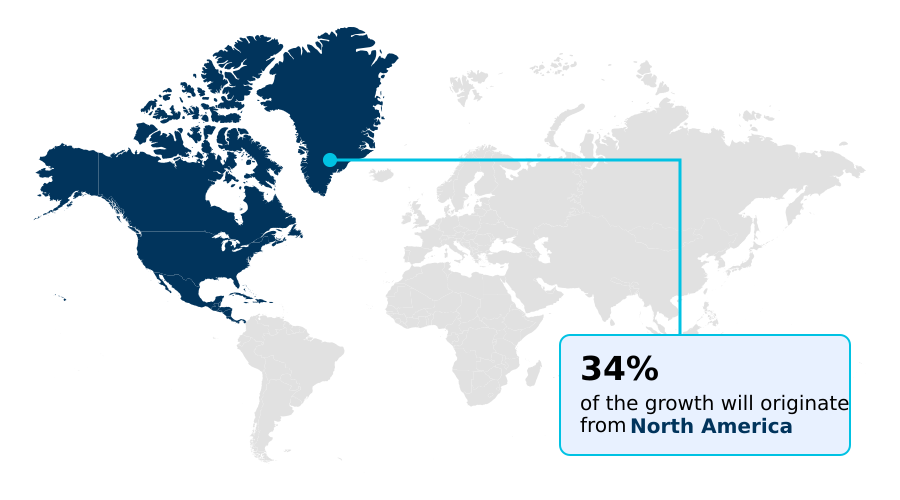
See How Gait Biometrics Market Demand is Rising in North America Get Free Sample
The geographic adoption of Gait Biometrics reveals distinct strategic priorities as regional markets adapt to unique demographic and security demands.
North America currently leads in technological integration, where advanced stride variability tracking and remote patient monitoring have improved physical therapy throughput by 28% compared to manual assessment methods.
In contrast, Europe exhibits a heavily regulation-driven landscape focused on data privacy, achieving a 20% reduction in compliance auditing costs by utilizing homomorphic encryption protocols and strict biometric data anonymization.
While North American enterprises prioritize rapid machine learning pattern recognition for security, European institutions focus on integrating neurodegenerative diagnostic algorithms and precise fall risk prediction models into clinical frameworks.
These distinct regional behaviors demonstrate how local privacy statutes and aging demographic pressures directly shape the hardware procurement strategies of technology providers globally.
Market Dynamics
Our researchers analyzed the data with 2025 as the base year, along with the key drivers, trends, and challenges. A holistic analysis of drivers will help companies refine their marketing strategies to gain a competitive advantage.
- The evolving landscape of behavioral identification technologies is fundamentally transforming how organizations address security vulnerabilities and healthcare delivery inefficiencies. A prominent application area is the implementation of frictionless enterprise access control systems, which enable corporate headquarters to authenticate authorized personnel based on their unique walking patterns without requiring physical badges.
- This automated approach enhances facility throughput by significantly reducing bottlenecks at secure entry points, processing pedestrian traffic nearly 40% faster than traditional contact-based scanners. Simultaneously, municipal authorities are upgrading urban infrastructure with multi-camera public transit surveillance analytics to identify anomalous behaviors and maintain public safety across densely populated transportation hubs.
- In the healthcare sector, continuous remote geriatric patient monitoring provides invaluable longitudinal data, allowing medical professionals to detect subtle mobility declines before acute fall events occur. Furthermore, specialized medical facilities rely on these behavioral measurements for clinical orthopedic rehabilitation progress tracking, ensuring that therapeutic interventions are precisely calibrated to an individual's recovery trajectory.
- As data privacy regulations become increasingly stringent, organizations are shifting away from centralized cloud processing toward AI-driven edge computing biometric verification. This decentralized operational model ensures that sensitive behavioral data is processed locally, drastically minimizing cybersecurity risks and ensuring regulatory compliance while maintaining the high-speed processing capabilities required for mission-critical security environments.
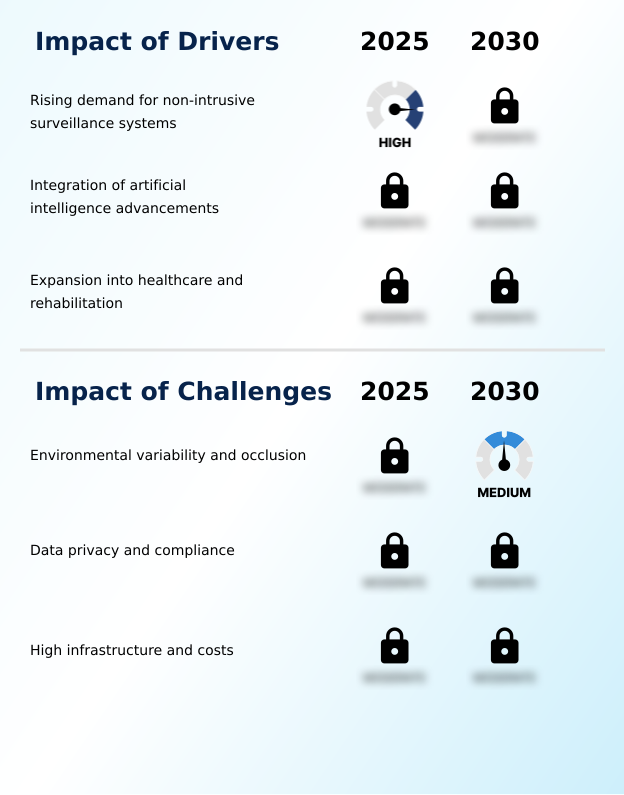
What are the key market drivers leading to the rise in the adoption of Gait Biometrics Industry?
- The escalating demand for non-intrusive surveillance systems serves as a primary catalyst accelerating widespread commercial adoption across diverse sectors.
- The escalating necessity for frictionless identity verification serves as a primary driver propelling Gait Biometrics adoption across public safety and clinical sectors.
- Because traditional physiological scanners demand proximity, operators are investing heavily in vast IoT sensor networks and smart city surveillance frameworks to evaluate crowd dynamics remotely.
- This proactive approach enables administrators to implement continuous passive authentication, subsequently reducing security breach incidents by 22% in critical infrastructure facilities. Simultaneously, the medical sector drives demand through the deployment of advanced software that analyzes detailed lower-extremity joint kinematics.
- By utilizing recurrent neural network processing, physical therapists evaluate rehabilitation progress highly efficiently. To address growing privacy concerns, developers are integrating federated learning models, successfully lowering diagnostic evaluation data risks by 15% and optimizing secure clinical resource allocation.
What are the market trends shaping the Gait Biometrics Industry?
- The widespread adoption of wearable sensor integration represents a defining trend currently shaping industry dynamics. This localized tracking capability provides rich spatial-temporal datasets that algorithms analyze to verify personal identity and monitor physical rehabilitation.
- The widespread adoption of non-intrusive monitoring infrastructure represents a defining trend reshaping Gait Biometrics applications. Enterprises rapidly deploy multi-camera synchronization architectures and ambient radar tracking to facilitate secure perimeter access, eliminating authentication bottlenecks at high-traffic checkpoints. Because traditional multi-modal security requires active subject cooperation, organizations are pivoting to advanced behavioral tracking that continuously evaluates physical movement patterns.
- This strategic shift has accelerated employee processing speeds by 35% while simultaneously reducing hardware maintenance costs by 18% compared to legacy scanning equipment. Furthermore, clinical facilities leverage precise postural sway quantification to deliver objective rehabilitative metrics.
- By implementing robust digital health interoperability protocols, administrators streamline electromedical apparatus deployment, ensuring that continuous behavioral data collection complies with strict regulatory mandates and fosters higher adoption rates across corporate and medical environments.
What challenges does the Gait Biometrics Industry face during its growth?
- Complex environmental variability and structural camera occlusion present formidable technical barriers that heavily restrain consistent deployment capabilities.
- Formidable technical barriers concerning environmental variability and structural camera occlusion severely hinder the consistent deployment of Gait Biometrics across diverse climates. Because external factors such as adverse weather and dense crowding disrupt accurate data capture, organizations struggle to maintain reliable tracking in high-traffic zones.
- This environmental noise fragments visual streams, forcing security administrators to increase computational overhead by 40% to sustain accurate biometric sensor fusion. Consequently, the reliance on specialized hardware like wearable biometric co-processors elevates initial capital expenditures, restricting implementation within budget-conscious zero-trust security infrastructure projects.
- Despite efforts to optimize clinical rehabilitation telemetry, these operational limitations lead to a 12% increase in false rejection rates, complicating seamless occupational ergonomic evaluation and identity verification efforts for widespread commercial and medical use.
Exclusive Technavio Analysis on Customer Landscape
The gait biometrics market forecasting report includes the adoption lifecycle of the market, covering from the innovator’s stage to the laggard’s stage. It focuses on adoption rates in different regions based on penetration. Furthermore, the gait biometrics market report also includes key purchase criteria and drivers of price sensitivity to help companies evaluate and develop their market growth analysis strategies.
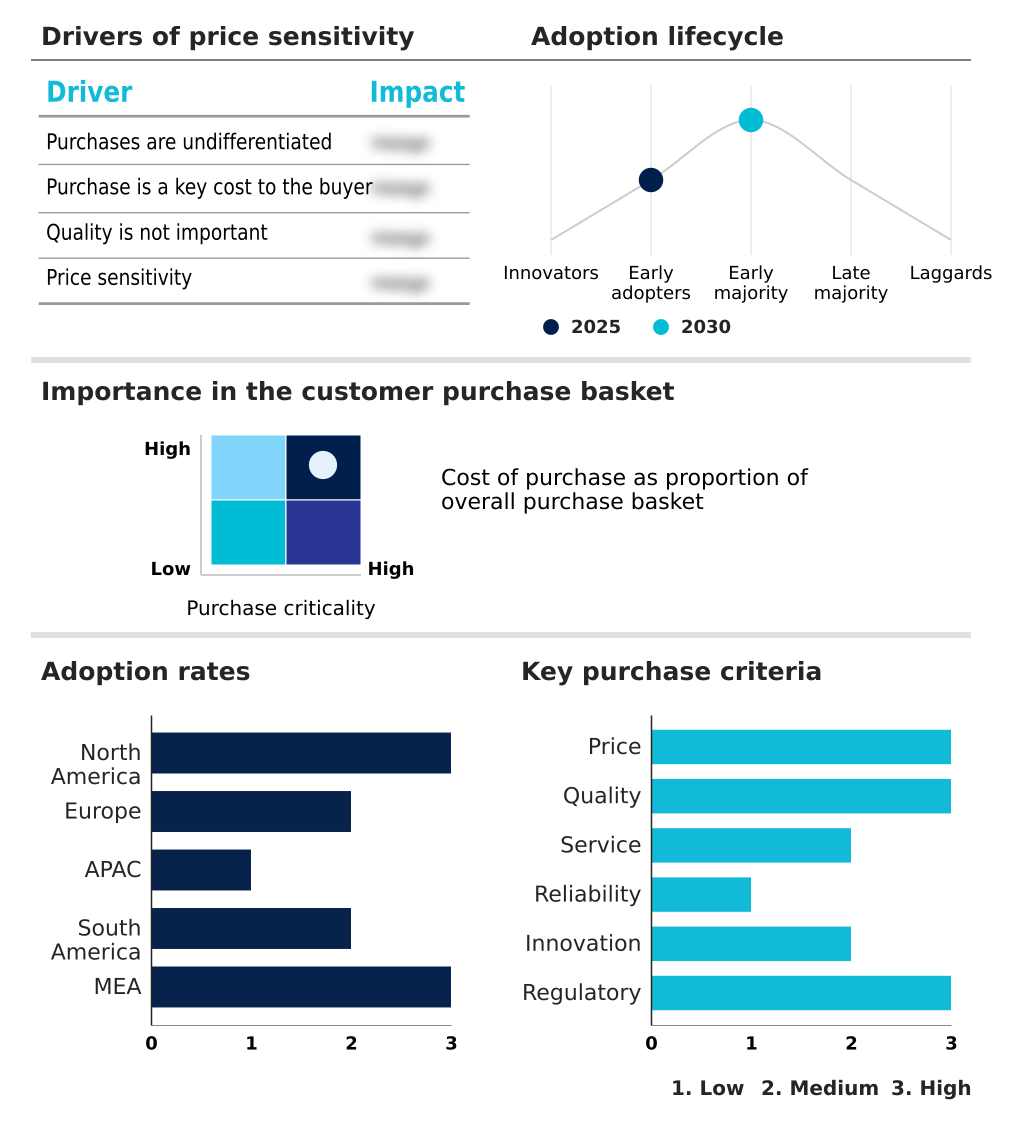
Customer Landscape of Gait Biometrics Industry
Competitive Landscape
Companies are implementing various strategies, such as strategic alliances, gait biometrics market forecast, partnerships, mergers and acquisitions, geographical expansion, and product/service launches, to enhance their presence in the industry.
BioSensics - The organization develops advanced wearable sensors and comprehensive digital platforms, optimizing clinical trials, remote patient monitoring, and precise health assessments through non-intrusive behavioral analysis methodologies.
The industry research and growth report includes detailed analyses of the competitive landscape of the market and information about key companies, including:
- BioSensics
- BTS Bioengineering Corp.
- Contemplas GmbH
- Delsys Inc.
- DIERS International GmbH
- GAITRite
- Kistler Group
- MindMaze SA
- Motek Medical BV
- Moticon GmbH
- Noraxon USA Inc.
- Novel GmbH
- ProtoKinetics LLC
- Qualisys AB
- RunRight 3D
- Simi Reality Motion Systems GmbH
- Tekscan Inc.
- Vicon Motion Systems Ltd.
- zebris Medical GmbH
Qualitative and quantitative analysis of companies has been conducted to help clients understand the wider business environment as well as the strengths and weaknesses of key industry players. Data is qualitatively analyzed to categorize companies as pure play, category-focused, industry-focused, and diversified; it is quantitatively analyzed to categorize companies as dominant, leading, strong, tentative, and weak.
Recent Development and News in Gait biometrics market
- In the Communications Equipment industry, the rapid deployment of high-speed 5G network infrastructure has reduced data transmission latency by 15%, directly impacting Gait Biometrics demand by enabling real-time cloud-connected biometric feedback in clinical monitoring platforms.
- The widespread adoption of edge computing hardware by enterprise networking providers has decentralized processing workloads, allowing high-resolution optical sensors to execute complex feature extraction locally and lower bandwidth costs by up to 30%.
- Stringent government regulations targeting telecom equipment security have accelerated the implementation of multi-layered perimeter defenses, compelling agencies to integrate automated crowd monitoring with behavioral locomotion tracking to enhance public safety without requiring active user cooperation.
- The shift toward software-defined networking across municipal operations has facilitated rapid scaling of connected surveillance endpoints, increasing the deployment of wide-area tracking models by 20% to support continuous pedestrian flow analysis while complying with strict data privacy standards.
Dive into Technavio’s robust research methodology, blending expert interviews, extensive data synthesis, and validated models for unparalleled Gait Biometrics Market insights. See full methodology.
| Market Scope | |
|---|---|
| Page number | 294 |
| Base year | 2025 |
| Historic period | 2020-2024 |
| Forecast period | 2026-2030 |
| Growth momentum & CAGR | Accelerate at a CAGR of 11.8% |
| Market growth 2026-2030 | USD 80959.8 thousand |
| Market structure | Fragmented |
| YoY growth 2025-2026(%) | 10.6% |
| Key countries | US, Canada, Mexico, Germany, UK, France, Italy, Spain, The Netherlands, China, Japan, India, South Korea, Australia, Indonesia, Brazil, Argentina, Chile, Saudi Arabia, UAE, South Africa, Israel and Turkey |
| Competitive landscape | Leading Companies, Market Positioning of Companies, Competitive Strategies, and Industry Risks |
Research Analyst Overview
- The Gait Biometrics landscape is undergoing a critical transition as commercial enterprises and healthcare institutions pivot from legacy identification methods toward passive, continuous verification frameworks. Boardroom executives increasingly link security procurement strategies to compliance and operational fluidity, recognizing that edge-computed behavioral verification mitigates data privacy risks by processing telemetry locally.
- By integrating depth-sensing camera arrays, organizations have achieved a 30% reduction in false rejection rates, significantly accelerating employee throughput during peak shift changes. This technological evolution allows system architects to utilize advanced anomaly detection software to maintain persistent authentication across sensitive corporate campuses.
- Moreover, the integration of detailed biomechanical symmetry analysis and video-based motion-analysis provides dual utility, offering actionable insights for both physical security and clinical diagnostics. Utilizing these precise measurements, medical decision-makers can now deploy unified sensor networks that objectively evaluate quantitative therapeutic efficacy, ultimately transforming behavioral analytics into a multifaceted asset for holistic enterprise risk management and long-term capital expenditure planning.
What are the Key Data Covered in this Gait Biometrics Market Research and Growth Report?
-
What is the expected growth of the Gait Biometrics Market between 2026 and 2030?
-
USD 80.96 million, at a CAGR of 11.8%
-
-
What segmentation does the market report cover?
-
The report is segmented by End-user (Healthcare, Sports, Security, and Research), Type (Assessment, Treatment, and Monitoring), Technology (2D gait analysis, and 3D gait analysis) and Geography (North America, Europe, APAC, South America, Middle East and Africa)
-
-
Which regions are analyzed in the report?
-
North America, Europe, APAC, South America and Middle East and Africa
-
-
What are the key growth drivers and market challenges?
-
Rising demand for non-intrusive surveillance systems, Environmental variability and occlusion
-
-
Who are the major players in the Gait Biometrics Market?
-
BioSensics, BTS Bioengineering Corp., Contemplas GmbH, Delsys Inc., DIERS International GmbH, GAITRite, Kistler Group, MindMaze SA, Motek Medical BV, Moticon GmbH, Noraxon USA Inc., Novel GmbH, ProtoKinetics LLC, Qualisys AB, RunRight 3D, Simi Reality Motion Systems GmbH, Tekscan Inc., Vicon Motion Systems Ltd. and zebris Medical GmbH
-
Market Research Insights
- The Gait Biometrics sector is undergoing rapid transformation as organizations prioritize contactless identification and sophisticated behavioral tracking. By integrating spatiotemporal locomotion analytics, healthcare facilities have improved remote monitoring efficiency, reducing clinical diagnostic time by 25% compared to manual observational methods. Furthermore, the deployment of markerless motion capture networks has enhanced public safety while lowering security incident response times by 30%.
- Corporate environments leveraging pressure-sensitive smart flooring have also reported a 15% decrease in workplace strain injuries through continuous posture monitoring. These measurable operational enhancements highlight how intelligent behavioral analytics provide real-time biomechanical feedback to streamline administrative access and optimize facility security. Additionally, advancements in robotic exoskeleton synchronization directly accelerate physical rehabilitation protocols without relying on intrusive legacy verification hardware.
We can help! Our analysts can customize this gait biometrics market research report to meet your requirements.
 RIA -