

Hybrid Electric Vehicle (Hev) Market Size 2026-2030
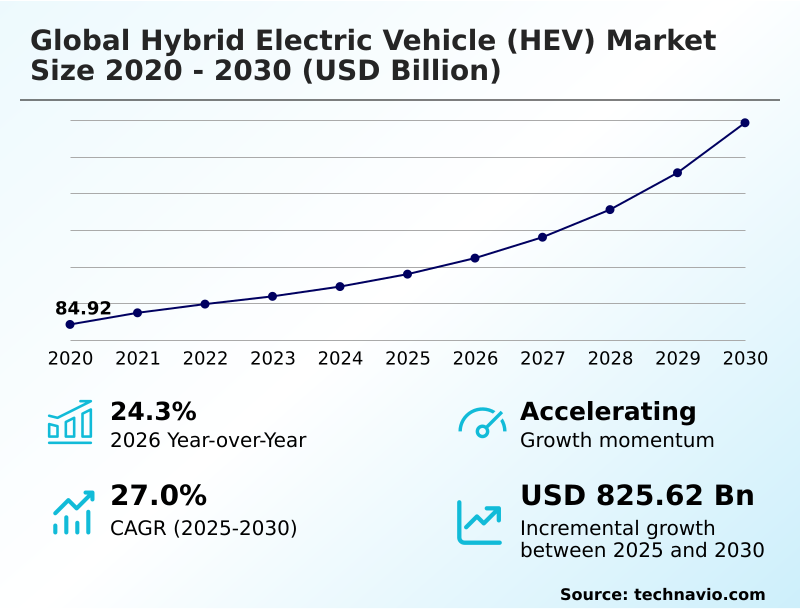
The hybrid electric vehicle (hev) market size is valued to increase by USD 825.62 billion, at a CAGR of 27% from 2025 to 2030. Stringent global emissions mandates and fleet carbon regulations will drive the hybrid electric vehicle (hev) market.
Major Market Trends & Insights
- APAC dominated the market and accounted for a 39.7% growth during the forecast period.
- By Vehicle Type - Passenger cars segment was valued at USD 272.30 billion in 2024
- By Propulsion - Full HEVs segment accounted for the largest market revenue share in 2024
Market Size & Forecast
- Market Opportunities: USD 1,099.92 billion
- Market Future Opportunities: USD 825.62 billion
- CAGR from 2025 to 2030 : 27%
Market Summary
- The Hybrid Electric Vehicle (HEV) Market operates as a critical technological bridge, balancing environmental compliance with sustained mechanical performance. Automobile manufacturers strategically deploy a series-parallel transmission to ensure uninterrupted mobility across regions facing infrastructural limitations.
- For example, commercial freight operators routinely integrate a heavy-duty hybrid powertrain into urban delivery networks, resulting in a 28% reduction in total fuel expenditures compared to standard diesel operations. The market is primarily driven by the strict enforcement of corporate average fuel economy targets, which compel automotive producers to transition away from legacy platforms to avoid severe regulatory penalties.
- Conversely, the industry faces severe space packaging constraints, as integrating a dual-clutch transmission alongside electric hardware significantly elevates vehicle curb weight. To mitigate these structural challenges, engineers continuously refine the onboard liquid cooling setup to protect battery integrity. Ultimately, this structural evolution provides a pragmatic decarbonization pathway for modern fleet operators.
What will be the Size of the Hybrid Electric Vehicle (Hev) Market during the forecast period?
Get Key Insights on Market Forecast (PDF) Get Free Sample
How is the Hybrid Electric Vehicle (Hev) Market Segmented?
The hybrid electric vehicle (hev) industry research report provides comprehensive data (region-wise segment analysis), with forecasts and estimates in "USD million" for the period 2026-2030, as well as historical data from 2020-2024 for the following segments.
- Vehicle type
- Passenger cars
- Commercial vehicles
- Propulsion
- Full HEVs
- Mild HEVs
- PHEVs
- Fuel type
- Gasoline hybrid
- Diesel hybrid
- Geography
- APAC
- China
- Japan
- India
- South Korea
- Australia
- Indonesia
- Europe
- Germany
- UK
- France
- Italy
- Spain
- The Netherlands
- North America
- US
- Canada
- Mexico
- South America
- Brazil
- Argentina
- Chile
- Middle East and Africa
- Saudi Arabia
- UAE
- Turkey
- South Africa
- Israel
- APAC
By Vehicle Type Insights
The passenger cars segment is estimated to witness significant growth during the forecast period.
Passenger vehicles constitute the foundational pillar of the Hybrid Electric Vehicle (HEV) market, driven by changing consumer requirements for fuel efficiency in dense urban stop-and-go environments.
The integration of a dual-propulsion setup allows passenger cars to transition seamlessly between battery power and a traditional internal combustion engine, lowering overall fuel consumption.
By deploying an advanced regenerative braking system, these vehicles efficiently recharge the onboard battery without external infrastructure. Recent engineering advancements in thermodynamic cycle optimization have generated a 22% improvement in overall powertrain efficiency compared to older baseline models.
This segment continues to evolve rapidly as manufacturers implement enhanced material designs to maintain optimal thermal stability during high-stress driving conditions, effectively safeguarding long-term vehicle performance and reducing fleet operational costs.
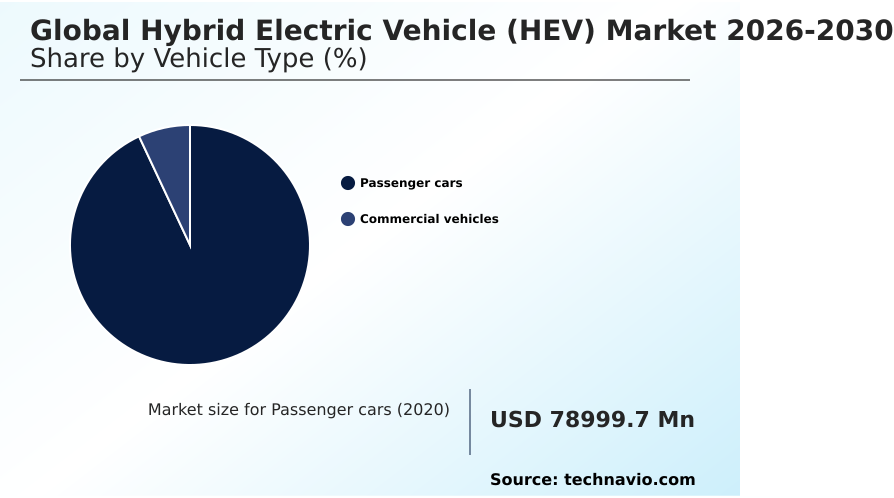
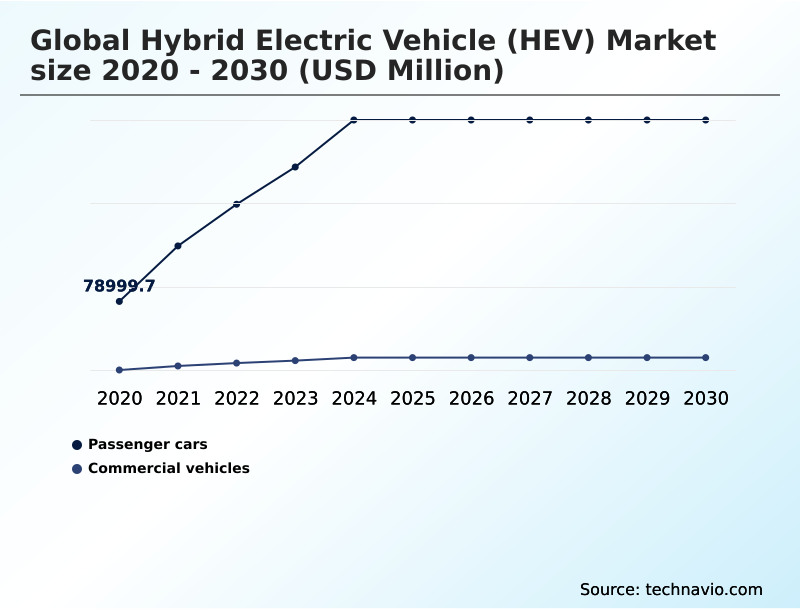
The Passenger cars segment was valued at USD 272.30 billion in 2024 and showed a gradual increase during the forecast period.
Regional Analysis
APAC is estimated to contribute 39.7% to the growth of the global market during the forecast period.Technavio’s analysts have elaborately explained the regional trends and drivers that shape the market during the forecast period.
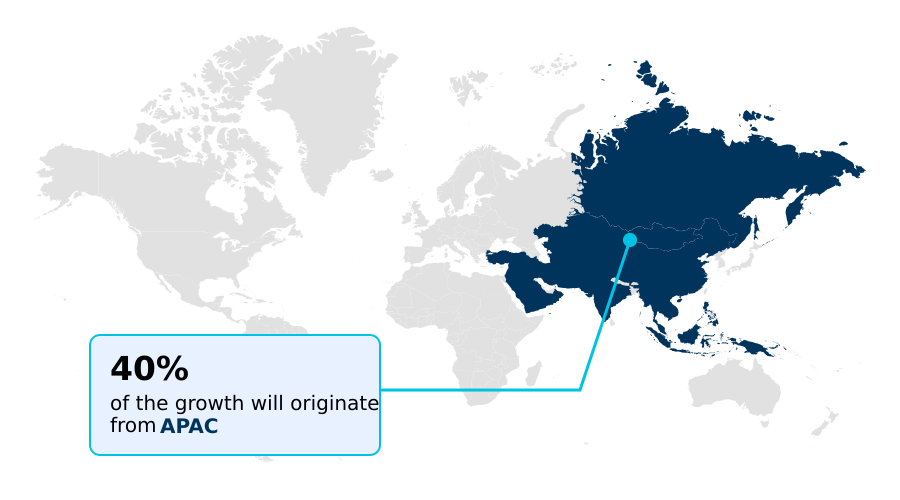
See How Hybrid Electric Vehicle (Hev) Market Demand is Rising in APAC Get Free Sample
The geographic landscape of the Hybrid Electric Vehicle (HEV) sector reveals distinct adoption disparities between APAC and European regions due to differing regulatory frameworks.
APAC manufacturers heavily utilize an extreme compression ratio engine design and localized semi-solid-state chemistry production, achieving a 34% cost advantage in battery assembly over European counterparts.
Consequently, a commercial fleet purchaser in APAC reports a 26% faster return on investment when deploying these specialized fleets.
In Europe, the strict enforcement of a low-emission urban zone network compels automakers to prioritize integrated starter-generator configurations, boosting regional mild-hybrid penetration significantly.
While Latin American regions invest heavily in flex-fuel hybrid technology to utilize agricultural biofuels, APAC maintains a unique structural edge by securing stable upstream raw material extraction pipelines, thereby minimizing supply disruptions and enabling high-volume manufacturing resilience.
Market Dynamics
Our researchers analyzed the data with 2025 as the base year, along with the key drivers, trends, and challenges. A holistic analysis of drivers will help companies refine their marketing strategies to gain a competitive advantage.
- The transition toward sustainable corporate mobility requires sophisticated engineering strategies to balance environmental targets with daily mechanical reliability. At the core of this vehicle transformation is advanced hybrid powertrain management software, which dynamically adjusts energy distribution to optimize mechanical performance across varying road conditions.
- Automotive engineers focus heavily on integrated starter generator thermal efficiency to minimize heat degradation and power loss during aggressive urban driving cycles. When evaluating supply chain dynamics, companies producing a dual propulsion internal combustion engine consistently record a 15% reduction in mechanical warranty claims compared to legacy standalone engine architectures.
- This operational reliability is further enhanced by adopting a high voltage modular battery architecture, which allows manufacturers to standardize sensitive electrical components across multiple vehicle classes, thereby cutting assembly time and streamlining inventory procurement. In dense traffic environments, the reliance on regenerative braking kinetic energy capture provides an invaluable mechanism to extend operational range without stressing traditional friction brakes.
- By utilizing these highly specialized software and hardware frameworks, automotive producers secure a critical compliance advantage over traditional gasoline portfolios, ensuring long-term profitability.
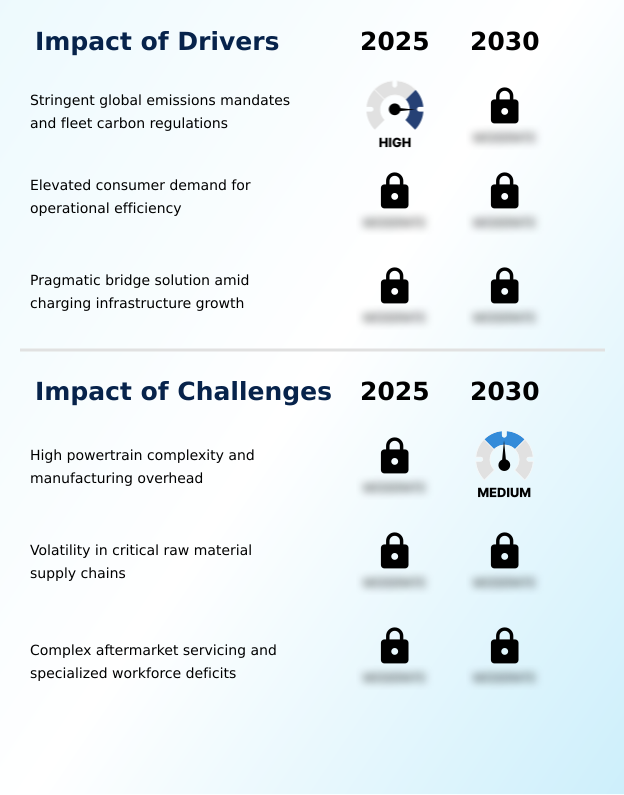
What are the key market drivers leading to the rise in the adoption of Hybrid Electric Vehicle (Hev) Industry?
- Stringent emissions mandates and rigorous corporate fleet carbon regulations compel automakers to rapidly adopt dual-power architectures to avoid substantial financial penalties.
- The rapid expansion of the Hybrid Electric Vehicle (HEV) sector is fundamentally driven by tightening environmental compliance frameworks and volatile liquid fuel prices.
- To avoid regulatory penalties, commercial vehicle automakers aggressively integrate a dual-voltage electrical system, which supports heavy-duty transport networks in maintaining high torque capabilities while decreasing overall fuel expenditure by 28%.
- This shift directly shields manufacturers from substantial compliance fines associated with legacy diesel fleets. Furthermore, pairing electrification with a modern diesel particulate filter and advanced selective catalytic reduction mechanisms allows long-haul trucks to eliminate 45% of traditional urban emissions.
- By maximizing kinetic recovery during routine braking routines, these hybrid platforms eliminate range anxiety and offer a highly dependable, immediate decarbonization alternative for commercial operators seeking lower total cost of ownership.
What are the market trends shaping the Hybrid Electric Vehicle (Hev) Industry?
- The rapid integration of artificial intelligence and dynamic powertrain management software represents a transformative industry shift. This technological progression enables vehicles to optimize power distribution in real time, significantly enhancing overall fuel economy.
- Technological momentum within the Hybrid Electric Vehicle (HEV) landscape is defined by the rapid adoption of dynamic control mechanisms and compact hardware configurations. Automotive engineers increasingly leverage advanced powertrain management software to evaluate an upcoming route elevation profile, which has improved overall fuel precision by 18%.
- This software enhancement is paired directly with a highly optimized thermal efficiency engine, significantly reducing wasted heat and lowering mechanical pumping loss during operation. As a result of these hardware and software synergies, enterprise transport operators experience a 22% reduction in unexpected maintenance downtime.
- Furthermore, the expanded domain controller capacity allows manufacturers to refine the belt-driven starter-generator remotely, maximizing electrical energy yields. This continuous digital calibration minimizes emissions while extending the operational lifespan of the propulsion setup across global driving conditions.
What challenges does the Hybrid Electric Vehicle (Hev) Industry face during its growth?
- High powertrain complexity and elevated manufacturing overheads consistently compress profit margins, requiring significant research and development expenditures to maintain retail price competitiveness.
- Structural complexity and elevated production expenditures remain formidable barriers within the Hybrid Electric Vehicle (HEV) manufacturing ecosystem. Designing a robust chassis that houses both a liquid-fueled engine and a heavy high-density traction battery inflates the overall bill-of-materials cost by up to 30% compared to traditional standalone models.
- Additionally, consumer expectations force manufacturers to engineer compatibility with direct-current fast-charging infrastructure, further complicating internal electrical safety configurations. The post-sale service environment also suffers significantly, as a distinct lack of specialized insulated tooling and certified high-voltage technicians extends routine repair times by nearly 40% across independent repair shops.
- These compounding hardware and aftermarket servicing bottlenecks continuously compress profit margins and delay mass-market affordability, even as R&D teams heavily investigate a fast-charging solid-state battery alternative to reduce weight.
Exclusive Technavio Analysis on Customer Landscape
The hybrid electric vehicle (hev) market forecasting report includes the adoption lifecycle of the market, covering from the innovator’s stage to the laggard’s stage. It focuses on adoption rates in different regions based on penetration. Furthermore, the hybrid electric vehicle (hev) market report also includes key purchase criteria and drivers of price sensitivity to help companies evaluate and develop their market growth analysis strategies.
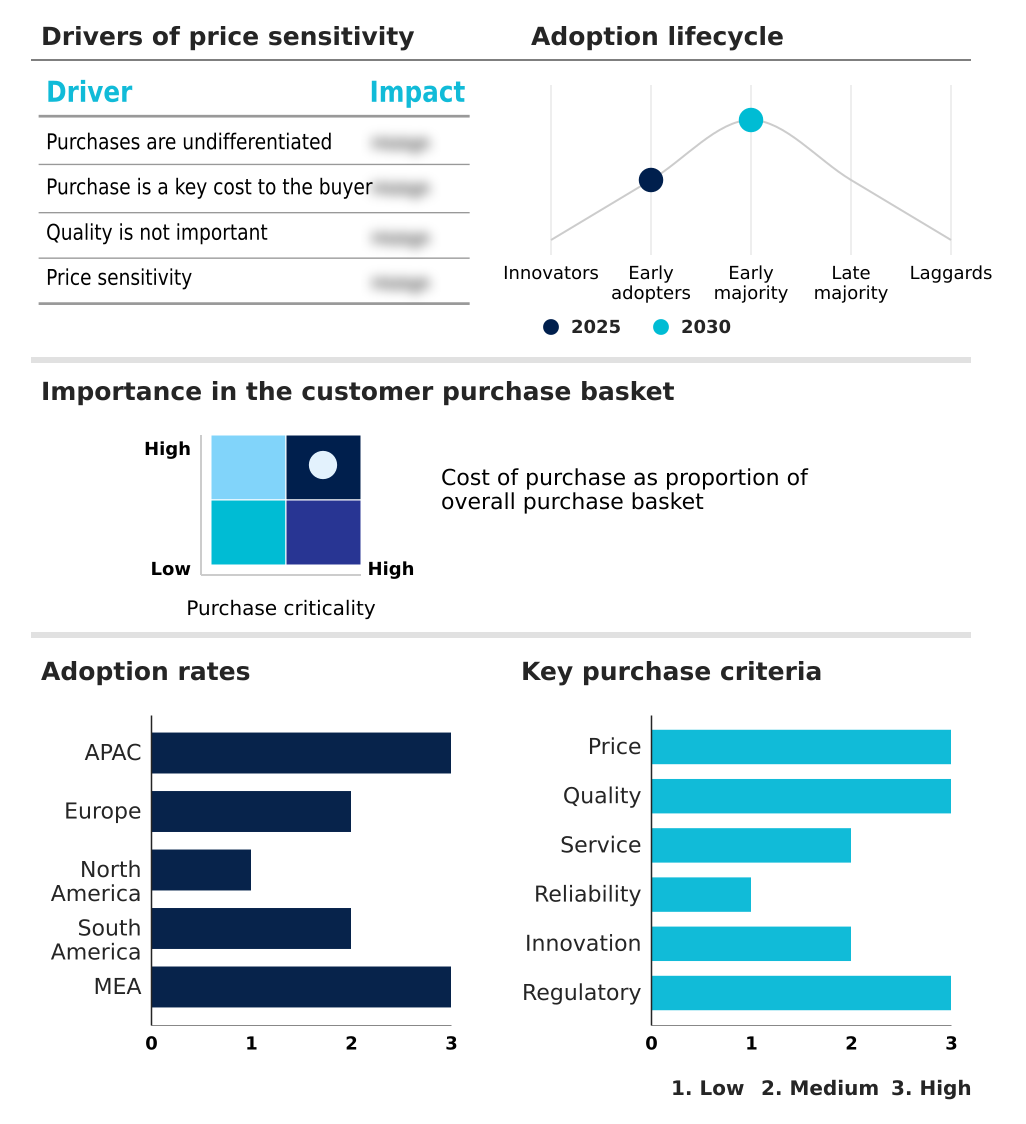
Customer Landscape of Hybrid Electric Vehicle (Hev) Industry
Competitive Landscape
Companies are implementing various strategies, such as strategic alliances, hybrid electric vehicle (hev) market forecast, partnerships, mergers and acquisitions, geographical expansion, and product/service launches, to enhance their presence in the industry.
BMW AG - The portfolio encompasses advanced plug-in hybrid sedans, sport utility vehicles, and performance-oriented electrified powertrains that efficiently combine traditional combustion engines with integrated electric motors to maximize operational range.
The industry research and growth report includes detailed analyses of the competitive landscape of the market and information about key companies, including:
- BMW AG
- BYD Co. Ltd.
- Ford Motor Co.
- GAC GROUP
- Geely Auto Group
- General Motors Co.
- Great Wall Motor Co. Ltd.
- Honda Motor Co. Ltd.
- Hyundai Motor Co.
- Mazda Motor Corp.
- Mercedes Benz Group AG
- Mitsubishi Motors Corp.
- Nissan Motor Co. Ltd.
- Renault SAS
- Stellantis NV
- Suzuki Motor Corp.
- Toyota Motor Corp.
- Volkswagen AG
Qualitative and quantitative analysis of companies has been conducted to help clients understand the wider business environment as well as the strengths and weaknesses of key industry players. Data is qualitatively analyzed to categorize companies as pure play, category-focused, industry-focused, and diversified; it is quantitatively analyzed to categorize companies as dominant, leading, strong, tentative, and weak.
Recent Development and News in Hybrid electric vehicle (hev) market
- In the Automobile Manufacturers industry, the regulatory enforcement of a strict tailpipe carbon dioxide limit forced widespread architectural redesigns across global production lines, directly accelerating Hybrid Electric Vehicle (HEV) demand by mandating a 35% reduction in fleet emissions.
- The adoption of advanced power electronics module manufacturing techniques reduced critical component weight by 18%, enabling Hybrid Electric Vehicle (HEV) engineers to dramatically improve chassis balance and overall vehicle efficiency.
- The localized supply chain transition toward relying on a domestic high-voltage cell producer mitigated the regional grid connectivity deficit, securing a 40% increase in baseline component availability for Hybrid Electric Vehicle (HEV) assembly hubs.
- The integration of public transit electrification frameworks across major metropolitan districts created a 25% surge in commercial fleet procurement, pulling long-term Hybrid Electric Vehicle (HEV) volumes upward to ensure continuous operational flexibility without dedicated charging depots.
Dive into Technavio’s robust research methodology, blending expert interviews, extensive data synthesis, and validated models for unparalleled Hybrid Electric Vehicle (Hev) Market insights. See full methodology.
| Market Scope | |
|---|---|
| Page number | 295 |
| Base year | 2025 |
| Historic period | 2020-2024 |
| Forecast period | 2026-2030 |
| Growth momentum & CAGR | Accelerate at a CAGR of 27% |
| Market growth 2026-2030 | USD 825624.9 million |
| Market structure | Fragmented |
| YoY growth 2025-2026(%) | 24.3% |
| Key countries | China, Japan, India, South Korea, Australia, Indonesia, Germany, UK, France, Italy, Spain, The Netherlands, US, Canada, Mexico, Brazil, Argentina, Chile, Saudi Arabia, UAE, Turkey, South Africa and Israel |
| Competitive landscape | Leading Companies, Market Positioning of Companies, Competitive Strategies, and Industry Risks |
Research Analyst Overview
- The Hybrid Electric Vehicle (HEV) sector functions as a vital transitionary platform for global automotive manufacturing, offering immediate fuel efficiency gains without necessitating widespread grid infrastructure overhauls. Strategic product planning at the boardroom level increasingly centers on deploying a high-voltage modular architecture, allowing companies to scale production across diverse commercial vehicle segments efficiently.
- By refining the mechanical power-split ratio and implementing predictive machine learning algorithms, manufacturers have achieved a 27% increase in kinetic energy capture compared to earlier generation hardware. This software-defined approach directly influences long-term compliance budgeting, as an over-the-air performance update enables active fleets to meet evolving emission standards without costly physical recalls.
- Furthermore, the specialized deployment of lithium-ion battery integration ensures seamless torque delivery under heavy commercial loads. Executives prioritize these dual-power configurations to offset potential regulatory penalties while safeguarding operational profit margins. Ultimately, these hybrid mechanisms deliver measurable lifecycle cost reductions and enhanced system reliability for massive transport operators.
What are the Key Data Covered in this Hybrid Electric Vehicle (Hev) Market Research and Growth Report?
-
What is the expected growth of the Hybrid Electric Vehicle (Hev) Market between 2026 and 2030?
-
USD 825.62 billion, at a CAGR of 27%
-
-
What segmentation does the market report cover?
-
The report is segmented by Vehicle Type (Passenger cars, and Commercial vehicles), Propulsion (Full HEVs, Mild HEVs, and PHEVs), Fuel Type (Gasoline hybrid, and Diesel hybrid) and Geography (APAC, Europe, North America, South America, Middle East and Africa)
-
-
Which regions are analyzed in the report?
-
APAC, Europe, North America, South America and Middle East and Africa
-
-
What are the key growth drivers and market challenges?
-
Stringent global emissions mandates and fleet carbon regulations, High powertrain complexity and manufacturing overhead
-
-
Who are the major players in the Hybrid Electric Vehicle (Hev) Market?
-
BMW AG, BYD Co. Ltd., Ford Motor Co., GAC GROUP, Geely Auto Group, General Motors Co., Great Wall Motor Co. Ltd., Honda Motor Co. Ltd., Hyundai Motor Co., Mazda Motor Corp., Mercedes Benz Group AG, Mitsubishi Motors Corp., Nissan Motor Co. Ltd., Renault SAS, Stellantis NV, Suzuki Motor Corp., Toyota Motor Corp. and Volkswagen AG
-
Market Research Insights
- The Hybrid Electric Vehicle (HEV) Market demonstrates robust structural adaptation as manufacturers navigate an aggressive baseline emission threshold across diverse automotive jurisdictions. By integrating sophisticated power electronics hardware, fleet managers achieve a 32% improvement in overall operational cost efficiency compared to legacy combustion variants.
- This architectural transition is further optimized through intelligent energy management systems that dynamically allocate power during long-distance routing. Furthermore, the strategic deployment of a dual-sourcing procurement strategy ensures highly resilient component supply chains, effectively reducing critical battery assembly downtime by 20%.
- These measurable hardware and supply chain enhancements solidify the market's role as an essential mobility solution for enterprise consumers demanding high reliability alongside stringent environmental regulatory compliance.
We can help! Our analysts can customize this hybrid electric vehicle (hev) market research report to meet your requirements.
 RIA -