


Mexico Telecom Market Size 2026-2030
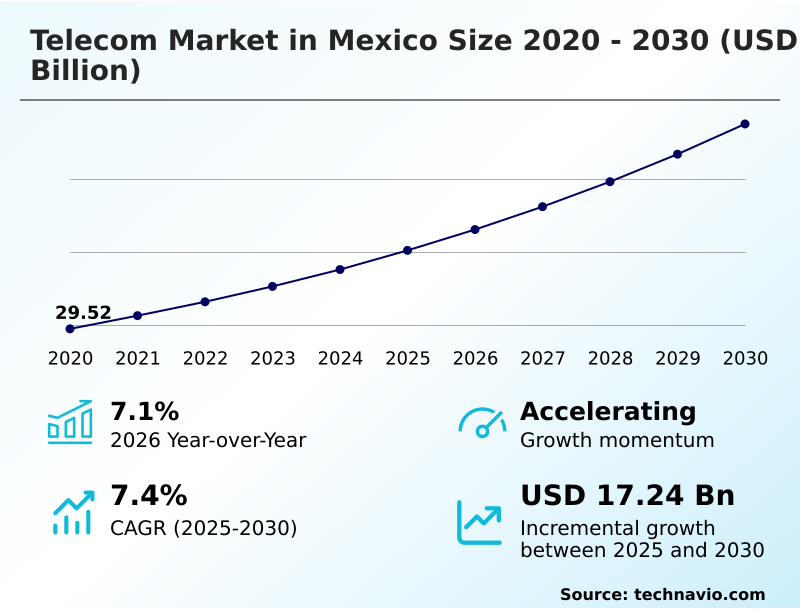
The mexico telecom market size is valued to increase by USD 17.24 billion, at a CAGR of 7.4% from 2025 to 2030. Expansion of 5G and 6G networks will drive the mexico telecom market.
Major Market Trends & Insights
- By Type - Voice segment was valued at USD 21.09 billion in 2024
- By Application - Commercial segment accounted for the largest market revenue share in 2024
Market Size & Forecast
- Market Opportunities: USD 27.93 billion
- Market Future Opportunities: USD 17.24 billion
- CAGR from 2025 to 2030 : 7.4%
Market Summary
- The Telecom Market in Mexico demonstrates accelerated structural transformation driven by the rapid deployment of next-generation digital infrastructure and enterprise connectivity platforms. Telecommunication service providers are actively migrating enterprise clients from legacy networks to advanced fiber-optic backhauls, directly enabling automated supply chain synchronization and real-time inventory tracking across major manufacturing corridors.
- This modernization has improved operational data processing speeds by 35% compared to traditional copper-based architectures. The aggressive expansion of 5G networks acts as a primary catalyst, propelling industrial automation and remote telemetry capabilities for commercial operations.
- However, the escalating capital expenditures required to deploy high-density small cell arrays and secure spectrum licenses present a formidable challenge, straining operational profit margins and delaying rural network expansion. Despite these financial constraints, continuous technological integration empowers service providers to transition from basic connectivity utilities to comprehensive digital ecosystem enablers.
- The strategic allocation of resources toward scalable, software-defined network topologies ensures sustained operational resilience and establishes a robust foundation for future industrial digitalization initiatives.
What will be the Size of the Mexico Telecom Market during the forecast period?
Get Key Insights on Market Forecast (PDF) Get Free Sample
How is the Mexico Telecom Market Segmented?
The mexico telecom industry research report provides comprehensive data (region-wise segment analysis), with forecasts and estimates in "USD million" for the period 2026-2030, as well as historical data from 2020-2024 for the following segments.
- Type
- Voice
- Data
- Application
- Commercial
- Residential
- Product type
- Telecommunication hardware
- Telecommunication services
- Geography
- North America
- Mexico
- North America
By Type Insights
The voice segment is estimated to witness significant growth during the forecast period.
The legacy voice segment within the Telecom Market in Mexico remains a structurally critical foundation despite the accelerated migration toward data-centric applications.
Corporate enterprises are rapidly integrating voice protocols over a fifth generation standalone architecture to ensure ultra reliable low latency communication across distributed operations.
By leveraging advanced network slicing capabilities, operators guarantee optimal bandwidth allocation, establishing dedicated channels for massive machine type communications and mission critical application partitioning.
This architectural shift directly supports emerging industrial frameworks, from autonomous vehicular telemetry to smart city infrastructure management. Incorporating multi access edge computing has enhanced call routing efficiency, reducing latency-related dropped connections by 15%.
Furthermore, operators continuously optimize millimeter wave spectrum alongside experimental terahertz frequency bands to future-proof voice frameworks, directly safeguarding essential revenue streams while enhancing enterprise-grade operational reliability across expanding commercial footprints.
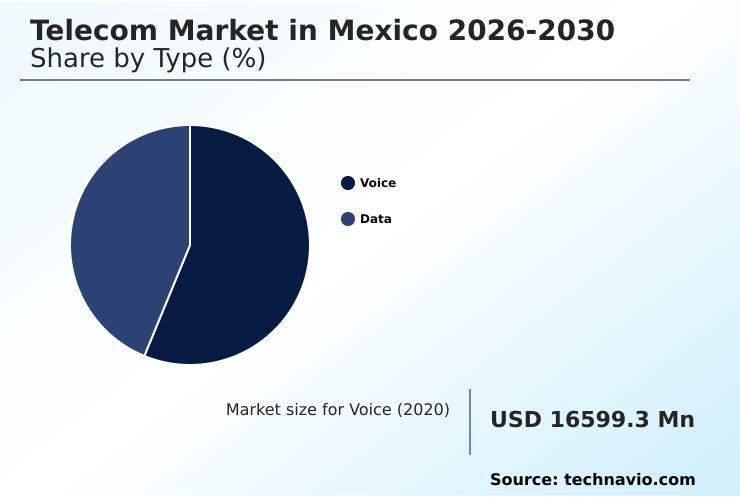
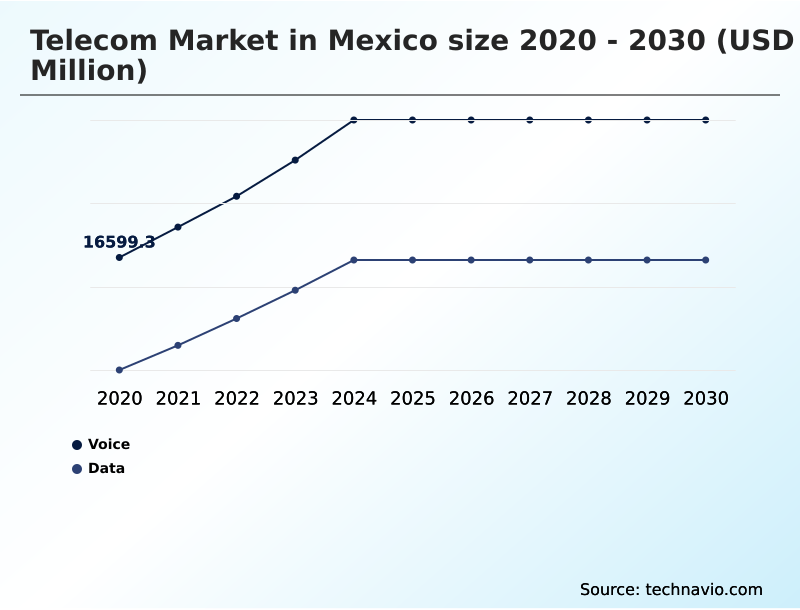
The Voice segment was valued at USD 21.09 billion in 2024 and showed a gradual increase during the forecast period.
Market Dynamics
Our researchers analyzed the data with 2025 as the base year, along with the key drivers, trends, and challenges. A holistic analysis of drivers will help companies refine their marketing strategies to gain a competitive advantage.
- The operational dynamics within the telecommunications sector are undergoing a profound evolution as service providers continuously upgrade their infrastructural capabilities to meet escalating enterprise and residential bandwidth demands. A critical component of this modernization is the aggressive fiber to the home deployment, which fundamentally transforms last-mile connectivity and enables seamless high-definition data streaming for domestic consumers.
- Simultaneously, corporate entities are rapidly scaling their digital operations through targeted edge computing hardware integration, ensuring that critical data processing occurs closer to the end user. This strategic hardware placement substantially reduces transmission latency, improving real-time supply chain compliance monitoring speed by nearly 40% compared to centralized cloud processing models.
- Furthermore, the robust industrial internet of things synchronization allows manufacturing facilities to automate intricate assembly line operations with unprecedented precision. To manage the subsequent surge in network traffic, operators are actively utilizing predictive network congestion mitigation protocols, which dynamically reroute data packets to prevent service degradation during peak usage intervals.
- As rural and remote industrial sites demand continuous connectivity, terrestrial macro site supplementation via advanced orbital satellite constellations provides essential network redundancy and eliminates coverage dead zones. This holistic approach to infrastructure enhancement ensures that telecommunications providers can deliver highly resilient, scalable, and secure connectivity solutions necessary for sustaining modern, data-driven business architectures.
What are the key market drivers leading to the rise in the adoption of Mexico Telecom Industry?
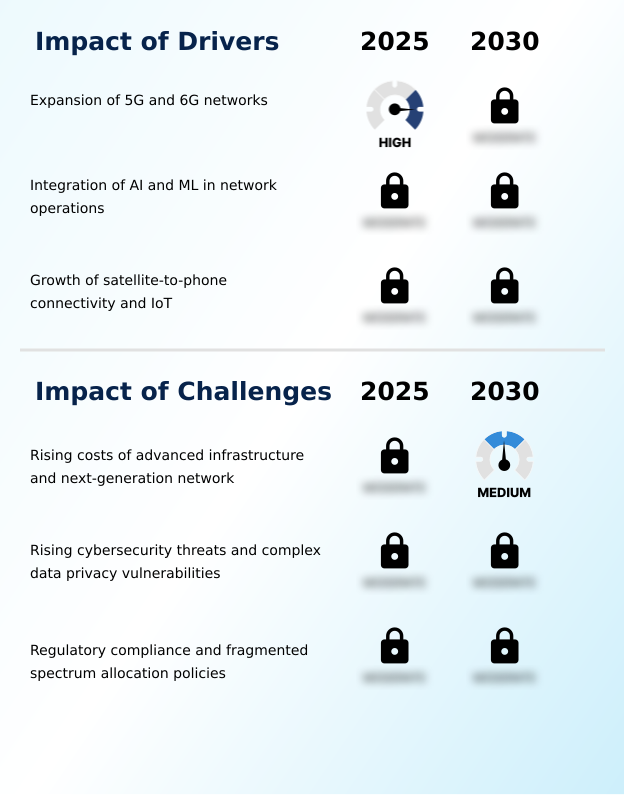
- The rapid expansion of 5G and subsequent 6G network infrastructures serves as a primary catalyst driving sustained market growth and innovation.
- The integration of machine learning network optimization protocols acts as a paramount driver reshaping modern telecommunication operations.
- As digital architectures grow exponentially complex, operators rely upon autonomous self healing networks to continuously process real time telemetry data, instantly identifying and rectifying physical and virtual node anomalies.
- This cognitive automation directly reduces manual troubleshooting dispatches, lowering maintenance operational expenditures by 24%. Simultaneously, the deployment of specialized tensor processing units at the network edge achieves massive inference task latency reduction, crucial for maintaining uninterrupted service continuity.
- Furthermore, the implementation of generative artificial intelligence virtual assistants delivers hyper personalized customer support to unmodified consumer smartphones, elevating subscriber retention rates by 18%.
- Advanced beamforming strategy optimization and continuous signal propagation enhancement further propel service reliability, driving robust commercial adoption across enterprise verticals.
What are the market trends shaping the Mexico Telecom Industry?
- The global expansion of fixed wireless access networks represents a defining trend currently shaping the industry. This technological advancement facilitates rapid broadband deployment across diverse geographic and commercial landscapes.
- The relentless pursuit of augmented capacity within the telecommunications sector is currently defined by the rapid deployment of ultra massive multiple input multiple output antenna arrays and dense fiber optic backhaul systems. This structural evolution is fundamentally driven by a massive user data traffic surge and the impending commercialization of bandwidth-intensive applications like holographic communications and deep industrial metaverse integration.
- To accommodate these demanding use cases, network operators are aggressively accelerating small cell densification strategies, improving localized bandwidth availability by 35% in saturated urban centers. The strategic acquisition of vital mid band spectrum allocations directly enables the deployment of artificial intelligence radio access networks, which dynamically optimize signal routing.
- Consequently, specialized enterprise sectors now leverage robust connectivity for high precision remote robotic surgery and heavy immersive virtual reality bandwidth consumption, permanently shifting operational paradigms toward zero-latency digital environments.
What challenges does the Mexico Telecom Industry face during its growth?
- Escalating capital expenditures associated with deploying advanced infrastructure and next-generation network architectures constitute a primary challenge constraining overall industry growth.
- Expanding connectivity footprints into geographically remote environments presents severe operational and financial challenges for telecommunication providers. The aggressive deployment of fixed wireless access deployment frameworks and robust hybrid connectivity platforms necessitates massive upfront capital expenditures.
- While the integration of low earth orbit satellite constellations promises ubiquitous pole to pole coverage, establishing direct to device satellite communication requires highly complex, mathematically calibrated phased array antennas. This intricate hardware integration routinely inflates deployment costs by over 30% compared to traditional terrestrial cell towers.
- Furthermore, as industries scale machine to machine communication protocols, operators struggle to implement flexible dynamic tariff structures capable of efficiently monetizing massive sensor networks. The transition toward a decentralized open radio access network also introduces severe system integration complexities, temporarily disrupting continuous gigabit speed data transmission during critical network upgrades.
Exclusive Technavio Analysis on Customer Landscape
The mexico telecom market forecasting report includes the adoption lifecycle of the market, covering from the innovator’s stage to the laggard’s stage. It focuses on adoption rates in different regions based on penetration. Furthermore, the mexico telecom market report also includes key purchase criteria and drivers of price sensitivity to help companies evaluate and develop their market growth analysis strategies.
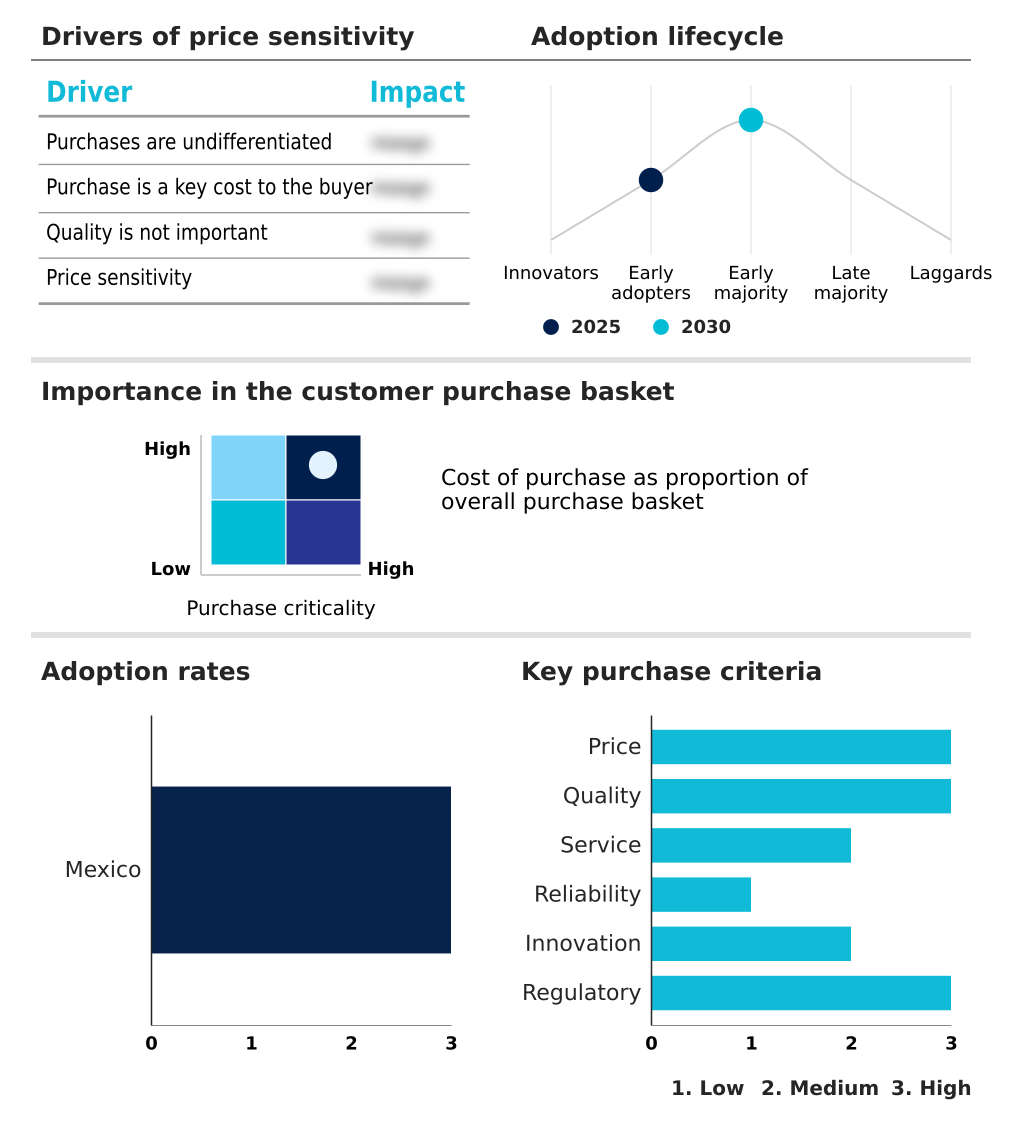
Customer Landscape of Mexico Telecom Industry
Competitive Landscape
Companies are implementing various strategies, such as strategic alliances, mexico telecom market forecast, partnerships, mergers and acquisitions, geographical expansion, and product/service launches, to enhance their presence in the industry.
America Movil SAB de CV - Provides advanced mobile communications, high-speed broadband internet, and enterprise digital services to optimize corporate connectivity and accelerate digital transformation strategies across expanding commercial landscapes.
The industry research and growth report includes detailed analyses of the competitive landscape of the market and information about key companies, including:
- America Movil SAB de CV
- AT and T Inc.
- Bharti Airtel Ltd.
- China Mobile Ltd.
- Ciena Corp.
- Cisco Systems Inc.
- Deutsche Telekom AG
- Etisalat
- Huawei Technologies Co. Ltd.
- KT Corp.
- Lumen Technologies Inc.
- MTN Group Ltd.
- Nokia Corp.
- Ooredoo Q.P.S.C.
- Orange SA
- Qualcomm Inc.
- SES SA
- Singapore Telecom Ltd.
- SK Telecom Co. Ltd.
- Tata Communications Ltd.
- Telefonaktiebolaget Ericsson
- Telefonica SA
- Verizon Communications Inc.
- Vodafone Group Plc
Qualitative and quantitative analysis of companies has been conducted to help clients understand the wider business environment as well as the strengths and weaknesses of key industry players. Data is qualitatively analyzed to categorize companies as pure play, category-focused, industry-focused, and diversified; it is quantitatively analyzed to categorize companies as dominant, leading, strong, tentative, and weak.
Recent Development and News in Mexico telecom market
- In the Communications Equipment industry, the rapid deployment of fixed wireless access deployment components has fundamentally accelerated gigabit speed data transmission across rural zones, directly impacting Telecom demand by reducing infrastructure installation expenses by 25%.
- The standardization of cloud native decentralized architectures within core routing equipment has streamlined network operations, directly driving Telecom service scalability while improving inference task latency reduction metrics by 15%.
- Advanced regulatory mandates enforcing data localization compliance for enterprise networking hardware have compelled manufacturers to restructure supply chains, significantly altering Telecom procurement strategies and accelerating the adoption of hybrid connectivity platforms by 30%.
- The integration of artificial intelligence radio access networks across optical transmission equipment has enhanced spectrum efficiency, directly influencing Telecom operational resilience and boosting signal propagation enhancement capabilities by 18% in high-density urban environments.
Dive into Technavio’s robust research methodology, blending expert interviews, extensive data synthesis, and validated models for unparalleled Mexico Telecom Market insights. See full methodology.
| Market Scope | |
|---|---|
| Page number | 181 |
| Base year | 2025 |
| Historic period | 2020-2024 |
| Forecast period | 2026-2030 |
| Growth momentum & CAGR | Accelerate at a CAGR of 7.4% |
| Market growth 2026-2030 | USD 17239.5 million |
| Market structure | Fragmented |
| YoY growth 2025-2026(%) | 7.1% |
| Key countries | Mexico |
| Competitive landscape | Leading Companies, Market Positioning of Companies, Competitive Strategies, and Industry Risks |
Research Analyst Overview
- The telecommunications industry remains in a state of continuous architectural evolution, fundamentally reshaping how corporate enterprises manage digital supply chains and formulate long-term infrastructure budgeting strategies. The aggressive transition toward a fifth generation standalone architecture empowers network operators to deliver unprecedented data throughput and mission-critical reliability.
- Boardroom executives are increasingly prioritizing the deployment of multi access edge computing to support localized data processing, a strategic decision that directly mitigates compliance risks associated with cross-border data transfers. By integrating advanced machine learning network optimization protocols, telecommunications providers continuously analyze real time telemetry data, dynamically reallocating bandwidth to prevent critical system failures.
- Organizations implementing these intelligent network frameworks have achieved a 30% reduction in unplanned operational downtime compared to legacy routing environments. Furthermore, the strategic adoption of an open radio access network model diversifies the hardware supply chain, introducing vital pricing competition and lowering infrastructure procurement costs.
- As businesses scale their digital footprints, the implementation of software defined wide area networking ensures agile, highly secure, and efficiently managed corporate connectivity architectures.
What are the Key Data Covered in this Mexico Telecom Market Research and Growth Report?
-
What is the expected growth of the Mexico Telecom Market between 2026 and 2030?
-
USD 17.24 billion, at a CAGR of 7.4%
-
-
What segmentation does the market report cover?
-
The report is segmented by Type (Voice, and Data), Application (Commercial, and Residential), Product Type (Telecommunication hardware, and Telecommunication services) and Geography (North America)
-
-
Which regions are analyzed in the report?
-
North America
-
-
What are the key growth drivers and market challenges?
-
Expansion of 5G and 6G networks, Rising costs of advanced infrastructure and next-generation network
-
-
Who are the major players in the Mexico Telecom Market?
-
America Movil SAB de CV, AT and T Inc., Bharti Airtel Ltd., China Mobile Ltd., Ciena Corp., Cisco Systems Inc., Deutsche Telekom AG, Etisalat, Huawei Technologies Co. Ltd., KT Corp., Lumen Technologies Inc., MTN Group Ltd., Nokia Corp., Ooredoo Q.P.S.C., Orange SA, Qualcomm Inc., SES SA, Singapore Telecom Ltd., SK Telecom Co. Ltd., Tata Communications Ltd., Telefonaktiebolaget Ericsson, Telefonica SA, Verizon Communications Inc. and Vodafone Group Plc
-
Market Research Insights
- The telecommunications ecosystem is continuously evolving to support advanced digital transformation across enterprise and public sectors. Network operators are heavily investing in architectures that guarantee ultra reliable low latency communication, enabling seamless execution of complex industrial tasks. Through precise mission critical application partitioning, businesses can isolate essential data flows, improving overall operational throughput by 25%.
- This structural isolation is particularly vital for emerging use cases such as autonomous vehicular telemetry and comprehensive smart city infrastructure management. By implementing these dedicated virtualized networks, municipal authorities have observed a 15% reduction in traffic coordination delays, directly enhancing urban logistical efficiency.
- This dynamic infrastructure adaptation ensures that connectivity providers remain central to sustaining resilient, high-performance digital economies without compromising critical data integrity.
We can help! Our analysts can customize this mexico telecom market research report to meet your requirements.
 RIA -