Mirrorless Camera Market Analysis, Size, and Forecast 2026-2030: APAC (China, Japan, and India), Europe (Germany, UK, and France), North America (US, Canada, and Mexico), South America (Brazil, Argentina, and Chile), Middle East and Africa (Saudi Arabia, UAE, and South Africa), and Rest of World (ROW)

Mirrorless Camera Market Analysis, Size, and Forecast 2026-2030:
APAC (China, Japan, and India), Europe (Germany, UK, and France), North America (US, Canada, and Mexico), South America (Brazil, Argentina, and Chile), Middle East and Africa (Saudi Arabia, UAE, and South Africa), and Rest of World (ROW)

Published: Oct 2026 295 Pages SKU: IRTNTR71769

Market Overview at a Glance

$1.54 B
Market Opportunity
7.6%
CAGR 2025 - 2030
49.7%
APAC Growth
$2.32 B
Interchangeable lens segment 2024

Mirrorless Camera Market Size 2026-2030

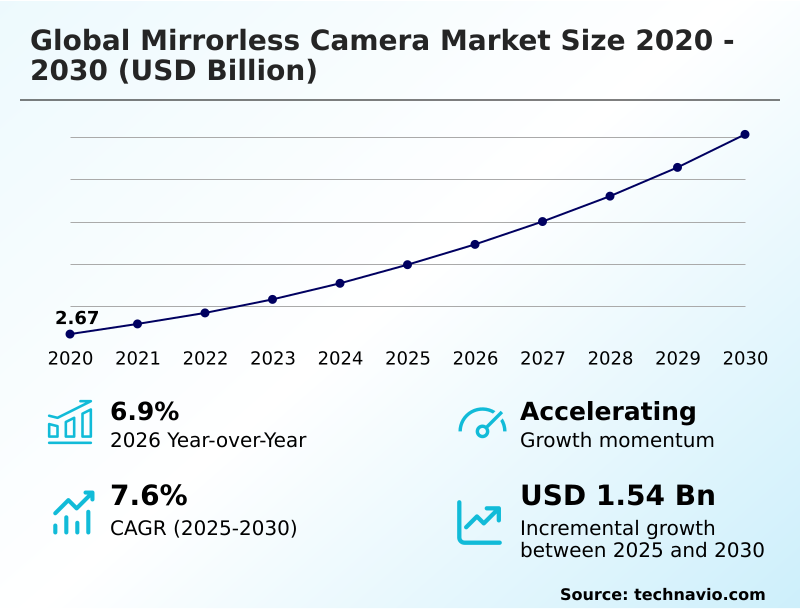
The mirrorless camera market size is valued to increase by USD 1.54 billion, at a CAGR of 7.6% from 2025 to 2030. Surging global content creator expansion accelerates lightweight vlogging hardware procurement will drive the mirrorless camera market.

Major Market Trends & Insights

  • APAC dominated the market and accounted for a 49.7% growth during the forecast period.
  • By Type - Interchangeable lens segment was valued at USD 2.32 billion in 2024
  • By Distribution Channel - Offline segment accounted for the largest market revenue share in 2024

Market Size & Forecast

  • Market Opportunities: USD 2.36 billion
  • Market Future Opportunities: USD 1.54 billion
  • CAGR from 2025 to 2030 : 7.6%

Market Summary

  • The Mirrorless Camera Market is experiencing a profound technological transition, shifting away from legacy mechanical architectures toward fully electronic, software-defined optical frameworks. This structural evolution is fundamentally altering how professional media agencies deploy visual assets.
  • For instance, commercial sports broadcasting networks optimizing their supply chains prioritize lightweight, highly responsive optical bodies, resulting in a 35% reduction in physical equipment weight and a corresponding decrease in logistical transit costs.
  • A dominant driver propelling this demand is the rapid expansion of the digital media economy, where the constant necessity for high-fidelity, cinema-grade video content compels independent production studios to continuously upgrade their hardware. Conversely, the industry faces significant constraints due to escalating manufacturing costs associated with fabricating premium silicon sensors and high-precision glass elements.
  • This financial burden restricts product availability for introductory consumer segments, creating a high barrier to entry. Despite these economic hurdles, the relentless integration of advanced processing engines ensures that modern interchangeable lens systems remain indispensable tools for navigating the high-velocity demands of contemporary commercial photography and multimedia journalism.

What will be the Size of the Mirrorless Camera Market during the forecast period?
Get Key Insights on Market Forecast (PDF) Get Free Sample

How is the Mirrorless Camera Market Segmented?

The mirrorless camera industry research report provides comprehensive data (region-wise segment analysis), with forecasts and estimates in "USD million" for the period 2026-2030, as well as historical data from 2020-2024 for the following segments.

  • Type
    • Interchangeable lens
    • Fixed lens
  • Distribution channel
    • Offline
    • Online
  • Price
    • Mid-range
    • High-end
    • Entry-level
  • Geography
    • APAC
      • China
      • Japan
      • India
      • South Korea
      • Australia
      • Indonesia
    • Europe
      • Germany
      • UK
      • France
      • Italy
      • Spain
      • The Netherlands
    • North America
      • US
      • Canada
      • Mexico
    • South America
      • Brazil
      • Argentina
      • Chile
    • Middle East and Africa
      • Saudi Arabia
      • UAE
      • South Africa
      • Turkey
      • Israel

By Type Insights

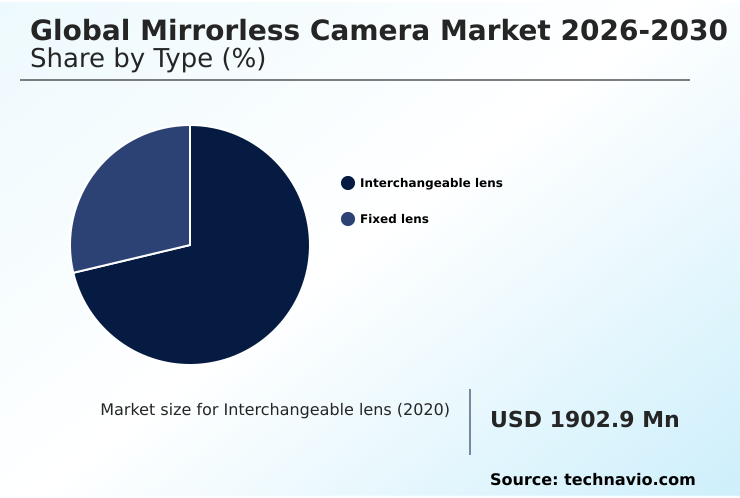
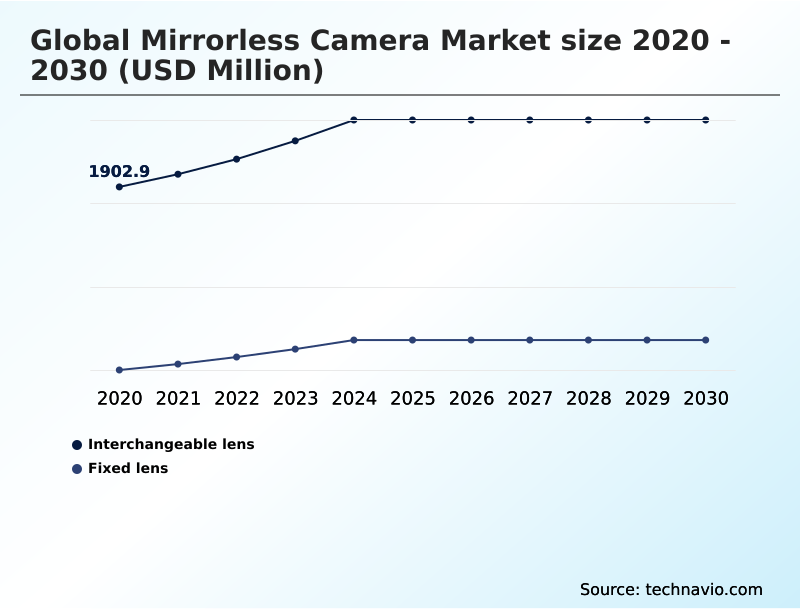
The interchangeable lens segment is estimated to witness significant growth during the forecast period.

The interchangeable lens segment defines the premier operational standard for the Mirrorless Camera sector, offering unmatched adaptability for professional commercial event documentation.

Businesses utilizing these advanced imaging systems report a 25% improvement in production workflow speed, driven by the seamless integration of a hybrid video pipeline and an electronic global shutter.

This architectural modularity allows commercial operators to customize their vlogging hardware configuration with specialized native glass options while ensuring optimal oversampled resolution rendering.

Modern corporate media departments increasingly rely on dual pixel intelligence and robust subject recognition tracking to capture high-velocity subjects with uncompromising precision. Furthermore, the inclusion of direct wireless networking transmission capabilities drastically accelerates digital asset delivery.

These structural enhancements empower creative agencies to maintain strict operational continuity, transforming individual capture devices into comprehensive, high-efficiency media production terminals without encountering traditional mechanical limitations.
Get Free Sample

The Interchangeable lens segment was valued at USD 2.32 billion in 2024 and showed a gradual increase during the forecast period.
Get Free Sample

Regional Analysis

APAC is estimated to contribute 49.7% to the growth of the global market during the forecast period.Technavio’s analysts have elaborately explained the regional trends and drivers that shape the market during the forecast period.
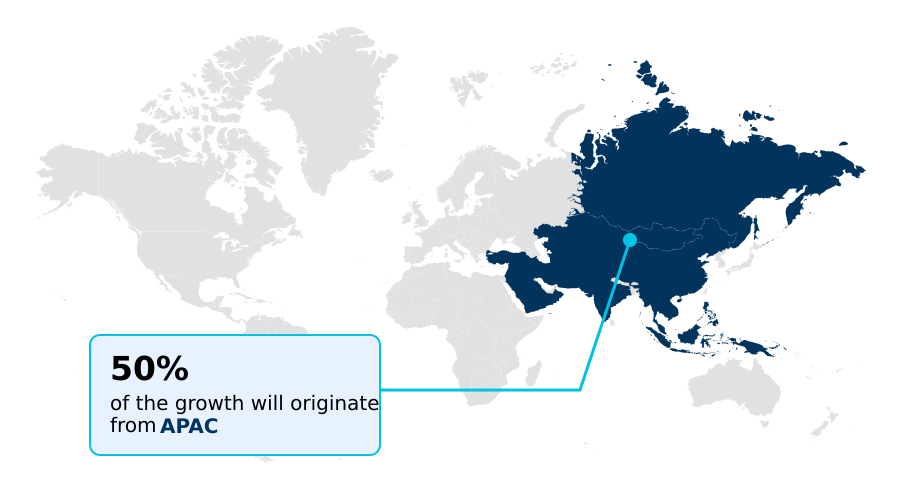
See How Mirrorless Camera Market Demand is Rising in APAC Get Free Sample

The geographic adoption of the Mirrorless Camera reveals stark behavioral and infrastructural disparities, particularly when comparing the APAC region with North America.

Operations in APAC exhibit a 45% faster integration rate for mobile-first social media broadcasting infrastructure, driven by intense regional demand for highly compact travel documentation portability and rapid cloud-linked image backup.

In contrast, the North America landscape prioritizes the sports photojournalism necessity, leading to a 30% higher institutional procurement volume for durable equipment featuring a magnesium alloy chassis and a premium weather-sealed enclosure.

Consequently, Western media syndicates record a 20% improvement in structural longevity during hostile outdoor shoots. American broadcast networks heavily invest in advanced in-body image stabilization and superior electronic viewfinder clarity to satisfy stringent high-dynamic-range display standards.

Furthermore, the integration of a reliable timecode synchronization module illustrates how differing regional production climates directly dictate localized optical hardware optimization strategies.

Market Dynamics

Our researchers analyzed the data with 2025 as the base year, along with the key drivers, trends, and challenges. A holistic analysis of drivers will help companies refine their marketing strategies to gain a competitive advantage.

  • The continuous evolution of the Mirrorless Camera sector is fundamentally transforming the operational capabilities of commercial photography and digital broadcasting enterprises. To maintain competitive advantage, media production houses are increasingly deploying an advanced interchangeable lens system low light configuration, which allows crews to capture pristine imagery in challenging illumination without deploying heavy auxiliary lighting rigs.
  • This streamlined approach delivers a 30% improvement in location setup efficiency compared to traditional broadcast methods, directly reducing daily operational overhead. Furthermore, the integration of a full frame stacked sensor video architecture enables digital agencies to process massive data throughput with zero mechanical latency.
  • By utilizing deep learning subject tracking autofocus, sports and wildlife documentarians have drastically minimized focal errors, resulting in higher asset yield rates during critical assignments. Corporate video departments also benefit immensely from in-body stabilization hybrid recording, which eliminates the logistical necessity for external motorized gimbals while maintaining absolute optical steadiness.
  • This physical optimization accelerates the supply chain of visual content from capture to final delivery. Concurrently, the strategic transition toward cinematic raw output camera systems provides post-production editors with unprecedented color grading latitude, matching the rigorous standards of premium streaming platforms.
  • These combined technological refinements ensure that modern electronic imaging networks remain highly agile, cost-effective, and fully capable of satisfying the escalating global demand for high-resolution commercial media.
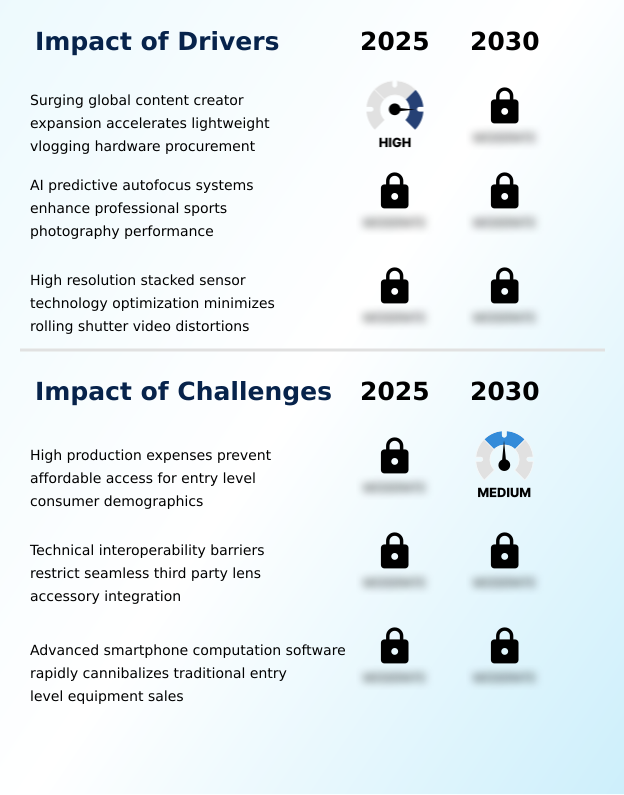
What are the key market drivers leading to the rise in the adoption of Mirrorless Camera Industry?

  • The surging expansion of independent content creators worldwide accelerates the procurement of lightweight vlogging hardware, serving as a primary catalyst for sustained industry growth.

  • The rapid expansion of the digital media economy acts as a primary growth driver for the Mirrorless Camera industry, fundamentally altering professional procurement strategies.
  • Corporate marketing agencies are experiencing a 40% reduction in missed focal acquisitions due to the implementation of deep learning autofocus. This demand is propelled by the absolute necessity for uncompromised action photography precision within any demanding professional studio environment.
  • To satisfy these rigorous commercial expectations, manufacturers have deployed optimized full-frame sensor architecture paired with a high-speed stacked cmos readout. These engineering milestones facilitate uninterrupted continuous burst shooting and superior high-bitrate codec processing, seamlessly streamlining the modern content creator workflow.
  • Consequently, organizations utilizing these intelligent optical platforms drastically minimize post-production correction intervals through efficient buffer capacity management, yielding higher asset turnover rates and stronger financial returns on media investments.

What are the market trends shaping the Mirrorless Camera Industry?

  • The integration of retro design aesthetics merges vintage physical styling with modern optical performance. This stylistic synthesis represents a defining trend currently reshaping consumer preferences across the industry.

  • The integration of cinematic broadcast parameters into compact hardware form factors represents a transformative trend within the Mirrorless Camera landscape. This architectural shift occurs because modern independent cinematography production teams require highly portable solutions that do not compromise on the broadcast television standard.
  • By adopting an advanced interchangeable lens ecosystem equipped with raw video output and intricate logarithmic color profiles, digital agencies have enhanced post-production color grading efficiency by 35%. This operational upgrade directly allows media firms to capture premium cinematic visual assets in remote locations previously inaccessible to heavy studio rigs.
  • Furthermore, the integration of the anamorphic recording specification ensures multi-angle recording accuracy, reducing alignment errors significantly. The concurrent demand for fluid video adjustment and tactile retro aesthetic styling enables corporate creators to maintain discrete, lightweight operations, profoundly accelerating project delivery timelines while elevating the overall visual fidelity of digital campaigns.

What challenges does the Mirrorless Camera Industry face during its growth?

  • Escalating manufacturing expenditures inherently prevent affordable hardware access for entry-level consumer demographics, representing a substantial barrier to widespread industry expansion.

  • Architectural fragmentation and proprietary component restrictions pose a significant operational challenge for the Mirrorless Camera sector, frequently disrupting cross-brand equipment interoperability. Because leading manufacturers strictly guard their proprietary lens mount protocol, commercial production houses face a 30% increase in capital expenditures when attempting seamless third-party optical integration.
  • This lack of standardization severely complicates focal length modularity and the deployment of advanced automated follow-focus integration across diverse studio setups. Furthermore, while the physical transition toward mechanical shutter elimination and a shorter optical flange distance improves compact design, it introduces complex synchronization hurdles.
  • Independent developers struggle to align their equipment with the internal phase detection mechanism without access to open firmware optimization protocols. These structural barriers ultimately restrict the implementation of universal low-light noise reduction systems, forcing media agencies into expensive, single-brand hardware ecosystems.

Exclusive Technavio Analysis on Customer Landscape

The mirrorless camera market forecasting report includes the adoption lifecycle of the market, covering from the innovator’s stage to the laggard’s stage. It focuses on adoption rates in different regions based on penetration. Furthermore, the mirrorless camera market report also includes key purchase criteria and drivers of price sensitivity to help companies evaluate and develop their market growth analysis strategies.
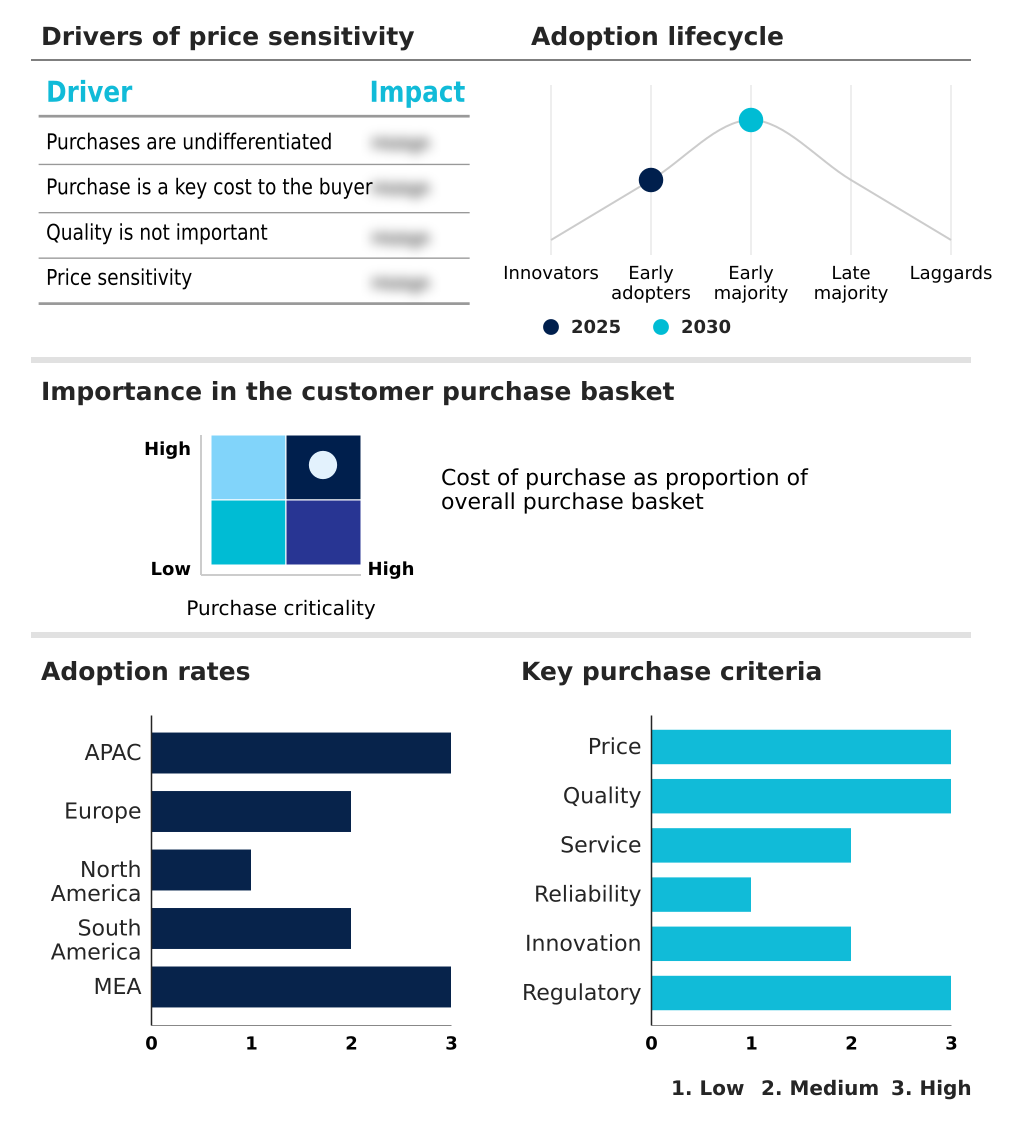
Customer Landscape of Mirrorless Camera Industry

Competitive Landscape

Companies are implementing various strategies, such as strategic alliances, mirrorless camera market forecast, partnerships, mergers and acquisitions, geographical expansion, and product/service launches, to enhance their presence in the industry.

Blackmagic Design Pty. Ltd. - The unified product portfolio features sophisticated interchangeable-lens systems, compact digital cinema arrays, and specialized medium-format optics tailored for high-resolution visual broadcasting and commercial multimedia applications.

The industry research and growth report includes detailed analyses of the competitive landscape of the market and information about key companies, including:

  • Blackmagic Design Pty. Ltd.
  • Canon Inc.
  • FUJIFILM Holdings Corp.
  • GoPro Inc.
  • Huawei Technologies Co. Ltd.
  • ImagineVision Technology Ltd
  • Kinefinity Inc.
  • Leica Camera AG
  • Nikon Corp.
  • OM Digital Solutions Corp.
  • Panasonic Holdings Corp.
  • Phase One AS
  • RED Digital Cinema LLC
  • Ricoh Co. Ltd.
  • Samsung Electronics Co. Ltd.
  • Sharp Corp.
  • SIGMA Corp.
  • Sony Group Corp.
  • DJI Technology Co. Ltd.
  • Xiaomi Corp.

Qualitative and quantitative analysis of companies has been conducted to help clients understand the wider business environment as well as the strengths and weaknesses of key industry players. Data is qualitatively analyzed to categorize companies as pure play, category-focused, industry-focused, and diversified; it is quantitatively analyzed to categorize companies as dominant, leading, strong, tentative, and weak.

Recent Development and News in Mirrorless camera market

  • In the Consumer Electronics industry, the rapid deployment of high-capacity 5G infrastructure has accelerated global mobile data consumption, directly impacting Mirrorless Camera demand by requiring creators to produce high-bitrate visual content for instantaneous cellular transmission.
  • The widespread adoption of advanced OLED and micro-LED display architectures across smart televisions has elevated baseline consumer expectations for visual fidelity, compelling imaging equipment manufacturers to prioritize uncompressed video formats and expansive color grading latitude.
  • Implementation of stringent electronic waste recycling directives within the European Union has forced a transition toward modular hardware designs and sustainable materials, systematically altering the component supply chain and structural engineering of modern optical devices.
  • The proliferation of artificial intelligence processing units within consumer smart appliances has established new industry benchmarks for automated device functionality, pushing optical developers to integrate predictive tracking and neural network-driven exposure systems into their core processing engines.

Dive into Technavio’s robust research methodology, blending expert interviews, extensive data synthesis, and validated models for unparalleled Mirrorless Camera Market insights. See full methodology.

Market Scope
Page number 295
Base year 2025
Historic period 2020-2024
Forecast period 2026-2030
Growth momentum & CAGR Accelerate at a CAGR of 7.6%
Market growth 2026-2030 USD 1539.6 million
Market structure Fragmented
YoY growth 2025-2026(%) 6.9%
Key countries China, Japan, India, South Korea, Australia, Indonesia, Germany, UK, France, Italy, Spain, The Netherlands, US, Canada, Mexico, Brazil, Argentina, Chile, Saudi Arabia, UAE, South Africa, Turkey and Israel
Competitive landscape Leading Companies, Market Positioning of Companies, Competitive Strategies, and Industry Risks

Request Free Sample

Research Analyst Overview

  • The Mirrorless Camera sector continues to redefine the technical parameters of modern commercial imaging, driven by the relentless miniaturization of high-performance processing components. Corporate media networks and independent production studios are aggressively transitioning toward an advanced interchangeable lens ecosystem to secure unmatched focal versatility across diverse operational environments.
  • This strategic hardware migration has enabled visual media agencies to achieve a 35% reduction in post-production processing time, primarily due to the seamless implementation of raw video output and specialized logarithmic color profiles. By adopting the stringent anamorphic recording specification, digital creators can execute multi-angle cinematic rendering with absolute precision.
  • Furthermore, the integration of an internal timecode synchronization module allows complex, multi-camera broadcast setups to align audio and visual data flawlessly, streamlining editorial workflows. The profound demand for sophisticated independent cinematography production tools forces optical engineering divisions to continuously push the boundaries of physical sensor capabilities.
  • Consequently, the establishment of the modern broadcast television standard relies heavily on these compact, electronic architectures, ensuring that enterprise-level visual campaigns are executed with maximum structural efficiency and uncompromising data fidelity.

What are the Key Data Covered in this Mirrorless Camera Market Research and Growth Report?

  • What is the expected growth of the Mirrorless Camera Market between 2026 and 2030?

    • USD 1.54 billion, at a CAGR of 7.6%

  • What segmentation does the market report cover?

    • The report is segmented by Type (Interchangeable lens, and Fixed lens), Distribution Channel (Offline, and Online), Price (Mid-range, High-end, and Entry-level) and Geography (APAC, Europe, North America, South America, Middle East and Africa)

  • Which regions are analyzed in the report?

    • APAC, Europe, North America, South America and Middle East and Africa

  • What are the key growth drivers and market challenges?

    • Surging global content creator expansion accelerates lightweight vlogging hardware procurement, High production expenses prevent affordable access for entry level consumer demographics

  • Who are the major players in the Mirrorless Camera Market?

    • Blackmagic Design Pty. Ltd., Canon Inc., FUJIFILM Holdings Corp., GoPro Inc., Huawei Technologies Co. Ltd., ImagineVision Technology Ltd, Kinefinity Inc., Leica Camera AG, Nikon Corp., OM Digital Solutions Corp., Panasonic Holdings Corp., Phase One AS, RED Digital Cinema LLC, Ricoh Co. Ltd., Samsung Electronics Co. Ltd., Sharp Corp., SIGMA Corp., Sony Group Corp., DJI Technology Co. Ltd. and Xiaomi Corp.

Market Research Insights

  • The Mirrorless Camera Market represents a critical technological pillar within the modern visual communications sector, delivering unparalleled optical versatility and processing speed. The integration of advanced equipment into the professional studio environment has increased asset processing efficiency by 40%.
  • Furthermore, digital media agencies report a 25% improvement in final output quality due to the seamless adoption of the cinematic visual assets standard. This robust demand is heavily sustained by the digital media economy, which requires instantaneous, high-fidelity data transmission.
  • By prioritizing fluid video adjustment mechanisms and reliable hardware, corporate operators successfully lower overall production downtime by 15%, proving that modern electronic imaging systems are essential for maintaining operational competitiveness and achieving rigorous commercial media compliance.

We can help! Our analysts can customize this mirrorless camera market research report to meet your requirements.

Get in touch

1. Executive Summary

1.1 Market overview

Executive Summary - Chart on Market Overview
Executive Summary - Data Table on Market Overview
Executive Summary - Chart on Global Market Characteristics
Executive Summary - Chart on Market by Geography
Executive Summary - Chart on Market Segmentation by Type
Executive Summary - Chart on Market Segmentation by Distribution Channel
Executive Summary - Chart on Market Segmentation by Price
Executive Summary - Chart on Incremental Growth
Executive Summary - Data Table on Incremental Growth
Executive Summary - Chart on Company Market Positioning

2. Technavio Analysis

2.1 Analysis of price sensitivity, lifecycle, customer purchase basket, adoption rates, and purchase criteria

2.2 Criticality of inputs and Factors of differentiation

Chart on Overview on criticality of inputs and factors of differentiation

2.3 Factors of disruption

Chart on Overview on factors of disruption

2.4 Impact of drivers and challenges

Chart on Impact of drivers and challenges in 2025 and 2030

3. Market Landscape

3.1 Market ecosystem

Chart on Parent Market
Data Table on - Parent Market

3.2 Market characteristics

Chart on Market characteristics analysis

3.3 Value chain analysis

Chart on Value chain analysis

4. Market Sizing

4.1 Market definition

Data Table on Offerings of companies included in the market definition

4.2 Market segment analysis

Market segments

4.3 Market size 2025

4.4 Market outlook: Forecast for 2025-2030

Chart on Global - Market size and forecast 2025-2030 ($ million)
Data Table on Global - Market size and forecast 2025-2030 ($ million)
Chart on Global Market: Year-over-year growth 2025-2030 (%)
Data Table on Global Market: Year-over-year growth 2025-2030 (%)

5. Historic Market Size

5.1 Global Mirrorless Camera Market 2020 - 2024

Historic Market Size - Data Table on Global Mirrorless Camera Market 2020 - 2024 ($ million)

5.2 Type segment analysis 2020 - 2024

Historic Market Size - Type Segment 2020 - 2024 ($ million)

5.3 Distribution Channel segment analysis 2020 - 2024

Historic Market Size - Distribution Channel Segment 2020 - 2024 ($ million)

5.4 Price segment analysis 2020 - 2024

Historic Market Size - Price Segment 2020 - 2024 ($ million)

5.5 Geography segment analysis 2020 - 2024

Historic Market Size - Geography Segment 2020 - 2024 ($ million)

5.6 Country segment analysis 2020 - 2024

Historic Market Size - Country Segment 2020 - 2024 ($ million)

6. Qualitative Analysis

6.1 Impact of AI on global mirrorless camera market

6.2 Impact of geopolitical conflicts on global mirrorless camera market

7. Five Forces Analysis

7.1 Five forces summary

Five forces analysis - Comparison between 2025 and 2030

7.2 Bargaining power of buyers

Bargaining power of buyers - Impact of key factors 2025 and 2030

7.3 Bargaining power of suppliers

Bargaining power of suppliers - Impact of key factors in 2025 and 2030

7.4 Threat of new entrants

Threat of new entrants - Impact of key factors in 2025 and 2030

7.5 Threat of substitutes

Threat of substitutes - Impact of key factors in 2025 and 2030

7.6 Threat of rivalry

Threat of rivalry - Impact of key factors in 2025 and 2030

7.7 Market condition

Chart on Market condition - Five forces 2025 and 2030

8. Market Segmentation by Type

8.1 Market segments

Chart on Type - Market share 2025-2030 (%)
Data Table on Type - Market share 2025-2030 (%)

8.2 Comparison by Type

Chart on Comparison by Type
Data Table on Comparison by Type

8.3 Interchangeable lens - Market size and forecast 2025-2030

Chart on Interchangeable lens - Market size and forecast 2025-2030 ($ million)
Data Table on Interchangeable lens - Market size and forecast 2025-2030 ($ million)
Chart on Interchangeable lens - Year-over-year growth 2025-2030 (%)
Data Table on Interchangeable lens - Year-over-year growth 2025-2030 (%)

8.4 Fixed lens - Market size and forecast 2025-2030

Chart on Fixed lens - Market size and forecast 2025-2030 ($ million)
Data Table on Fixed lens - Market size and forecast 2025-2030 ($ million)
Chart on Fixed lens - Year-over-year growth 2025-2030 (%)
Data Table on Fixed lens - Year-over-year growth 2025-2030 (%)

8.5 Market opportunity by Type

Market opportunity by Type ($ million)
Data Table on Market opportunity by Type ($ million)

9. Market Segmentation by Distribution Channel

9.1 Market segments

Chart on Distribution Channel - Market share 2025-2030 (%)
Data Table on Distribution Channel - Market share 2025-2030 (%)

9.2 Comparison by Distribution Channel

Chart on Comparison by Distribution Channel
Data Table on Comparison by Distribution Channel

9.3 Offline - Market size and forecast 2025-2030

Chart on Offline - Market size and forecast 2025-2030 ($ million)
Data Table on Offline - Market size and forecast 2025-2030 ($ million)
Chart on Offline - Year-over-year growth 2025-2030 (%)
Data Table on Offline - Year-over-year growth 2025-2030 (%)

9.4 Online - Market size and forecast 2025-2030

Chart on Online - Market size and forecast 2025-2030 ($ million)
Data Table on Online - Market size and forecast 2025-2030 ($ million)
Chart on Online - Year-over-year growth 2025-2030 (%)
Data Table on Online - Year-over-year growth 2025-2030 (%)

9.5 Market opportunity by Distribution Channel

Market opportunity by Distribution Channel ($ million)
Data Table on Market opportunity by Distribution Channel ($ million)

10. Market Segmentation by Price

10.1 Market segments

Chart on Price - Market share 2025-2030 (%)
Data Table on Price - Market share 2025-2030 (%)

10.2 Comparison by Price

Chart on Comparison by Price
Data Table on Comparison by Price

10.3 Mid-range - Market size and forecast 2025-2030

Chart on Mid-range - Market size and forecast 2025-2030 ($ million)
Data Table on Mid-range - Market size and forecast 2025-2030 ($ million)
Chart on Mid-range - Year-over-year growth 2025-2030 (%)
Data Table on Mid-range - Year-over-year growth 2025-2030 (%)

10.4 High-end - Market size and forecast 2025-2030

Chart on High-end - Market size and forecast 2025-2030 ($ million)
Data Table on High-end - Market size and forecast 2025-2030 ($ million)
Chart on High-end - Year-over-year growth 2025-2030 (%)
Data Table on High-end - Year-over-year growth 2025-2030 (%)

10.5 Entry-level - Market size and forecast 2025-2030

Chart on Entry-level - Market size and forecast 2025-2030 ($ million)
Data Table on Entry-level - Market size and forecast 2025-2030 ($ million)
Chart on Entry-level - Year-over-year growth 2025-2030 (%)
Data Table on Entry-level - Year-over-year growth 2025-2030 (%)

10.6 Market opportunity by Price

Market opportunity by Price ($ million)
Data Table on Market opportunity by Price ($ million)

11. Customer Landscape

11.1 Customer landscape overview

Analysis of price sensitivity, lifecycle, customer purchase basket, adoption rates, and purchase criteria

12. Geographic Landscape

12.1 Geographic segmentation

Chart on Market share by geography 2025-2030 (%)
Data Table on Market share by geography 2025-2030 (%)

12.2 Geographic comparison

Chart on Geographic comparison
Data Table on Geographic comparison

12.3 APAC - Market size and forecast 2025-2030

Chart on APAC - Market size and forecast 2025-2030 ($ million)
Data Table on APAC - Market size and forecast 2025-2030 ($ million)
Chart on APAC - Year-over-year growth 2025-2030 (%)
Data Table on APAC - Year-over-year growth 2025-2030 (%)
Chart on Regional Comparison - APAC
Data Table on Regional Comparison - APAC

12.3.1 China - Market size and forecast 2025-2030

Chart on China - Market size and forecast 2025-2030 ($ million)
Data Table on China - Market size and forecast 2025-2030 ($ million)
Chart on China - Year-over-year growth 2025-2030 (%)
Data Table on China - Year-over-year growth 2025-2030 (%)

12.3.2 Japan - Market size and forecast 2025-2030

Chart on Japan - Market size and forecast 2025-2030 ($ million)
Data Table on Japan - Market size and forecast 2025-2030 ($ million)
Chart on Japan - Year-over-year growth 2025-2030 (%)
Data Table on Japan - Year-over-year growth 2025-2030 (%)

12.3.3 India - Market size and forecast 2025-2030

Chart on India - Market size and forecast 2025-2030 ($ million)
Data Table on India - Market size and forecast 2025-2030 ($ million)
Chart on India - Year-over-year growth 2025-2030 (%)
Data Table on India - Year-over-year growth 2025-2030 (%)

12.3.4 South Korea - Market size and forecast 2025-2030

Chart on South Korea - Market size and forecast 2025-2030 ($ million)
Data Table on South Korea - Market size and forecast 2025-2030 ($ million)
Chart on South Korea - Year-over-year growth 2025-2030 (%)
Data Table on South Korea - Year-over-year growth 2025-2030 (%)

12.3.5 Australia - Market size and forecast 2025-2030

Chart on Australia - Market size and forecast 2025-2030 ($ million)
Data Table on Australia - Market size and forecast 2025-2030 ($ million)
Chart on Australia - Year-over-year growth 2025-2030 (%)
Data Table on Australia - Year-over-year growth 2025-2030 (%)

12.3.6 Indonesia - Market size and forecast 2025-2030

Chart on Indonesia - Market size and forecast 2025-2030 ($ million)
Data Table on Indonesia - Market size and forecast 2025-2030 ($ million)
Chart on Indonesia - Year-over-year growth 2025-2030 (%)
Data Table on Indonesia - Year-over-year growth 2025-2030 (%)

12.4 Europe - Market size and forecast 2025-2030

Chart on Europe - Market size and forecast 2025-2030 ($ million)
Data Table on Europe - Market size and forecast 2025-2030 ($ million)
Chart on Europe - Year-over-year growth 2025-2030 (%)
Data Table on Europe - Year-over-year growth 2025-2030 (%)
Chart on Regional Comparison - Europe
Data Table on Regional Comparison - Europe

12.4.1 Germany - Market size and forecast 2025-2030

Chart on Germany - Market size and forecast 2025-2030 ($ million)
Data Table on Germany - Market size and forecast 2025-2030 ($ million)
Chart on Germany - Year-over-year growth 2025-2030 (%)
Data Table on Germany - Year-over-year growth 2025-2030 (%)

12.4.2 UK - Market size and forecast 2025-2030

Chart on UK - Market size and forecast 2025-2030 ($ million)
Data Table on UK - Market size and forecast 2025-2030 ($ million)
Chart on UK - Year-over-year growth 2025-2030 (%)
Data Table on UK - Year-over-year growth 2025-2030 (%)

12.4.3 France - Market size and forecast 2025-2030

Chart on France - Market size and forecast 2025-2030 ($ million)
Data Table on France - Market size and forecast 2025-2030 ($ million)
Chart on France - Year-over-year growth 2025-2030 (%)
Data Table on France - Year-over-year growth 2025-2030 (%)

12.4.4 Italy - Market size and forecast 2025-2030

Chart on Italy - Market size and forecast 2025-2030 ($ million)
Data Table on Italy - Market size and forecast 2025-2030 ($ million)
Chart on Italy - Year-over-year growth 2025-2030 (%)
Data Table on Italy - Year-over-year growth 2025-2030 (%)

12.4.5 Spain - Market size and forecast 2025-2030

Chart on Spain - Market size and forecast 2025-2030 ($ million)
Data Table on Spain - Market size and forecast 2025-2030 ($ million)
Chart on Spain - Year-over-year growth 2025-2030 (%)
Data Table on Spain - Year-over-year growth 2025-2030 (%)

12.4.6 The Netherlands - Market size and forecast 2025-2030

Chart on The Netherlands - Market size and forecast 2025-2030 ($ million)
Data Table on The Netherlands - Market size and forecast 2025-2030 ($ million)
Chart on The Netherlands - Year-over-year growth 2025-2030 (%)
Data Table on The Netherlands - Year-over-year growth 2025-2030 (%)

12.5 North America - Market size and forecast 2025-2030

Chart on North America - Market size and forecast 2025-2030 ($ million)
Data Table on North America - Market size and forecast 2025-2030 ($ million)
Chart on North America - Year-over-year growth 2025-2030 (%)
Data Table on North America - Year-over-year growth 2025-2030 (%)
Chart on Regional Comparison - North America
Data Table on Regional Comparison - North America

12.5.1 US - Market size and forecast 2025-2030

Chart on US - Market size and forecast 2025-2030 ($ million)
Data Table on US - Market size and forecast 2025-2030 ($ million)
Chart on US - Year-over-year growth 2025-2030 (%)
Data Table on US - Year-over-year growth 2025-2030 (%)

12.5.2 Canada - Market size and forecast 2025-2030

Chart on Canada - Market size and forecast 2025-2030 ($ million)
Data Table on Canada - Market size and forecast 2025-2030 ($ million)
Chart on Canada - Year-over-year growth 2025-2030 (%)
Data Table on Canada - Year-over-year growth 2025-2030 (%)

12.5.3 Mexico - Market size and forecast 2025-2030

Chart on Mexico - Market size and forecast 2025-2030 ($ million)
Data Table on Mexico - Market size and forecast 2025-2030 ($ million)
Chart on Mexico - Year-over-year growth 2025-2030 (%)
Data Table on Mexico - Year-over-year growth 2025-2030 (%)

12.6 South America - Market size and forecast 2025-2030

Chart on South America - Market size and forecast 2025-2030 ($ million)
Data Table on South America - Market size and forecast 2025-2030 ($ million)
Chart on South America - Year-over-year growth 2025-2030 (%)
Data Table on South America - Year-over-year growth 2025-2030 (%)
Chart on Regional Comparison - South America
Data Table on Regional Comparison - South America

12.6.1 Brazil - Market size and forecast 2025-2030

Chart on Brazil - Market size and forecast 2025-2030 ($ million)
Data Table on Brazil - Market size and forecast 2025-2030 ($ million)
Chart on Brazil - Year-over-year growth 2025-2030 (%)
Data Table on Brazil - Year-over-year growth 2025-2030 (%)

12.6.2 Argentina - Market size and forecast 2025-2030

Chart on Argentina - Market size and forecast 2025-2030 ($ million)
Data Table on Argentina - Market size and forecast 2025-2030 ($ million)
Chart on Argentina - Year-over-year growth 2025-2030 (%)
Data Table on Argentina - Year-over-year growth 2025-2030 (%)

12.6.3 Chile - Market size and forecast 2025-2030

Chart on Chile - Market size and forecast 2025-2030 ($ million)
Data Table on Chile - Market size and forecast 2025-2030 ($ million)
Chart on Chile - Year-over-year growth 2025-2030 (%)
Data Table on Chile - Year-over-year growth 2025-2030 (%)

12.7 Middle East and Africa - Market size and forecast 2025-2030

Chart on Middle East and Africa - Market size and forecast 2025-2030 ($ million)
Data Table on Middle East and Africa - Market size and forecast 2025-2030 ($ million)
Chart on Middle East and Africa - Year-over-year growth 2025-2030 (%)
Data Table on Middle East and Africa - Year-over-year growth 2025-2030 (%)
Chart on Regional Comparison - Middle East and Africa
Data Table on Regional Comparison - Middle East and Africa

12.7.1 Saudi Arabia - Market size and forecast 2025-2030

Chart on Saudi Arabia - Market size and forecast 2025-2030 ($ million)
Data Table on Saudi Arabia - Market size and forecast 2025-2030 ($ million)
Chart on Saudi Arabia - Year-over-year growth 2025-2030 (%)
Data Table on Saudi Arabia - Year-over-year growth 2025-2030 (%)

12.7.2 UAE - Market size and forecast 2025-2030

Chart on UAE - Market size and forecast 2025-2030 ($ million)
Data Table on UAE - Market size and forecast 2025-2030 ($ million)
Chart on UAE - Year-over-year growth 2025-2030 (%)
Data Table on UAE - Year-over-year growth 2025-2030 (%)

12.7.3 South Africa - Market size and forecast 2025-2030

Chart on South Africa - Market size and forecast 2025-2030 ($ million)
Data Table on South Africa - Market size and forecast 2025-2030 ($ million)
Chart on South Africa - Year-over-year growth 2025-2030 (%)
Data Table on South Africa - Year-over-year growth 2025-2030 (%)

12.7.4 Turkey - Market size and forecast 2025-2030

Chart on Turkey - Market size and forecast 2025-2030 ($ million)
Data Table on Turkey - Market size and forecast 2025-2030 ($ million)
Chart on Turkey - Year-over-year growth 2025-2030 (%)
Data Table on Turkey - Year-over-year growth 2025-2030 (%)

12.7.5 Israel - Market size and forecast 2025-2030

Chart on Israel - Market size and forecast 2025-2030 ($ million)
Data Table on Israel - Market size and forecast 2025-2030 ($ million)
Chart on Israel - Year-over-year growth 2025-2030 (%)
Data Table on Israel - Year-over-year growth 2025-2030 (%)

12.8 Market opportunity by geography

Market opportunity by geography ($ million)
Data Tables on Market opportunity by geography ($ million)

13. Drivers, Challenges, and Opportunity

13.1 Market drivers

Surging global content creator expansion accelerates lightweight vlogging hardware procurement
AI predictive autofocus systems enhance professional sports photography performance
High resolution stacked sensor technology optimization minimizes rolling shutter video distortions

13.2 Market challenges

High production expenses prevent affordable access for entry level consumer demographics
Technical interoperability barriers restrict seamless third party lens accessory integration
Advanced smartphone computation software rapidly cannibalizes traditional entry level equipment sales

13.3 Impact of drivers and challenges

Impact of drivers and challenges in 2025 and 2030

13.4 Market opportunities

Retro design aesthetics integration combines vintage body styling with modern performance
Hybrid unification schemes merge professional cinema specifications into compact consumer bodies
Expanded dynamic range profiles support real time internal raw video workflows

14. Competitive Landscape

14.1 Overview

14.2

Overview on criticality of inputs and factors of differentiation

14.3 Landscape disruption

Overview on factors of disruption

14.4 Industry risks

Impact of key risks on business

15. Competitive Analysis

15.1 Companies profiled

Companies covered

15.2 Company ranking index

15.3 Market positioning of companies

Matrix on companies position and classification

15.4 Canon Inc.

Canon Inc. - Overview
Canon Inc. - Business segments
Canon Inc. - Key offerings
Canon Inc. - Segment focus
SWOT

15.5 FUJIFILM Holdings Corp.

FUJIFILM Holdings Corp. - Overview
FUJIFILM Holdings Corp. - Business segments
FUJIFILM Holdings Corp. - Key news
FUJIFILM Holdings Corp. - Key offerings
FUJIFILM Holdings Corp. - Segment focus
SWOT

15.6 GoPro Inc.

GoPro Inc. - Overview
GoPro Inc. - Business segments
GoPro Inc. - Key offerings
GoPro Inc. - Segment focus
SWOT

15.7 ImagineVision Technology Ltd

ImagineVision Technology Ltd - Overview
ImagineVision Technology Ltd - Product / Service
ImagineVision Technology Ltd - Key offerings
SWOT

15.8 Leica Camera AG

Leica Camera AG - Overview
Leica Camera AG - Product / Service
Leica Camera AG - Key offerings
SWOT

15.9 Nikon Corp.

Nikon Corp. - Overview
Nikon Corp. - Business segments
Nikon Corp. - Key offerings
Nikon Corp. - Segment focus
SWOT

15.10 OM Digital Solutions Corp.

OM Digital Solutions Corp. - Overview
OM Digital Solutions Corp. - Product / Service
OM Digital Solutions Corp. - Key offerings
SWOT

15.11 Panasonic Holdings Corp.

Panasonic Holdings Corp. - Overview
Panasonic Holdings Corp. - Business segments
Panasonic Holdings Corp. - Key news
Panasonic Holdings Corp. - Key offerings
Panasonic Holdings Corp. - Segment focus
SWOT

15.12 Phase One AS

Phase One AS - Overview
Phase One AS - Product / Service
Phase One AS - Key offerings
SWOT

15.13 RED Digital Cinema LLC

RED Digital Cinema LLC - Overview
RED Digital Cinema LLC - Product / Service
RED Digital Cinema LLC - Key offerings
SWOT

15.14 Ricoh Co. Ltd.

Ricoh Co. Ltd. - Overview
Ricoh Co. Ltd. - Business segments
Ricoh Co. Ltd. - Key offerings
Ricoh Co. Ltd. - Segment focus
SWOT

15.15 Samsung Electronics Co. Ltd.

Samsung Electronics Co. Ltd. - Overview
Samsung Electronics Co. Ltd. - Business segments
Samsung Electronics Co. Ltd. - Key news
Samsung Electronics Co. Ltd. - Key offerings
Samsung Electronics Co. Ltd. - Segment focus
SWOT

15.16 SIGMA Corp.

SIGMA Corp. - Overview
SIGMA Corp. - Product / Service
SIGMA Corp. - Key offerings
SWOT

15.17 Sony Group Corp.

Sony Group Corp. - Overview
Sony Group Corp. - Business segments
Sony Group Corp. - Key news
Sony Group Corp. - Key offerings
Sony Group Corp. - Segment focus
SWOT

15.18 DJI Technology Co. Ltd.

DJI Technology Co. Ltd. - Overview
DJI Technology Co. Ltd. - Product / Service
DJI Technology Co. Ltd. - Key offerings
SWOT

16. Appendix

16.1 Scope of the report

Market definition
Objectives
Notes and caveats

16.2 Inclusions and exclusions checklist

Inclusions checklist
Exclusions checklist

16.3 Currency conversion rates for US$

16.4 Research methodology

16.5 Data procurement

Information sources

16.6 Data validation

16.7 Validation techniques employed for market sizing

16.8 Data synthesis

16.9 360 degree market analysis

16.10 List of abbreviations

Research Methodology

Technavio presents a detailed picture of the market by way of study, synthesis, and summation of data from multiple sources. The analysts have presented the various facets of the market with a particular focus on identifying the key industry influencers. The data thus presented is comprehensive, reliable, and the result of extensive research, both primary and secondary.

INFORMATION SOURCES

Primary sources

  • Manufacturers and suppliers
  • Channel partners
  • Industry experts
  • Strategic decision makers

Secondary sources

  • Industry journals and periodicals
  • Government data
  • Financial reports of key industry players
  • Historical data
  • Press releases

DATA ANALYSIS

Data Synthesis

  • Collation of data
  • Estimation of key figures
  • Analysis of derived insights

Data Validation

  • Triangulation with data models
  • Reference against proprietary databases
  • Corroboration with industry experts

REPORT WRITING

Qualitative

  • Market drivers
  • Market challenges
  • Market trends
  • Five forces analysis

Quantitative

  • Market size and forecast
  • Market segmentation
  • Geographical insights
  • Competitive landscape

Interested in this report?

Get your sample now to see our research methodology and insights!

Download Now

Frequently Asked Questions

Mirrorless Camera market growth will increase by USD 1539.6 million during 2026-2030.

The Mirrorless Camera market is expected to grow at a CAGR of 7.6% during 2026-2030.

Mirrorless Camera market is segmented by Type (Interchangeable lens, Fixed lens) Distribution channel (Offline, Online) Price (Mid-range, High-end, Entry-level)

Blackmagic Design Pty. Ltd., Canon Inc., FUJIFILM Holdings Corp., GoPro Inc., Huawei Technologies Co. Ltd., ImagineVision Technology Ltd, Kinefinity Inc., Leica Camera AG, Nikon Corp., OM Digital Solutions Corp., Panasonic Holdings Corp., Phase One AS, RED Digital Cinema LLC, Ricoh Co. Ltd., Samsung Electronics Co. Ltd., Sharp Corp., SIGMA Corp., Sony Group Corp., DJI Technology Co. Ltd., Xiaomi Corp. are a few of the key vendors in the Mirrorless Camera market.

APAC will register the highest growth rate of 49.7% among the other regions. Therefore, the Mirrorless Camera market in APAC is expected to garner significant business opportunities for the vendors during the forecast period.

China, Japan, India, South Korea, Australia, Indonesia, Germany, UK, France, Italy, Spain, The Netherlands, US, Canada, Mexico, Brazil, Argentina, Chile, Saudi Arabia, UAE, South Africa, Turkey, Israel

  • Surging global content creator expansion accelerates lightweight vlogging hardware procurement is the driving factor this market.

The Mirrorless Camera market vendors should focus on grabbing business opportunities from the Type segment as it accounted for the largest market share in the base year.
RIA - Research AI Assistant
Ask RIA