


Motor Vehicles Market Size 2026-2030
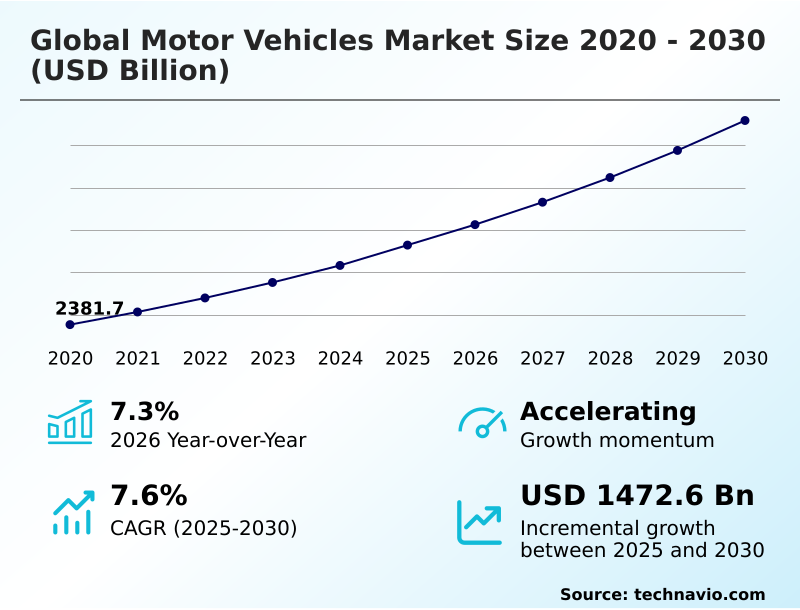
The motor vehicles market size is valued to increase by USD 1472.6 billion, at a CAGR of 7.6% from 2025 to 2030. Accelerated urbanization and global fleet logistics expansion will drive the motor vehicles market.
Major Market Trends & Insights
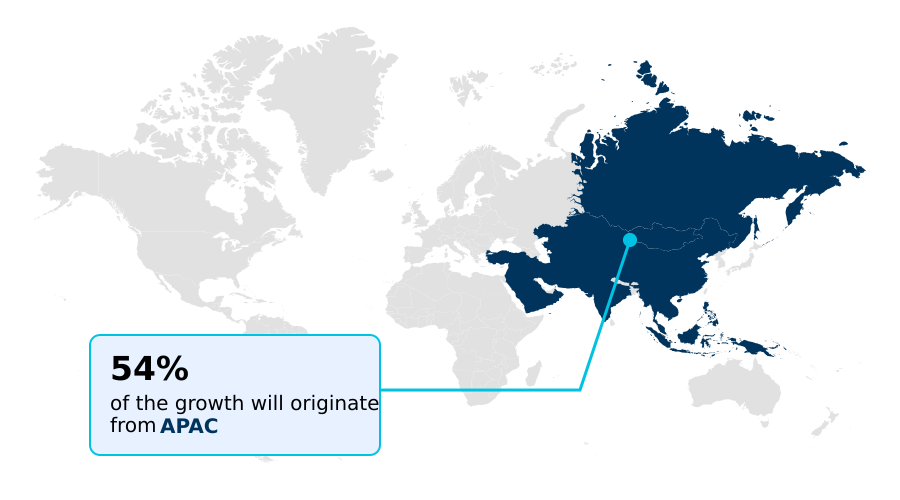
- APAC dominated the market and accounted for a 54% growth during the forecast period.
- By Vehicle Type - Passenger cars segment was valued at USD 1990.7 billion in 2024
- By Propulsion - ICE segment accounted for the largest market revenue share in 2024
Market Size & Forecast
- Market Opportunities: USD 2412.4 billion
- Market Future Opportunities: USD 1472.6 billion
- CAGR from 2025 to 2030 : 7.6%
Market Summary
- The Motor Vehicles sector continues to undergo a profound structural transformation driven by electrification and digital integration. Accelerated urbanization and fleet logistics expansion serve as primary drivers, forcing companies to optimize supply chains and increase the production of commercial transport vehicles to meet last-mile delivery demands.
- Conversely, stringent environmental regulations present a formidable challenge, compelling manufacturers to invest heavily in alternative powertrains and navigate complex compliance frameworks. In response to these shifts, automotive enterprises are restructuring their operational models, heavily adopting predictive maintenance technologies to streamline manufacturing downtime.
- The integration of advanced telematics integration within commercial fleets has successfully reduced operational overhead by 22% compared to legacy tracking methods. This shift fundamentally alters how automotive assets are managed and maintained over their lifecycles.
- The rapid proliferation of autonomous driving systems and connected digital environments ensures that continuous software capabilities now dictate competitive positioning, moving the industry away from traditional mechanical hardware dominance.
What will be the Size of the Motor Vehicles Market during the forecast period?
Get Key Insights on Market Forecast (PDF) Get Free Sample
How is the Motor Vehicles Market Segmented?
The motor vehicles industry research report provides comprehensive data (region-wise segment analysis), with forecasts and estimates in "USD billion" for the period 2026-2030, as well as historical data from 2020-2024 for the following segments.
- Vehicle type
- Passenger cars
- Commercial vehicles
- Propulsion
- ICE
- Electric
- Hybrid
- Engine capacity
- More than 1000-1500 cc
- Less than 1000 cc
- More than 1500-2000 cc
- More than 2000 cc
- Geography
- APAC
- China
- India
- Japan
- South Korea
- Indonesia
- Australia
- Europe
- Germany
- UK
- France
- Italy
- Spain
- North America
- US
- Canada
- Mexico
- Middle East and Africa
- Saudi Arabia
- South Africa
- Turkey
- UAE
- Morocco
- South America
- Brazil
- Argentina
- Chile
- APAC
By Vehicle Type Insights
The passenger cars segment is estimated to witness significant growth during the forecast period.
The passenger cars segment remains a critical component of the Motor Vehicles sector, driven by consumer demand for battery electric propulsion and advanced driver assistance.
Modern automotive engineering prioritizes aerodynamic efficiency optimization alongside high strength lightweight materials to reduce overall energy consumption. Manufacturers are actively pivoting toward plug in hybrid architectures, which have improved thermal efficiency by 15% across leading platforms compared to legacy models.
This structural shift ensures that multi purpose passenger vehicles align with strict corporate average fuel economy standards. The ongoing evolution of software defined architecture enables continuous performance refinement, fundamentally changing how these vehicles operate within zero emission urban zones.
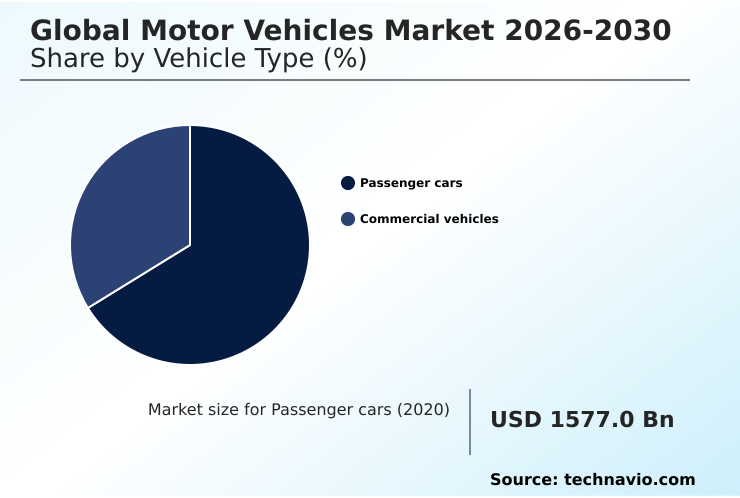
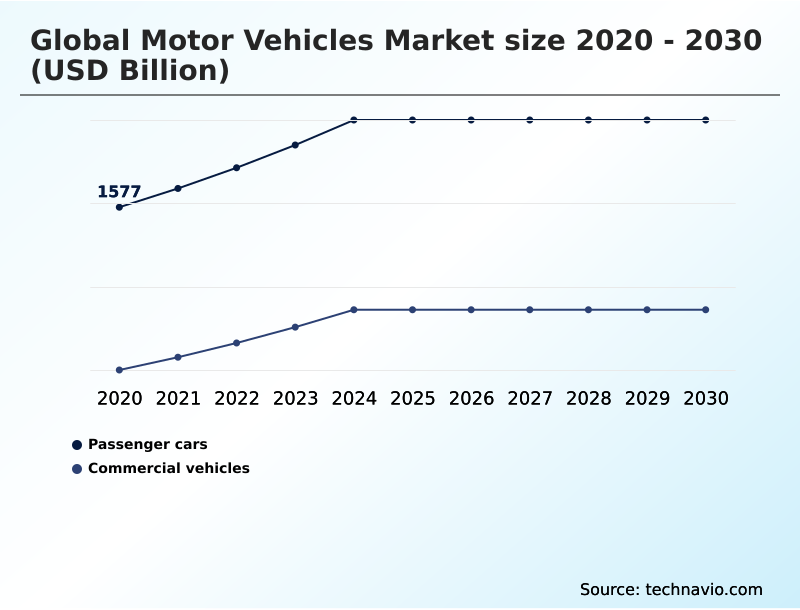
The Passenger cars segment was valued at USD 1990.7 billion in 2024 and showed a gradual increase during the forecast period.
Regional Analysis
APAC is estimated to contribute 54% to the growth of the global market during the forecast period.Technavio’s analysts have elaborately explained the regional trends and drivers that shape the market during the forecast period.
See How Motor Vehicles Market Demand is Rising in APAC Get Free Sample
The geographic landscape of the Motor Vehicles sector reveals stark operational contrasts between APAC and Europe, driven by distinct regulatory and supply chain dynamics.
APAC dominates regional volume, heavily supported by extensive localized industrial manufacturing and substantial investments in grid synchronization technology. This localization has reduced battery assembly costs in APAC by 18% compared to European operations, enabling highly competitive pricing for alternative platforms.
Meanwhile, Europe maintains a stringent focus on localized green policies and the rapid expansion of public charging networks. European fleet operators have achieved a 25% higher penetration rate of advanced platforms compared to their APAC counterparts.
To adapt, businesses in both regions are leveraging thermal management software to optimize vehicle performance under diverse environmental conditions.
These distinct regional strategies highlight how companies adjust their supply chains to support a flexible fuel vehicle ecosystem while navigating varying compliance landscapes.
Market Dynamics
Our researchers analyzed the data with 2025 as the base year, along with the key drivers, trends, and challenges. A holistic analysis of drivers will help companies refine their marketing strategies to gain a competitive advantage.
- The strategic evolution of the Motor Vehicles sector relies heavily on continuous innovation across both passenger and commercial segments. Companies are actively prioritizing battery electric vehicle platform integration to streamline manufacturing complexity and achieve economies of scale. Simultaneously, rapid software defined vehicle architecture development enables continuous functional improvements, altering the traditional vehicle lifecycle.
- To enhance passenger safety and meet strict regulatory standards, automotive manufacturers are accelerating autonomous emergency braking system deployment across mainstream model lineups. In the commercial sector, the focus has shifted toward commercial fleet logistics route optimization, utilizing advanced data analytics to minimize fuel consumption and improve delivery accuracy.
- This digital shift ensures that over the air software update frequency has increased by 40% compared to previous generation models, directly improving long-term asset reliability. Furthermore, advances in lithium ion battery energy density have mitigated consumer range anxiety, allowing alternative vehicles to compete directly with conventional options.
- For heavy industries, maximizing heavy duty commercial truck payload remains critical to maintaining supply chain efficiency, while plug in hybrid electric vehicle range continues to expand for suburban commuters. Hydrogen fuel cell heavy haulage is emerging as a viable alternative for long-distance transport.
- Engineering breakthroughs in variable compression ratio engine efficiency support legacy combustion platforms, while advanced driver assistance system penetration enhances overall road safety. Ensuring zero emission vehicle regulatory compliance remains paramount, supported by the expansion of every smart city intelligent transportation network and strict corporate average fuel economy standards.
- Ultimately, the development of robust vehicle to everything communication infrastructure will define the next era of connected mobility.
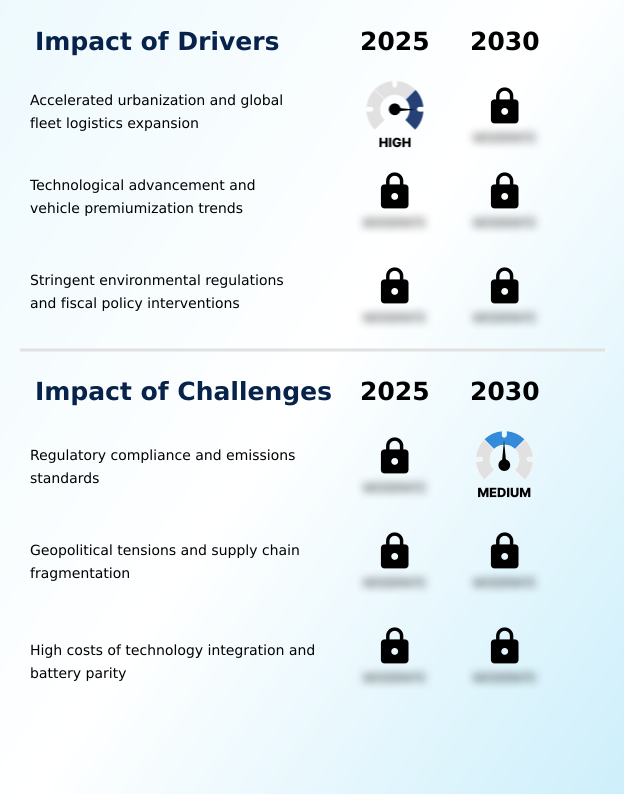
What are the key market drivers leading to the rise in the adoption of Motor Vehicles Industry?
- Accelerated urbanization coupled with the continuous expansion of global fleet logistics serves as the primary catalyst propelling sustained market demand.
- Accelerated urbanization and e-commerce logistics expansion serve as primary catalysts driving structural demand within the Motor Vehicles sector. This shift compels logistics providers to scale their procurement of light commercial vehicles to sustain delivery networks.
- To maximize supply chain reliability, companies invest in downsized engineering architectures featuring active cylinder deactivation and variable valve timing for superior fuel economy.
- Commercial fleets utilizing these modern platforms have lowered operational fuel costs by 12% while improving payload efficiency by 18%. The push for sustainability is amplified by stringent corporate average fuel economy standards, forcing manufacturers to integrate advanced electronic engine management.
- These efficiency mandates directly influence procurement strategies, ensuring automotive assets remain cost-effective and highly adaptable.
What are the market trends shaping the Motor Vehicles Industry?
- The rapid adoption of electric mobility systems by consumers and commercial fleets represents a defining trend currently transforming the automotive landscape.
- The rapid proliferation of connected vehicle technologies and integrated smart mobility platforms is fundamentally reshaping the Motor Vehicles landscape. This technological shift is driven by consumer demand for seamless digital experiences and the need for enhanced operational efficiency across shared transport ecosystems.
- By adopting automated emergency braking and advanced telematics integration, fleet operators have improved overall road safety while reducing unexpected maintenance downtime by 25%. Furthermore, the expansion of multimodal transport platforms allows businesses to optimize last-mile delivery routes, leading to a 15% improvement in urban logistical efficiency.
- The transition toward intelligent transportation ecosystems forces manufacturers to incorporate over the air software updates directly into their core product strategies. This software-centric approach not only extends the functional lifecycle of vehicles but also allows companies to seamlessly adapt to evolving compliance requirements across various ride hailing networks.
What challenges does the Motor Vehicles Industry face during its growth?
- Stringent regulatory compliance mandates and evolving emissions standards pose significant operational and financial challenges for industry participants.
- Navigating fragmented regulatory frameworks and mitigating operational vulnerabilities remain critical challenges for participants in the Motor Vehicles sector. Governments worldwide are aggressively enforcing carbon dioxide reduction targets, placing immense financial strain on legacy manufacturing operations. The high capital expenditure required to transition from internal combustion engines to alternative powertrains restricts overall corporate liquidity.
- Furthermore, persistent supply chain fragmentation regarding critical electronic components and battery mineral refining for lithium ion battery cells has delayed production timelines globally. By transitioning to direct current fast charging compatible platforms, manufacturers attempt to alleviate consumer range anxiety; however, these integrations have increased baseline vehicle production costs by 22% compared to traditional models.
- These structural limitations force companies to constantly recalibrate their pricing strategies to maintain viability amidst volatile input material availability.
Exclusive Technavio Analysis on Customer Landscape
The motor vehicles market forecasting report includes the adoption lifecycle of the market, covering from the innovator’s stage to the laggard’s stage. It focuses on adoption rates in different regions based on penetration. Furthermore, the motor vehicles market report also includes key purchase criteria and drivers of price sensitivity to help companies evaluate and develop their market growth analysis strategies.
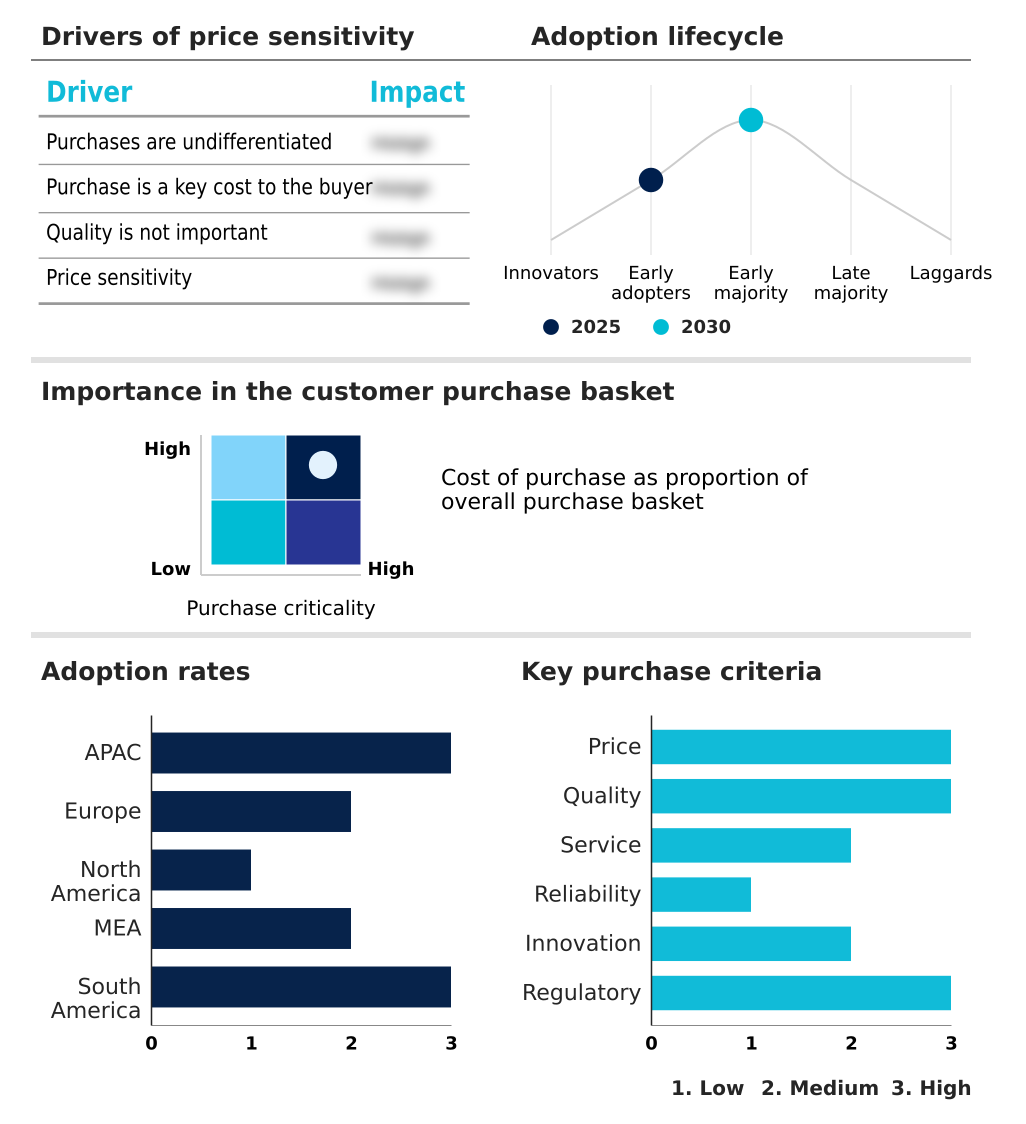
Customer Landscape of Motor Vehicles Industry
Competitive Landscape
Companies are implementing various strategies, such as strategic alliances, motor vehicles market forecast, partnerships, mergers and acquisitions, geographical expansion, and product/service launches, to enhance their presence in the industry.
Bayerische Motoren Werke AG - The vendor provides a diverse portfolio of luxury passenger cars and premium sport utility vehicles, emphasizing high-performance engineering, advanced safety features, and dynamic driving experiences for retail consumers.
The industry research and growth report includes detailed analyses of the competitive landscape of the market and information about key companies, including:
- Bayerische Motoren Werke AG
- BYD Co. Ltd.
- Chongqing Changan Auto. Ltd.
- Ford Motor Co.
- Geely Auto Group
- General Motors Co.
- Great Wall Motor Co. Ltd.
- Honda Motor Co. Ltd.
- Hyundai Motor Co.
- KIA CORP.
- Mazda Motor Corp.
- Mercedes Benz Group AG
- Nissan Motor Co. Ltd.
- Renault SAS
- SAIC Motor Corp. Ltd.
- Stellantis NV
- SUBARU Corp.
- Suzuki Motor Corp.
- Tata Motors Ltd.
- Tesla Inc.
- Toyota Motor Corp.
- Volkswagen AG
Qualitative and quantitative analysis of companies has been conducted to help clients understand the wider business environment as well as the strengths and weaknesses of key industry players. Data is qualitatively analyzed to categorize companies as pure play, category-focused, industry-focused, and diversified; it is quantitatively analyzed to categorize companies as dominant, leading, strong, tentative, and weak.
Recent Development and News in Motor vehicles market
- In the Automobile Manufacturers industry, the aggressive deployment of localized green policies and corporate average fuel economy targets has forced manufacturers to prioritize battery electric vehicle platform integration, directly impacting Motor Vehicles demand by accelerating the phase-out of traditional internal combustion engines and increasing the market penetration of zero-emission fleets by over 25%.
- The rapid advancement of software defined vehicle architecture development has transformed production lines to support over the air software updates, reshaping the Motor Vehicles market by enabling continuous feature enhancements and extending the operational lifecycle of connected passenger vehicles.
- Supply chain fragmentation regarding battery mineral refining and semiconductor availability has disrupted traditional manufacturing cycles, heavily influencing Motor Vehicles supply dynamics by driving a 15% increase in domestic on-shoring investments to secure lithium ion battery cells and mitigate critical component shortages.
- The integration of hydrogen fuel cell systems within commercial fleet logistics route optimization strategies has created new compliance requirements, directly pulling Motor Vehicles demand toward heavy duty long haul transport solutions that meet stringent zero emission vehicle regulatory compliance frameworks.
Dive into Technavio’s robust research methodology, blending expert interviews, extensive data synthesis, and validated models for unparalleled Motor Vehicles Market insights. See full methodology.
| Market Scope | |
|---|---|
| Page number | 300 |
| Base year | 2025 |
| Historic period | 2020-2024 |
| Forecast period | 2026-2030 |
| Growth momentum & CAGR | Accelerate at a CAGR of 7.6% |
| Market growth 2026-2030 | USD 1472.6 billion |
| Market structure | Fragmented |
| YoY growth 2025-2026(%) | 7.3% |
| Key countries | China, India, Japan, South Korea, Indonesia, Australia, Germany, UK, France, Italy, Spain, Russia, US, Canada, Mexico, Saudi Arabia, South Africa, Turkey, UAE, Morocco, Brazil, Argentina and Chile |
| Competitive landscape | Leading Companies, Market Positioning of Companies, Competitive Strategies, and Industry Risks |
Research Analyst Overview
- The Motor Vehicles sector is undergoing a profound structural evolution characterized by a definitive pivot toward advanced connectivity and sustainable propulsion. Boardroom-level product strategy decisions are increasingly dictated by the necessity to integrate cellular network synchronization and sophisticated autonomous driving systems into modern vehicle architectures.
- This digital transformation has led manufacturers to adopt a software defined architecture, which enables continuous functionality upgrades and drastically alters the traditional product lifecycle. Consequently, companies implementing these integrated digital environments have recorded a 30% reduction in diagnostic processing times, directly enhancing operational efficiency and customer retention.
- The industry is also witnessing a rapid expansion in the adoption of mild hybrid electronic assists and regenerative electrical energy capturing technologies to meet stringent emission mandates without sacrificing performance. The deployment of high capacity commuter buses featuring alternative powertrains is reshaping municipal transit strategies.
- These technological shifts force automotive enterprises to fundamentally reassess their capital allocation, ensuring that product pipelines are fully aligned with the ongoing transition toward intelligent, highly connected mobility ecosystems.
What are the Key Data Covered in this Motor Vehicles Market Research and Growth Report?
-
What is the expected growth of the Motor Vehicles Market between 2026 and 2030?
-
USD 1472.6 billion, at a CAGR of 7.6%
-
-
What segmentation does the market report cover?
-
The report is segmented by Vehicle Type (Passenger cars, and Commercial vehicles), Propulsion (ICE, Electric, and Hybrid), Engine Capacity (More than 1000-1500 cc, Less than 1000 cc, More than 1500-2000 cc, and More than 2000 cc) and Geography (APAC, Europe, North America, Middle East and Africa, South America)
-
-
Which regions are analyzed in the report?
-
APAC, Europe, North America, Middle East and Africa and South America
-
-
What are the key growth drivers and market challenges?
-
Accelerated urbanization and global fleet logistics expansion, Regulatory compliance and emissions standards
-
-
Who are the major players in the Motor Vehicles Market?
-
Bayerische Motoren Werke AG, BYD Co. Ltd., Chongqing Changan Auto. Ltd., Ford Motor Co., Geely Auto Group, General Motors Co., Great Wall Motor Co. Ltd., Honda Motor Co. Ltd., Hyundai Motor Co., KIA CORP., Mazda Motor Corp., Mercedes Benz Group AG, Nissan Motor Co. Ltd., Renault SAS, SAIC Motor Corp. Ltd., Stellantis NV, SUBARU Corp., Suzuki Motor Corp., Tata Motors Ltd., Tesla Inc., Toyota Motor Corp. and Volkswagen AG
-
Market Research Insights
- The Motor Vehicles sector is experiencing rapid technological evolution fueled by shifting consumer preferences and rigorous carbon dioxide reduction targets. Automotive manufacturers are actively adopting circular economy principles to optimize resource utilization, resulting in a 20% reduction in raw material waste during production.
- The deployment of predictive intelligence platforms has significantly enhanced inventory management, improving dealership stock allocation efficiency by 15%. Furthermore, investments in urban transport infrastructure are accelerating the transition toward intelligent transportation ecosystems, enhancing overall mobility network fluidity. As companies address supply chain fragmentation, localized manufacturing initiatives have improved component delivery reliability by 18%, directly supporting sustained profitability and operational resilience.
We can help! Our analysts can customize this motor vehicles market research report to meet your requirements.
 RIA -