

North America Rail Freight Transportation Market Size 2026-2030
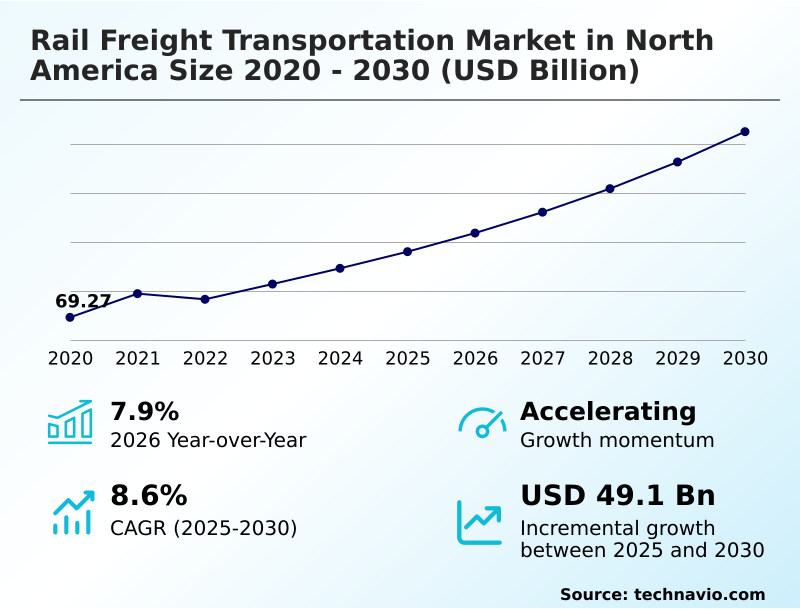
The north america rail freight transportation market size is valued to increase by USD 49.10 billion, at a CAGR of 8.6% from 2025 to 2030. Integration of intermodal network solutions will drive the north america rail freight transportation market.
Major Market Trends & Insights
- By Mode of Transportation - Freight cars segment was valued at USD 39.40 billion in 2024
- By End-user - Petroleum and chemical segment accounted for the largest market revenue share in 2024
Market Size & Forecast
- Market Opportunities: USD 75.96 billion
- Market Future Opportunities: USD 49.10 billion
- CAGR from 2025 to 2030 : 8.6%
Market Summary
- The Rail Freight Transportation functions as a highly integrated logistical backbone, moving essential bulk commodities and containerized goods efficiently across vast transcontinental corridors. Industrial shippers increasingly leverage this network to bypass congested highway systems, optimizing their supply chains through dedicated unit trains that deliver bulk materials directly to manufacturing campuses.
- For instance, shifting long-haul cargo from road to rail frequently yields a 30% reduction in total landed transportation costs while simultaneously advancing corporate environmental targets. The strategic integration of intermodal network solutions acts as a primary market driver, enabling operators to seamlessly bridge maritime ports with inland distribution hubs, thereby accelerating inventory velocity.
- Conversely, persistent network congestion and strained legacy infrastructure serve as critical challenges. When bottlenecks occur at major gateways, the resulting delays cascade throughout the continent, increasing terminal dwell times and eroding the inherent cost advantages of rail transit.
- Addressing these structural limitations requires synchronized terminal operations and targeted capital investments to ensure the network can reliably support expanding industrial and e-commerce freight volumes.
What will be the Size of the North America Rail Freight Transportation Market during the forecast period?
Get Key Insights on Market Forecast (PDF) Get Free Sample
How is the North America Rail Freight Transportation Market Segmented?
The north america rail freight transportation industry research report provides comprehensive data (region-wise segment analysis), with forecasts and estimates in "USD million" for the period 2026-2030, as well as historical data from 2020-2024 for the following segments.
- Mode of transportation
- Freight cars
- Tank wagons
- Intermodals
- End-user
- Petroleum and chemical
- Coal
- Metals and minerals
- Agriculture products
- Others
- Type
- Domestic
- International
- Geography
- North America
- US
- Canada
- Mexico
- North America
By Mode of Transportation Insights
The freight cars segment is estimated to witness significant growth during the forecast period.
The freight cars segment represents the foundational infrastructure for heavy-haul operations, moving raw materials across expansive domestic supply chains. Operators increasingly prioritize high-capacity unit train configurations and advanced multi-level railcar design to maximize throughput.
The integration of freight car telematics has fundamentally transformed operations, enabling real-time monitoring of wheel conditions and providing unprecedented freight routing visibility. By deploying predictive maintenance analytics, rail operators have successfully reduced catastrophic equipment failures by 15%.
This shift towards proactive monitoring improves the asset utilization metric, directly leading to a 12% enhancement in payload efficiency compared to legacy rolling stock.
Furthermore, ensuring superior railcar fleet flexibility allows operators to seamlessly transition between handling dry bulk goods and managing specialized liquid commodities via a pressure-differential tank car, effectively mitigating costly service disruptions.
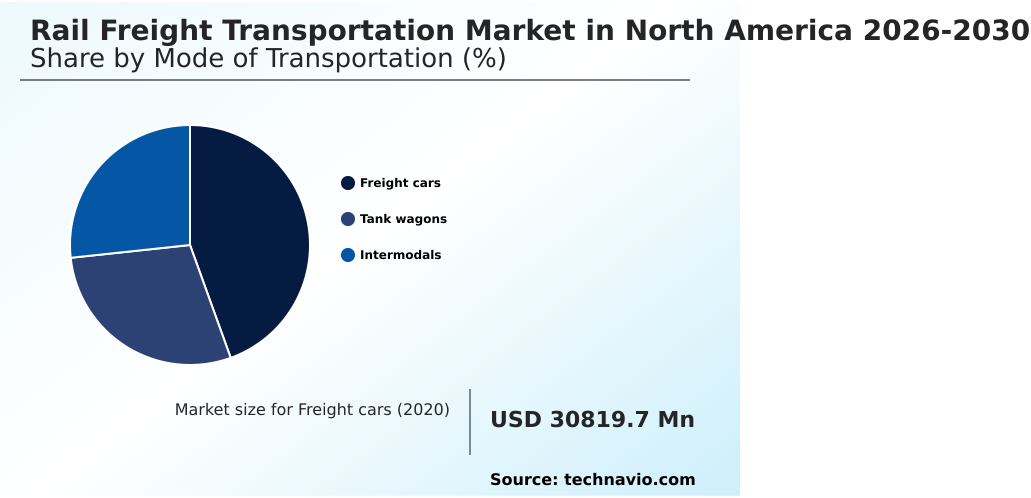
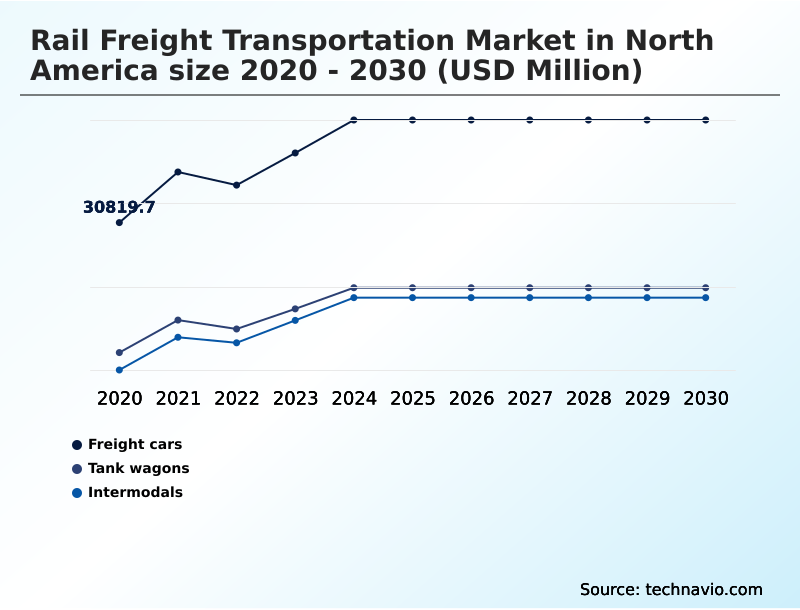
The Freight cars segment was valued at USD 39.40 billion in 2024 and showed a gradual increase during the forecast period.
Market Dynamics
Our researchers analyzed the data with 2025 as the base year, along with the key drivers, trends, and challenges. A holistic analysis of drivers will help companies refine their marketing strategies to gain a competitive advantage.
- Modern supply chains are increasingly reliant on the structural efficiency and environmental advantages of the Rail Freight Transportation. To remain competitive against highly flexible over-the-road trucking alternatives, rail operators are heavily focused on optimizing double-stack container capacity, which allows them to effectively double their payload volume on constrained corridors without proportionately increasing locomotive fuel consumption.
- This operational pivot ensures that long-haul rail provides a significantly lower cost-per-ton-mile ratio, yielding up to a 25% improvement in freight economy compared to traditional single-stack configurations. Furthermore, ensuring network reliability requires operators to be proactive rather than reactive, leading to the rapid adoption and integrating automated track inspection systems across major transcontinental routes.
- This technological integration drastically reduces unexpected track closures and maintains high-velocity cargo flow. Simultaneously, the industry is navigating complex environmental mandates by actively developing battery-electric locomotive deployment strategies, which are particularly effective for reducing localized emissions during intensive yard switching operations.
- Handling complex chemical and energy commodities necessitates rigorous oversight, making managing hazardous material transport protocols a critical component of risk mitigation and regulatory compliance for heavy-haul carriers.
- Finally, as international trade volumes fluctuate, the seamless transfer of goods from coastal ports to interior markets relies heavily on improving inland transloading facility efficiency, ensuring that the rail network functions as a highly synchronized, resilient artery for continental commerce.
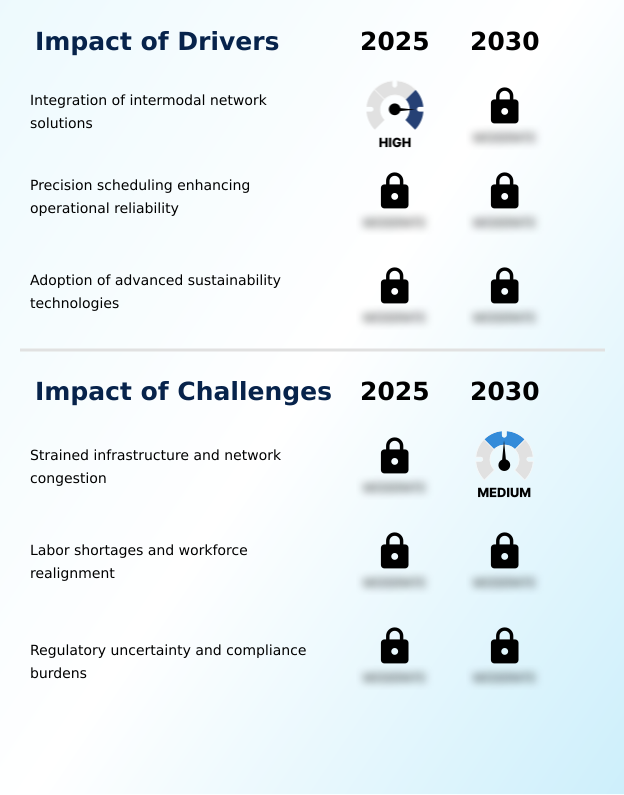
What are the key market drivers leading to the rise in the adoption of North America Rail Freight Transportation Industry?
- The strategic integration of advanced intermodal network solutions functions as the primary driver advancing long-term capacity expansion and supply chain efficiency.
- The exponential growth of e-commerce and retail distribution networks serves as a dominant driver for the Rail Freight Transportation.
- To accommodate surging consumer demand, logistics providers are heavily prioritizing intermodal network optimization to seamlessly bridge maritime gateways with an inland distribution hub. This strategic synchronization effectively circumvents severe highway congestion, enabling supply chains to accelerate freight velocity.
- By leveraging advanced cloud-based fleet management systems and integrating advanced sustainability technology, operators have improved container routing accuracy by 25% and reduced terminal processing bottlenecks by 15%.
- This enhanced first-mile last-mile connectivity allows major retailers to rely on rail for time-sensitive deliveries.
- Consequently, the ability to seamlessly integrate high-capacity rail transport with localized trucking networks lowers total landed costs, ensuring vital supply chain resilience against external macroeconomic shocks.
What are the market trends shaping the North America Rail Freight Transportation Industry?
- Decarbonization driven by targeted locomotive innovation represents a pivotal emerging trend reshaping operational sustainability and asset procurement within the market.
- A defining trend within the Rail Freight Transportation is the targeted deployment of low-emission propulsion systems across localized switching environments. Corporate sustainability mandates are forcing operators to integrate a hydrogen-fuel-cell prototype and adopt a renewable biodiesel blend into their active fleets.
- By replacing aging diesel assets in a dense industrial campus environment, rail carriers are successfully lowering localized particulate emissions while simultaneously reducing fuel consumption by 20% in constrained yard operations. Additionally, the reactive maintenance transition toward proactive infrastructure monitoring utilizing non-destructive weld testing has improved track integrity assessments by 18%, sharply decreasing unexpected downtime.
- This ongoing shift toward cleaner energy and digitized safety oversight allows railroads to achieve critical carbon intensity minimization targets, ensuring compliance with strict environmental policies while maintaining robust heavy-haul operational capabilities.
What challenges does the North America Rail Freight Transportation Industry face during its growth?
- Strained legacy infrastructure and persistent network congestion act as critical challenges that significantly constrain optimal velocity and operational growth.
- Strained legacy infrastructure and acute network congestion remain formidable challenges severely impacting the Rail Freight Transportation. The immense volume of intermodal cargo frequently exceeds the structural limitations of existing terminal facilities and single-track corridors.
- When drayage service synchronization fails at a major port terminal service, the resulting operational bottleneck reduction efforts are severely hampered, leading to a 20% increase in unanticipated container dwell time.
- Furthermore, persistent labor shortages and complex locomotive crew scheduling force carriers to rely heavily on extended shifts, which can decrease overall network velocity by up to 12% during peak import seasons. Without sustained investments in heavy-haul locomotive engineering to modernize pulling power and expand siding lengths, operators struggle to maintain the strict transit schedules required by modern manufacturing models.
Exclusive Technavio Analysis on Customer Landscape
The north america rail freight transportation market forecasting report includes the adoption lifecycle of the market, covering from the innovator’s stage to the laggard’s stage. It focuses on adoption rates in different regions based on penetration. Furthermore, the north america rail freight transportation market report also includes key purchase criteria and drivers of price sensitivity to help companies evaluate and develop their market growth analysis strategies.
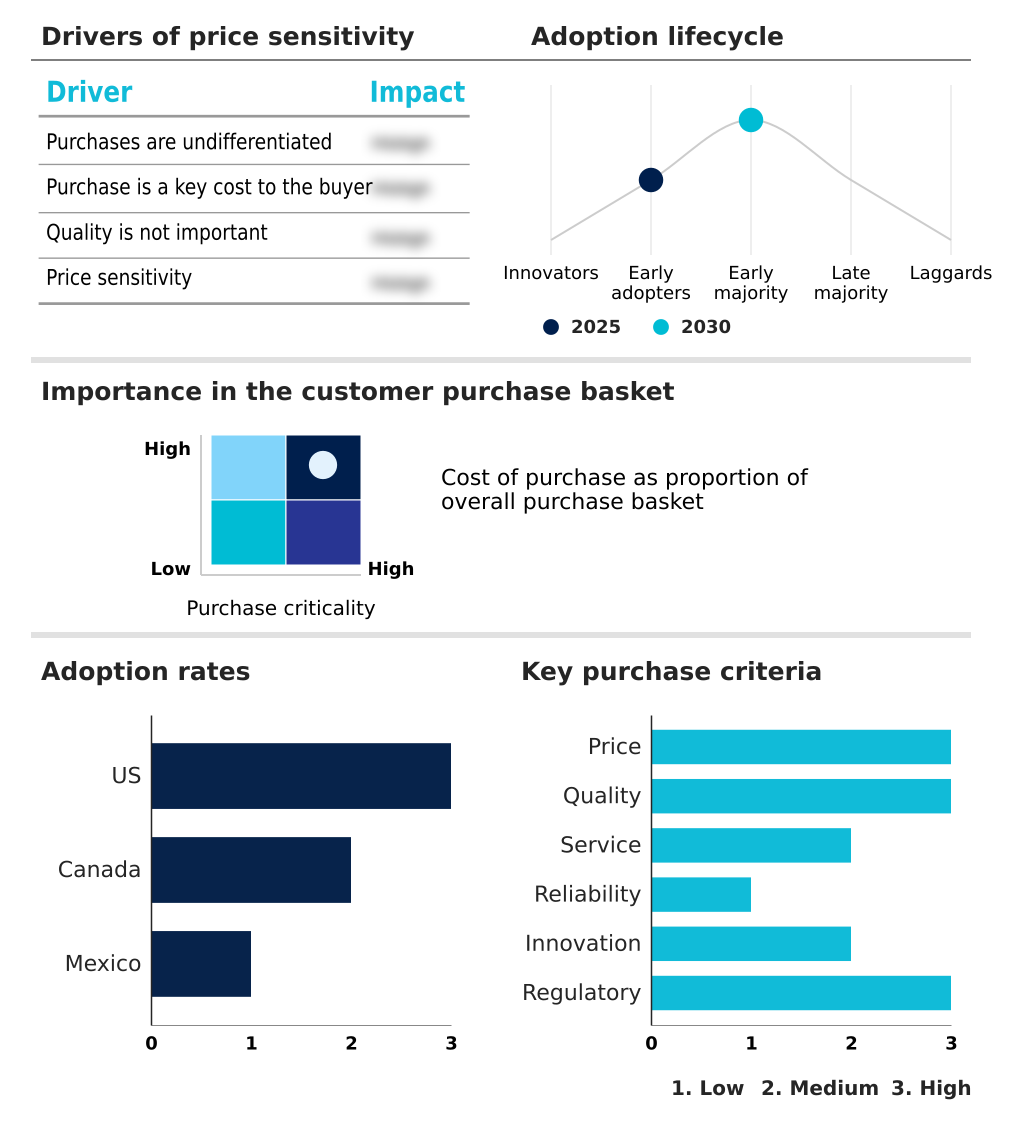
Customer Landscape of North America Rail Freight Transportation Industry
Competitive Landscape
Companies are implementing various strategies, such as strategic alliances, north america rail freight transportation market forecast, partnerships, mergers and acquisitions, geographical expansion, and product/service launches, to enhance their presence in the industry.
Anacostia Rail Holdings Co. - The entity provides comprehensive regional freight operations, industrial switching, specialized rail logistics, and transloading services designed to optimize bulk commodity and industrial goods transportation networks.
The industry research and growth report includes detailed analyses of the competitive landscape of the market and information about key companies, including:
- Anacostia Rail Holdings Co.
- BNSF Railway
- Canadian National Railway Co.
- Canadian Pacific Kansas City
- Carload Express Inc.
- CSX Corp.
- Florida East Coast Railway
- Genesee and Wyoming Inc.
- Guardian Rail Services LLC
- Gulf and Ohio Railways Inc.
- Iowa Interstate Railroad Ltd.
- Norfolk Southern Corp.
- OmniTRAX Inc.
- Patriot Rail Co.
- Pinsly Railroad Co.
- Progressive Rail Inc.
- R. J. Corman Railroad Group LLC
- Railroad Construction Co. Inc.
- TNW Corp.
- Union Pacific Corp.
- Watco Companies LLC
Qualitative and quantitative analysis of companies has been conducted to help clients understand the wider business environment as well as the strengths and weaknesses of key industry players. Data is qualitatively analyzed to categorize companies as pure play, category-focused, industry-focused, and diversified; it is quantitatively analyzed to categorize companies as dominant, leading, strong, tentative, and weak.
Recent Development and News in North america rail freight transportation market
- In the Rail Transportation industry, the mandated implementation of positive train control and related communication-based train control systems has reduced mainline collision incidents by over 40%, directly impacting Rail Freight Transportation by minimizing supply chain disruptions and improving the yard switching operation safety for heavy-haul providers.
- Stringent environmental regulations targeting diesel emissions have accelerated battery-electric locomotive deployment, decreasing localized carbon output by 25% and fundamentally shifting Rail Freight Transportation fleet procurement strategies toward rigorous hazardous material protocol compliance and sustainable propulsion architectures.
- The widespread integration of high-resolution machine vision and a lidar sensor diagnostic tool along primary corridors has improved defect detection accuracy by 30%, allowing Rail Freight Transportation networks to lower the inventory carrying cost by ensuring highly precise preventive maintenance schedules.
- Surging e-commerce volumes have driven massive infrastructure investments in an inland transloading facility, increasing double-stack container capacity by 15% and directly boosting Rail Freight Transportation demand by enabling seamless port-to-distribution connectivity.
Dive into Technavio’s robust research methodology, blending expert interviews, extensive data synthesis, and validated models for unparalleled North America Rail Freight Transportation Market insights. See full methodology.
| Market Scope | |
|---|---|
| Page number | 213 |
| Base year | 2025 |
| Historic period | 2020-2024 |
| Forecast period | 2026-2030 |
| Growth momentum & CAGR | Accelerate at a CAGR of 8.6% |
| Market growth 2026-2030 | USD 49095.1 million |
| Market structure | Fragmented |
| YoY growth 2025-2026(%) | 7.9% |
| Key countries | US, Canada and Mexico |
| Competitive landscape | Leading Companies, Market Positioning of Companies, Competitive Strategies, and Industry Risks |
Research Analyst Overview
- The Rail Freight Transportation is navigating a transformative phase defined by rigorous technological modernization and a strategic pivot toward precision operations. Chief supply chain officers are increasingly integrating rail logistics into their core procurement strategies to achieve stringent scope 3 emission reduction targets.
- This executive-level mandate is accelerating the adoption of precision scheduled railroading, which optimizes asset deployment and dramatically improves network fluidity. By standardizing transit schedules, operators have successfully reduced unnecessary locomotive idling, achieving a 14% improvement in overall fuel efficiency compared to traditional dispatching models. Concurrently, the industry is scaling the deployment of drone-based bridge inspection technologies to fortify infrastructure resilience.
- The proactive detection of structural anomalies facilitates immediate equipment defect remediation, significantly minimizing catastrophic service failures. Furthermore, the expansion of transloading infrastructure provides a critical buffer against coastal congestion, ensuring uninterrupted transcontinental cargo flow.
What are the Key Data Covered in this North America Rail Freight Transportation Market Research and Growth Report?
-
What is the expected growth of the North America Rail Freight Transportation Market between 2026 and 2030?
-
USD 49.10 billion, at a CAGR of 8.6%
-
-
What segmentation does the market report cover?
-
The report is segmented by Mode of Transportation (Freight cars, Tank wagons, and Intermodals), End-user (Petroleum and chemical, Coal, Metals and minerals, Agriculture products, and Others), Type (Domestic, and International) and Geography (North America)
-
-
Which regions are analyzed in the report?
-
North America
-
-
What are the key growth drivers and market challenges?
-
Integration of intermodal network solutions, Strained infrastructure and network congestion
-
-
Who are the major players in the North America Rail Freight Transportation Market?
-
Anacostia Rail Holdings Co., BNSF Railway, Canadian National Railway Co., Canadian Pacific Kansas City, Carload Express Inc., CSX Corp., Florida East Coast Railway, Genesee and Wyoming Inc., Guardian Rail Services LLC, Gulf and Ohio Railways Inc., Iowa Interstate Railroad Ltd., Norfolk Southern Corp., OmniTRAX Inc., Patriot Rail Co., Pinsly Railroad Co., Progressive Rail Inc., R. J. Corman Railroad Group LLC, Railroad Construction Co. Inc., TNW Corp., Union Pacific Corp. and Watco Companies LLC
-
Market Research Insights
- The Rail Freight Transportation is undergoing a fundamental structural optimization to enhance supply chain resilience. By refining crew scheduling and improving asset visibility, operators are successfully mitigating chronic logistics bottlenecks. Recent operational adjustments have reduced average container dwell time by 18%, significantly increasing terminal throughput capacity.
- Furthermore, the strategic deployment of advanced routing algorithms has lowered inventory overhead for major industrial shippers by up to 12%. This transition from legacy tonnage-based dispatching toward precise, synchronized networks ensures that heavy-haul freight remains a highly competitive, low-emission alternative to over-the-road trucking, solidifying its critical role in modern domestic and cross-border commerce.
We can help! Our analysts can customize this north america rail freight transportation market research report to meet your requirements.
 RIA -