


Mexico Retail Market Size 2026-2030
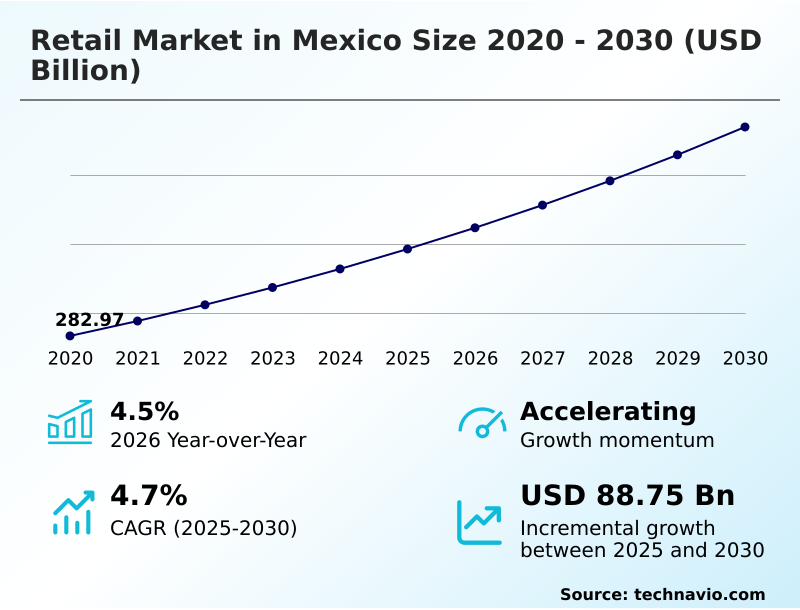
The mexico retail market size is valued to increase by USD 88.75 billion, at a CAGR of 4.7% from 2025 to 2030. Accelerating E-commerce and digital adoption will drive the mexico retail market.
Major Market Trends & Insights
- By Product - PFD and AB and TP segment was valued at USD 116.15 billion in 2024
- By Distribution Channel - Offline segment accounted for the largest market revenue share in 2024
Market Size & Forecast
- Market Opportunities: USD 151.95 billion
- Market Future Opportunities: USD 88.75 billion
- CAGR from 2025 to 2030 : 4.7%
Market Summary
- The Retail Market in Mexico is undergoing a profound structural transformation characterized by the rapid convergence of physical storefronts and sophisticated digital commerce ecosystems. As disposable incomes rise across key industrial corridors, consumer purchasing behaviors are definitively shifting toward omnichannel engagement.
- A prominent retail driver is the accelerated deployment of integrated supply chain automation; for instance, major supermarket chains modernizing their fulfillment centers have achieved a 22% improvement in last-mile delivery efficiency compared to legacy distribution models. This operational shift enables retailers to maintain highly competitive pricing on essential household goods while rapidly expanding their digital footprint.
- Conversely, the pervasive nature of informal commerce presents a formidable structural challenge, heavily diluting the economies of scale required by formal retail organizations and forcing continuous margin compression. To combat this friction, organized retail entities are systematically rolling out localized small-format discount outlets within high-density urban areas.
- By capturing daily impulse purchases and immediate grocery replenishment demands, these modern trade networks establish durable operational resilience against macroeconomic volatility and shifting demographic trends.
What will be the Size of the Mexico Retail Market during the forecast period?
Get Key Insights on Market Forecast (PDF) Get Free Sample
How is the Mexico Retail Market Segmented?
The mexico retail industry research report provides comprehensive data (region-wise segment analysis), with forecasts and estimates in "USD million" for the period 2026-2030, as well as historical data from 2020-2024 for the following segments.
- Product
- PFD and AB and TP
- Personal and household care
- AF and A
- Electrical and electronics
- Others
- Distribution channel
- Offline
- Online
- End-user
- Value
- Premium
- Luxury
- Geography
- North America
- Mexico
- North America
By Product Insights
The pfd and ab and tp segment is estimated to witness significant growth during the forecast period.
The packaged food and beverage sector fundamentally anchors consumption patterns within the Retail Market in Mexico, demonstrating significant resilience against macroeconomic volatility.
Modern hypermarkets and convenience store operators are actively deploying omnichannel integration to synchronize offline and online availability of these essential goods.
By implementing automated climate control systems across their distribution networks, prominent grocery chains have reduced temperature-sensitive product spoilage by 18%. This operational enhancement directly preserves profit margins on high-frequency low-ticket transactions.
Furthermore, the mandatory introduction of front-of-pack nutritional labeling has accelerated product reformulations, compelling manufacturers to optimize localized product assortments.
To support these shifting dietary preferences, retailers increasingly leverage inventory optimization software, ensuring that high-demand wellness alternatives and traditional staples remain consistently stocked across decentralized distribution hubs.
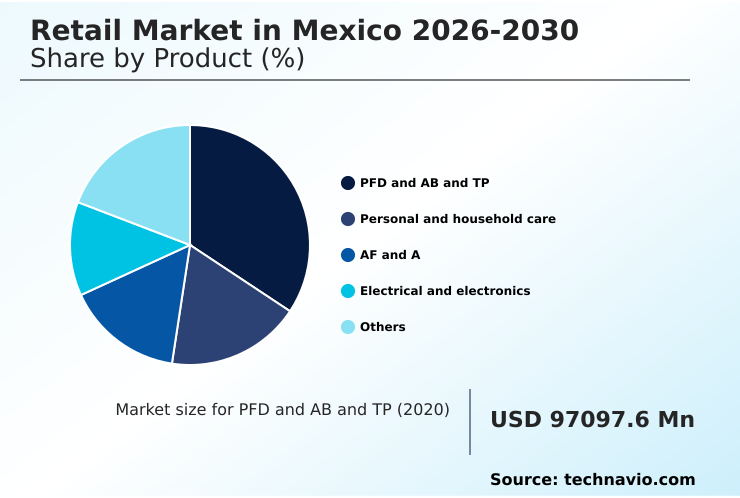
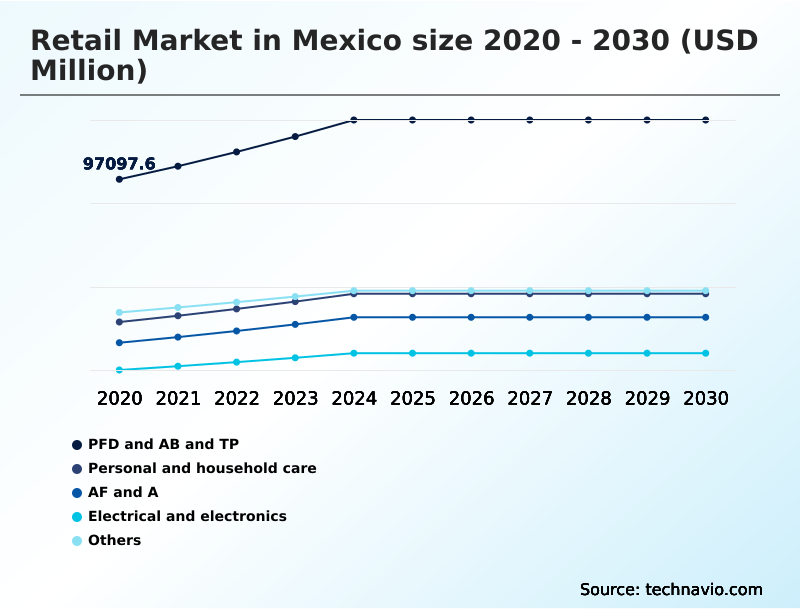
The PFD and AB and TP segment was valued at USD 116.15 billion in 2024 and showed a gradual increase during the forecast period.
Market Dynamics
Our researchers analyzed the data with 2025 as the base year, along with the key drivers, trends, and challenges. A holistic analysis of drivers will help companies refine their marketing strategies to gain a competitive advantage.
- The ongoing structural maturation of the Retail Market in Mexico necessitates comprehensive infrastructural overhauls to align with shifting consumer expectations and persistent logistical challenges. As domestic shoppers rapidly embrace hybrid purchasing models, the necessity for robust omnichannel integration in modern grocery has never been more pronounced.
- Supermarket conglomerates are moving aggressively to synchronize their physical inventory with digital storefronts, actively deploying automated fulfillment centers for e-commerce to ensure rapid order processing and minimize fulfillment errors. By transitioning away from manual warehousing, these operators routinely experience processing time reductions of nearly thirty percent compared to legacy distribution methodologies.
- Concurrently, the strategic realignment of global manufacturing continues to influence domestic operations, making the optimization of nearshoring supply chain distribution networks a critical priority for large-scale retail logistics. This localized sourcing approach substantially curtails trans-oceanic shipping dependencies and secures inventory stability.
- To combat localized inflationary pressures, retail chains are deeply focused on private-label merchandise margin optimization, offering value-driven alternatives that maintain stringent quality controls while driving superior profitability per unit sold. Furthermore, to overcome the traditional hurdles associated with a largely unbanked demographic, the widespread adoption of mobile digital wallets in retail provides a seamless transaction gateway.
- This financial technology bridges the gap between traditional cash reliance and modern digital commerce, ultimately cultivating a highly resilient, data-driven consumer ecosystem capable of sustaining long-term commercial expansion.
What are the key market drivers leading to the rise in the adoption of Mexico Retail Industry?
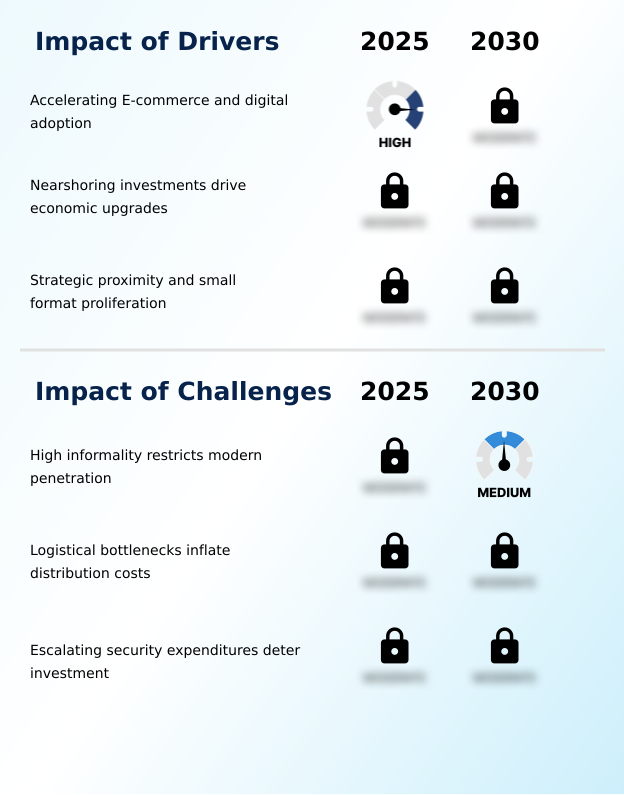
- The rapid acceleration of e-commerce channels and comprehensive digital adoption serves as the primary driver propelling modern market expansion.
- The systemic migration toward digital commerce serves as a formidable operational driver within the Retail Market in Mexico, fundamentally reshaping traditional distribution mechanics.
- By rapidly deploying automated fulfillment centers and highly synchronized last-mile delivery networks, enterprise retailers are overcoming historical logistical bottlenecks that previously constrained geographical expansion. This technological overhaul has effectively reduced urban delivery transit times by 30%, guaranteeing reliable service execution.
- Simultaneously, the widespread implementation of point-of-sale technologies and integrated click-and-collect capabilities empowers consumers to seamlessly navigate between digital exploration and physical procurement. Supported by pervasive consumer financial technology, these modernized fulfillment channels generate a 16% improvement in overall asset utilization.
- Ultimately, this structural digital integration optimizes operational logistics while ensuring that corporate retail strategies remain deeply aligned with contemporary demands for transaction immediacy.
What are the market trends shaping the Mexico Retail Industry?
- Nearshoring economic influxes are significantly boosting disposable income levels across industrial corridors. This macroeconomic shift acts as a prominent market trend driving consumption upgrades toward premium discretionary goods.
- Shifting consumer demographics and localized industrial booms are driving a massive surge in discretionary spending across the Retail Market in Mexico, particularly fueling the expansion of specialized wellness storefronts. This behavioral evolution compels corporate retail entities to fundamentally restructure their merchandising strategies, placing a heavy emphasis on high-margin discretionary categories such as organic dietary supplements and premium self-care merchandise.
- By leveraging hyper-personalized product recommendations through advanced digital catalog platforms, retailers have successfully improved online conversion rates by 21% compared to static generic promotions. Furthermore, the integration of social commerce initiatives serves as a powerful catalyst for younger consumer engagement, bridging the gap between brand discovery and immediate acquisition.
- This strategic pivot actively reduces customer acquisition expenditures by 14% while solidifying long-term loyalty. Consequently, the adoption of these targeted engagement frameworks ensures that retail operators maximize profitability while directly aligning their product portfolios with the sophisticated demands of an upwardly mobile middle class.
What challenges does the Mexico Retail Industry face during its growth?
- The persistent high prevalence of informal commerce structurally restricts the geographic penetration of modern organized trade formats.
- Pervasive informal commerce and severe infrastructural deficiencies remain critical structural barriers within the Retail Market in Mexico, heavily restricting the geographic expansion of organized corporate trade. Because independent neighborhood vendors evade formal fiscal oversight, they generate immense competitive friction against established supermarket chains.
- To offset these margin pressures, formal retailers are increasingly reliant on expanding their private-label merchandise portfolios to maintain price parity. Furthermore, escalating regional security risks and poor road maintenance necessitate the costly implementation of real-time satellite tracking and advanced real-time logistics tracking across freight fleets.
- These defensive operational outlays artificially inflate distribution overhead by up to 18%, significantly compressing net profitability. Consequently, retail corporations are forced to redirect substantial capital toward securing their brick-and-mortar storefronts and issuing proprietary store-issued financial instruments to retain consumers, which subsequently delays the rollout of more sophisticated digital storefront capabilities by nearly 12% in fragmented semi-urban territories.
Exclusive Technavio Analysis on Customer Landscape
The mexico retail market forecasting report includes the adoption lifecycle of the market, covering from the innovator’s stage to the laggard’s stage. It focuses on adoption rates in different regions based on penetration. Furthermore, the mexico retail market report also includes key purchase criteria and drivers of price sensitivity to help companies evaluate and develop their market growth analysis strategies.
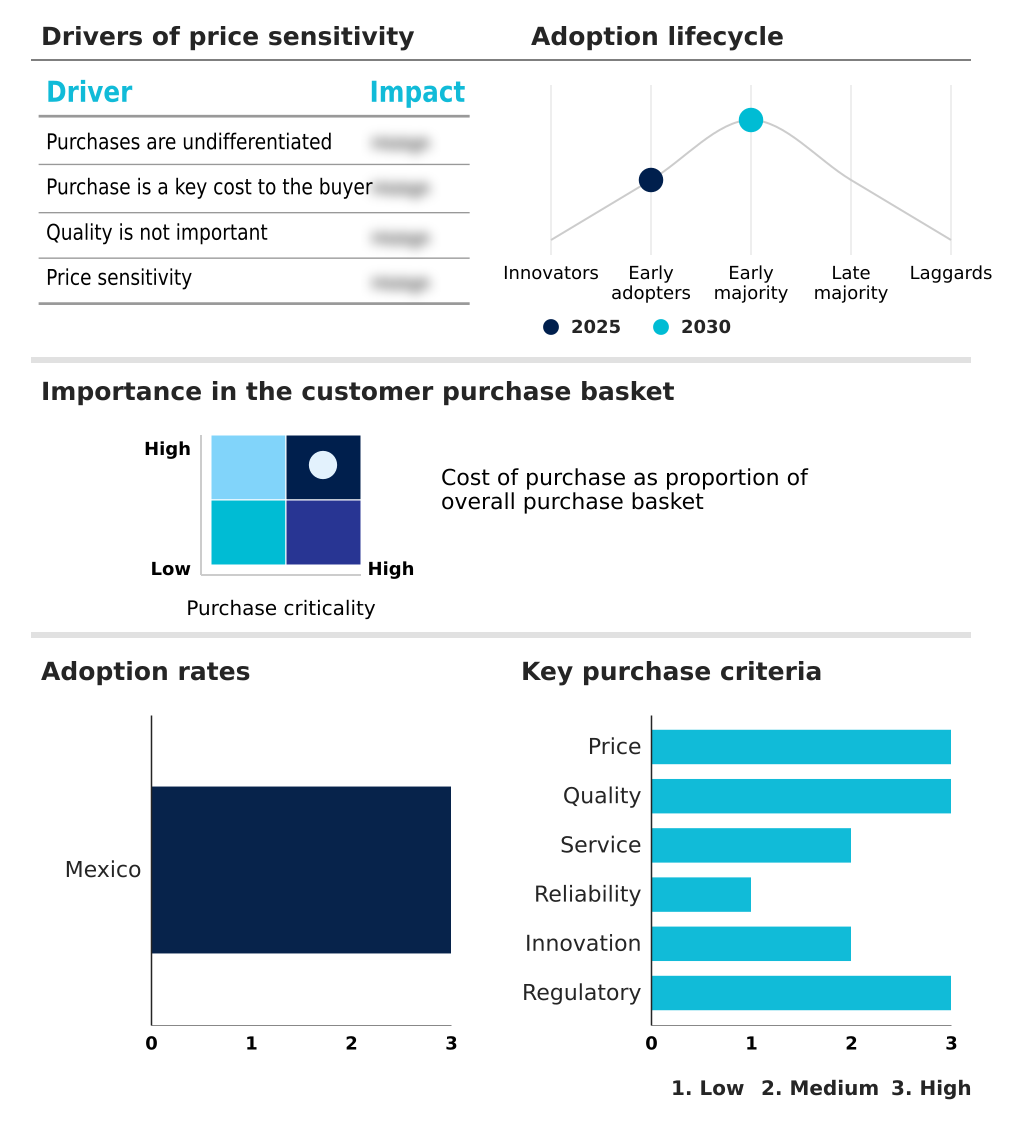
Customer Landscape of Mexico Retail Industry
Competitive Landscape
Companies are implementing various strategies, such as strategic alliances, mexico retail market forecast, partnerships, mergers and acquisitions, geographical expansion, and product/service launches, to enhance their presence in the industry.
BBB Foods Inc. - Retail operations focus on providing fast-moving consumer goods and private-label groceries through a robust hard-discount format, delivering essential household products and beverages at highly competitive price points.
The industry research and growth report includes detailed analyses of the competitive landscape of the market and information about key companies, including:
- BBB Foods Inc.
- C and A Mexico S. de R.L.
- Cadena Comercial Oxxo S.A.
- Casa Ley S.A. de C.V.
- Comercializadora Farmaceutica de
- Controladora Comercial El Sol
- Coppel SA de CV
- Corporativo Fragua S.A.B.
- El Palacio de Hierro SA de CV
- El Puerto de Liverpool
- Grupo Comercial Chedraui S.A.B.
- Grupo Elektra S.A.B. de C.V.
- Grupo Sanborns S.A. de C.V.
- HEB SA de CV
- La Comer SAB de CV
- Organizacion Soriana S.A.B.
- Waldo Dolar Mart de Mexico S.
- Walmart de Mexico y Centroamerica
Qualitative and quantitative analysis of companies has been conducted to help clients understand the wider business environment as well as the strengths and weaknesses of key industry players. Data is qualitatively analyzed to categorize companies as pure play, category-focused, industry-focused, and diversified; it is quantitatively analyzed to categorize companies as dominant, leading, strong, tentative, and weak.
Recent Development and News in Mexico retail market
- In the Broadline Retail industry, the rapid deployment of direct-to-consumer digital channels enabled manufacturers to bypass intermediaries, directly impacting the retail market by intensifying competition and forcing traditional brick-and-mortar storefronts to enhance their digital storefront capabilities to maintain consumer engagement.
- Widespread integration of multi-functional logistical hubs optimized regional inventory staging, substantially lowering transit times and directly impacting retail demand by facilitating highly efficient cross-border commerce options for imported discretionary goods.
- The strategic implementation of buy-now-pay-later micro-credit platforms expanded consumer purchasing power for premium goods, directly pulling retail demand upward by accelerating the velocity of high-margin discretionary categories across online networks.
- Stringent environmental mandates regarding sustainable packaging forced widespread adoption of eco-friendly packaging strategies, directly altering retail supply dynamics by requiring vendors to upgrade their temperature-sensitive logistics to comply with new material standards.
Dive into Technavio’s robust research methodology, blending expert interviews, extensive data synthesis, and validated models for unparalleled Mexico Retail Market insights. See full methodology.
| Market Scope | |
|---|---|
| Page number | 197 |
| Base year | 2025 |
| Historic period | 2020-2024 |
| Forecast period | 2026-2030 |
| Growth momentum & CAGR | Accelerate at a CAGR of 4.7% |
| Market growth 2026-2030 | USD 88747.0 million |
| Market structure | Fragmented |
| YoY growth 2025-2026(%) | 4.5% |
| Key countries | Mexico |
| Competitive landscape | Leading Companies, Market Positioning of Companies, Competitive Strategies, and Industry Risks |
Research Analyst Overview
- Boardrooms operating within the Retail Market in Mexico are increasingly prioritizing systemic technological investments to navigate complex logistical environments and sophisticated consumer demands. The decisive shift toward hybrid commerce models directly influences corporate capital expenditure strategies, compelling large-scale operators to aggressively implement retail supply chain automation.
- By transitioning from legacy distribution frameworks to automated warehouse robotics, prominent retail networks have realized a 28% reduction in inventory processing times, securing critical margin resilience. Furthermore, the integration of predictive inventory analytics empowers commercial planners to optimize stock levels precisely, mitigating the risks of overstocking and product stockouts across fragmented urban zones.
- To further enhance operational fluidity, corporations are embedding advanced electronic payment gateways and mobile commerce gateways into their point-of-sale architectures, drastically lowering transaction friction for cash-dependent demographics. Concurrently, the strategic alignment with nearshoring supply chains ensures consistent product availability and insulates domestic operations from global maritime disruptions.
- These cohesive strategic directives ensure that physical and digital retail channels function synchronously, providing the agility required to sustain operational dominance.
What are the Key Data Covered in this Mexico Retail Market Research and Growth Report?
-
What is the expected growth of the Mexico Retail Market between 2026 and 2030?
-
USD 88.75 billion, at a CAGR of 4.7%
-
-
What segmentation does the market report cover?
-
The report is segmented by Product (PFD and AB and TP, Personal and household care, AF and A, Electrical and electronics, and Others), Distribution Channel (Offline, and Online), End-user (Value, Premium, and Luxury) and Geography (North America)
-
-
Which regions are analyzed in the report?
-
North America
-
-
What are the key growth drivers and market challenges?
-
Accelerating E-commerce and digital adoption, High informality restricts modern penetration
-
-
Who are the major players in the Mexico Retail Market?
-
BBB Foods Inc., C and A Mexico S. de R.L., Cadena Comercial Oxxo S.A., Casa Ley S.A. de C.V., Comercializadora Farmaceutica de, Controladora Comercial El Sol, Coppel SA de CV, Corporativo Fragua S.A.B., El Palacio de Hierro SA de CV, El Puerto de Liverpool, Grupo Comercial Chedraui S.A.B., Grupo Elektra S.A.B. de C.V., Grupo Sanborns S.A. de C.V., HEB SA de CV, La Comer SAB de CV, Organizacion Soriana S.A.B., Waldo Dolar Mart de Mexico S. and Walmart de Mexico y Centroamerica
-
Market Research Insights
- The dynamic infrastructure of the Retail Market in Mexico increasingly relies on seamlessly bridging traditional consumer habits with advanced digital frameworks. By incorporating digital payment solutions at the point of sale, operators have successfully reduced cash-handling friction, driving a 15% increase in transaction velocity within proximity-driven retail formats.
- Simultaneously, the deployment of advanced data management systems allows retailers to execute dynamic pricing adjustments in real time, yielding a 12% improvement in overall margin retention during inflationary cycles.
- Furthermore, the strategic rollout of proprietary store-issued financial instruments has integrated unbanked populations into the formal economy, accelerating the adoption of direct-to-consumer digital channels and fortifying long-term customer loyalty across regional consumer bases.
We can help! Our analysts can customize this mexico retail market research report to meet your requirements.
 RIA -