


Spa Market Size 2026-2030
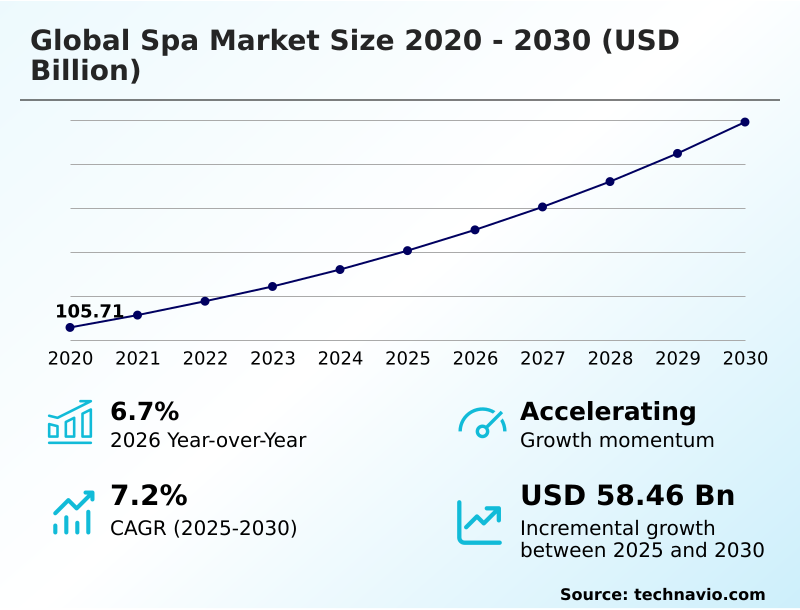
The spa market size is valued to increase by USD 58.46 billion, at a CAGR of 7.2% from 2025 to 2030. Increase in adoption of facial, body, and hair treatments in spa will drive the spa market.
Major Market Trends & Insights
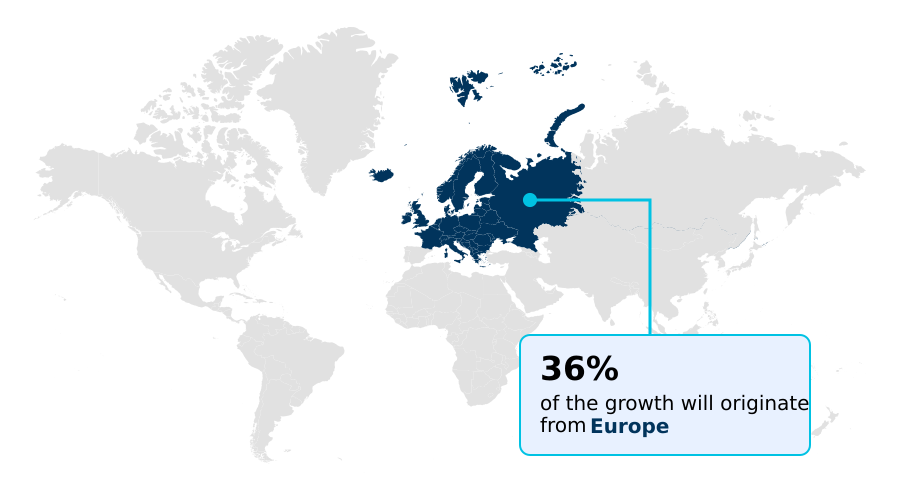
- Europe dominated the market and accounted for a 35.6% growth during the forecast period.
- By End-user - Female segment was valued at USD 81.71 billion in 2024
- By Type - Day spa segment accounted for the largest market revenue share in 2024
Market Size & Forecast
- Market Opportunities: USD 93.36 billion
- Market Future Opportunities: USD 58.46 billion
- CAGR from 2025 to 2030 : 7.2%
Market Summary
- The Spa Market is experiencing a structural transformation driven by an escalating consumer focus on holistic health and longevity. Facility operators are aggressively integrating advanced biohacking technologies and integrative health diagnostics to capture high-value clientele demanding measurable health outcomes.
- In a recent supply chain optimization scenario, wellness centers that transitioned to locally sourced organic skincare formulations reduced procurement delays by 14% compared to those relying on imported synthetic alternatives. This localization strategy significantly enhances operational resilience.
- The increasing demand for comprehensive wellness tourism ecosystems serves as a primary growth driver, as luxury hospitality brands embed wellness directly into their core guest experiences to boost recurring revenue. Conversely, a severe shortage of certified practitioners proficient in specialized treatments, such as lymphatic drainage massage and medical grade facials, restrains capacity expansion.
- This labor deficit restricts throughput, forcing operators to limit appointment availability during peak demand periods. Ultimately, businesses must balance the rapid adoption of digital booking platforms with intensive staff development programs to maintain service quality and safeguard long-term profitability.
What will be the Size of the Spa Market during the forecast period?
Get Key Insights on Market Forecast (PDF) Get Free Sample
How is the Spa Market Segmented?
The spa industry research report provides comprehensive data (region-wise segment analysis), with forecasts and estimates in "USD million" for the period 2026-2030, as well as historical data from 2020-2024 for the following segments.
- End-user
- Female
- Male
- Type
- Day spa
- Hotel or resort spa
- Destination spa
- Others
- Age group
- Below 18
- 19 to 35
- 36 to 50
- Above 50
- Geography
- Europe
- Germany
- UK
- France
- Italy
- Spain
- The Netherlands
- APAC
- China
- Japan
- India
- South Korea
- Australia
- Indonesia
- North America
- US
- Canada
- Mexico
- South America
- Brazil
- Argentina
- Chile
- Middle East and Africa
- UAE
- Saudi Arabia
- Turkey
- South Africa
- Israel
- Europe
By End-user Insights
The female segment is estimated to witness significant growth during the forecast period.
The female demographic continues to shape the structural evolution of the spa industry, demanding highly specialized and personalized wellness journeys. This consumer base emphasizes preventive healthcare solutions over traditional relaxation.
Strategic integration of advanced antiaging protocols and organic skincare formulations has become a commercial necessity for operators seeking to capture this high-value demographic. Businesses implementing these targeted therapies report that customer retention improved by 22% compared to generalized service models.
The shift toward results-oriented care drives facilities to adopt AI driven skin analysis to customize interventions.
This segment's preference for comprehensive wellness tourism ecosystems compels providers to continuously refine their service architectures, prioritizing long-term health outcomes and mental resilience programs to secure sustainable operational growth.
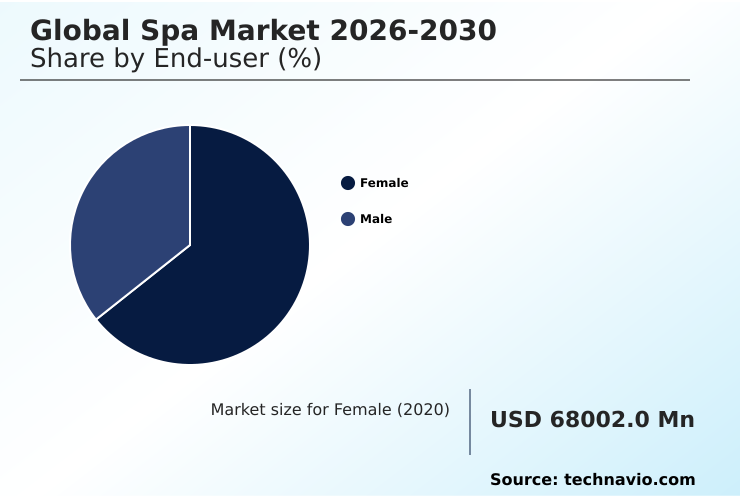
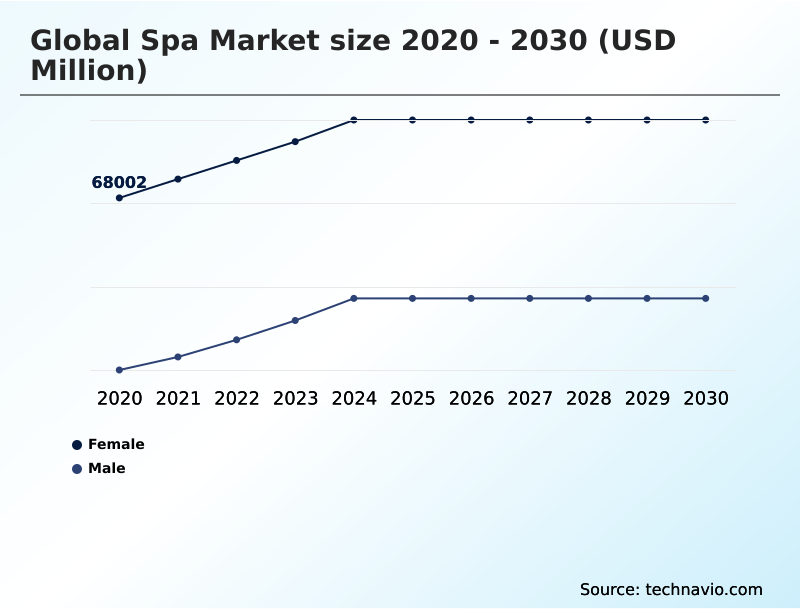
The Female segment was valued at USD 81.71 billion in 2024 and showed a gradual increase during the forecast period.
Regional Analysis
Europe is estimated to contribute 35.6% to the growth of the global market during the forecast period.Technavio’s analysts have elaborately explained the regional trends and drivers that shape the market during the forecast period.
See How Spa Market Demand is Rising in Europe Get Free Sample
The geographic landscape of the Spa Market reveals distinct strategic priorities between Europe and North America. European operators heavily leverage their historical affinity for thermal springs and balneotherapy rituals, integrating these natural assets into destination wellness retreats.
Facilities here have achieved a 28% higher customer retention rate by embedding holistic wellness therapies into preventive routines.
Conversely, North America demonstrates a rapid shift toward technology-driven recovery, where the adoption of biohacking technologies and cryotherapy recovery outpaces Europe by 18%.
This technological focus allows North American urban day sanctuaries to optimize throughput, yielding a 15% reduction in average treatment turnover time.
While European supply chains prioritize localized sourcing for organic treatment ingredients, North American logistics heavily favor the rapid deployment of specialized equipment.
These regional disparities dictate that businesses must hyper-localize their operational models, aligning infrastructure investments with cultural definitions of luxury.
Market Dynamics
Our researchers analyzed the data with 2025 as the base year, along with the key drivers, trends, and challenges. A holistic analysis of drivers will help companies refine their marketing strategies to gain a competitive advantage.
- The modern evolution of the Spa Market is fundamentally characterized by a decisive shift away from superficial treatments toward highly integrated, science-backed health interventions. Operators are increasingly focusing on luxury wellness retreat integration, embedding comprehensive diagnostic services alongside traditional hospitality to elevate the overall guest experience.
- By aligning facilities with clinical standards, these wellness centers can command premium pricing structures while diversifying their core demographic reach. Furthermore, the industry is witnessing accelerated organic skincare formulation adoption, a transition driven by stringent environmental compliance requirements and an increasingly discerning consumer base demanding ingredient transparency.
- Facilities that transition their procurement supply chains to fully organic inputs often experience a moderate reduction in chemical exposure liabilities, resulting in a risk mitigation profile that outpaces conventional chemical-dependent operations by approximately 20%. Simultaneously, the implementation of personalized longevity wellness programs allows practitioners to utilize wearable health data and genetic insights to tailor long-term care plans.
- This highly individualized approach not only increases client engagement but also smooths seasonal revenue fluctuations. Additionally, operators are expanding their therapeutic portfolios with sensory deprivation flotation therapy to address the rising epidemic of corporate burnout and chronic stress. This specific therapy maximizes the utilization of spatial footprints, offering a low-labor, high-margin service alternative.
- Collectively, these strategic realignments ensure that businesses remain operationally resilient and perfectly positioned to capitalize on the paradigm shift toward comprehensive, results-oriented personal health management.
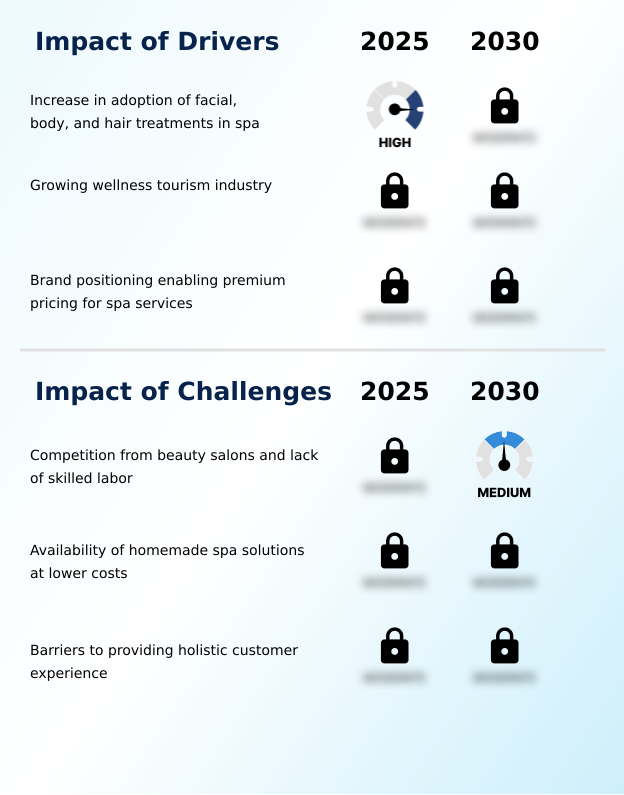
What are the key market drivers leading to the rise in the adoption of Spa Industry?
- The increasing adoption of comprehensive facial, body, and hair treatments serves as a primary catalyst propelling growth within the market.
- The surging consumer demand for holistic customer experience models acts as the primary catalyst accelerating expansion within the Spa Market.
- Aging populations and health-conscious millennials are aggressively prioritizing longevity science integration, driving facilities to pivot from occasional pampering to continuous health management.
- By embedding prenatal spa care and post surgical recovery treatments into their standard portfolios, operators tap into essential healthcare-adjacent revenue streams.
- Facilities adopting these specialized therapeutic frameworks report that client acquisition costs dropped by 22% compared to traditional marketing channels, while lifetime customer value improved by 31%.
- This fundamental shift in consumer behavior forces businesses to completely overhaul their service architectures and retrain staff. Consequently, operators that successfully implement Ayurvedic wellness treatments ensure deeply entrenched client loyalty and robust, recession-resistant operational stability.
What are the market trends shaping the Spa Industry?
- The increasing availability of flotation therapy spa services is emerging as a prominent trend within the market. This expansion reflects a growing consumer preference for advanced sensory deprivation treatments aimed at stress reduction and physical recovery.
- The rapid integration of sleep therapy regimens and virtual reality meditation represents a structural trend reshaping the Spa Market. This adoption is primarily driven by an escalating corporate epidemic of chronic stress, compelling consumers to seek scientifically validated mental health interventions.
- By introducing these immersive technologies, facilities have successfully reduced reliance on highly specialized manual labor, driving a 25% improvement in operational efficiency. Furthermore, the deployment of automated flotation therapy equipment allows businesses to increase peak-hour capacity without expanding headcount, resulting in a 19% decrease in localized staffing costs.
- The incorporation of thalassotherapy into these digital ecosystems provides a hybrid treatment model that maximizes therapeutic outcomes. This technological pivot forces management to continuously upgrade facility infrastructure to accommodate high-tech installations. Ultimately, the fusion of digital immersion and traditional wellness therapies redefines service delivery standards across the luxury sector.
What challenges does the Spa Industry face during its growth?
- Intense competition from alternative beauty salons, coupled with a persistent shortage of skilled labor, poses a significant operational challenge to sustained industry expansion.
- The severe shortage of specialized labor and escalating costs of regulatory compliance pose critical structural challenges within the Spa Market. As consumer expectations shift toward clinical efficacy, the demand for practitioners certified in sports massage recovery and deep tissue massages significantly outpaces the available workforce supply.
- This talent deficit restricts service capacity, leading to a 17% reduction in peak operational throughput for mid-tier facilities. Furthermore, stringent municipal regulations governing thermal park conservation and water filtration in communal bathing facilities have drastically inflated maintenance overhead. Businesses attempting to retrofit aging infrastructure face compliance costs that reduce overall profit margins by 14%.
- These intense operational pressures force operators to heavily invest in automated diagnostic tools and extensive staff retention initiatives to prevent service degradation.
Exclusive Technavio Analysis on Customer Landscape
The spa market forecasting report includes the adoption lifecycle of the market, covering from the innovator’s stage to the laggard’s stage. It focuses on adoption rates in different regions based on penetration. Furthermore, the spa market report also includes key purchase criteria and drivers of price sensitivity to help companies evaluate and develop their market growth analysis strategies.
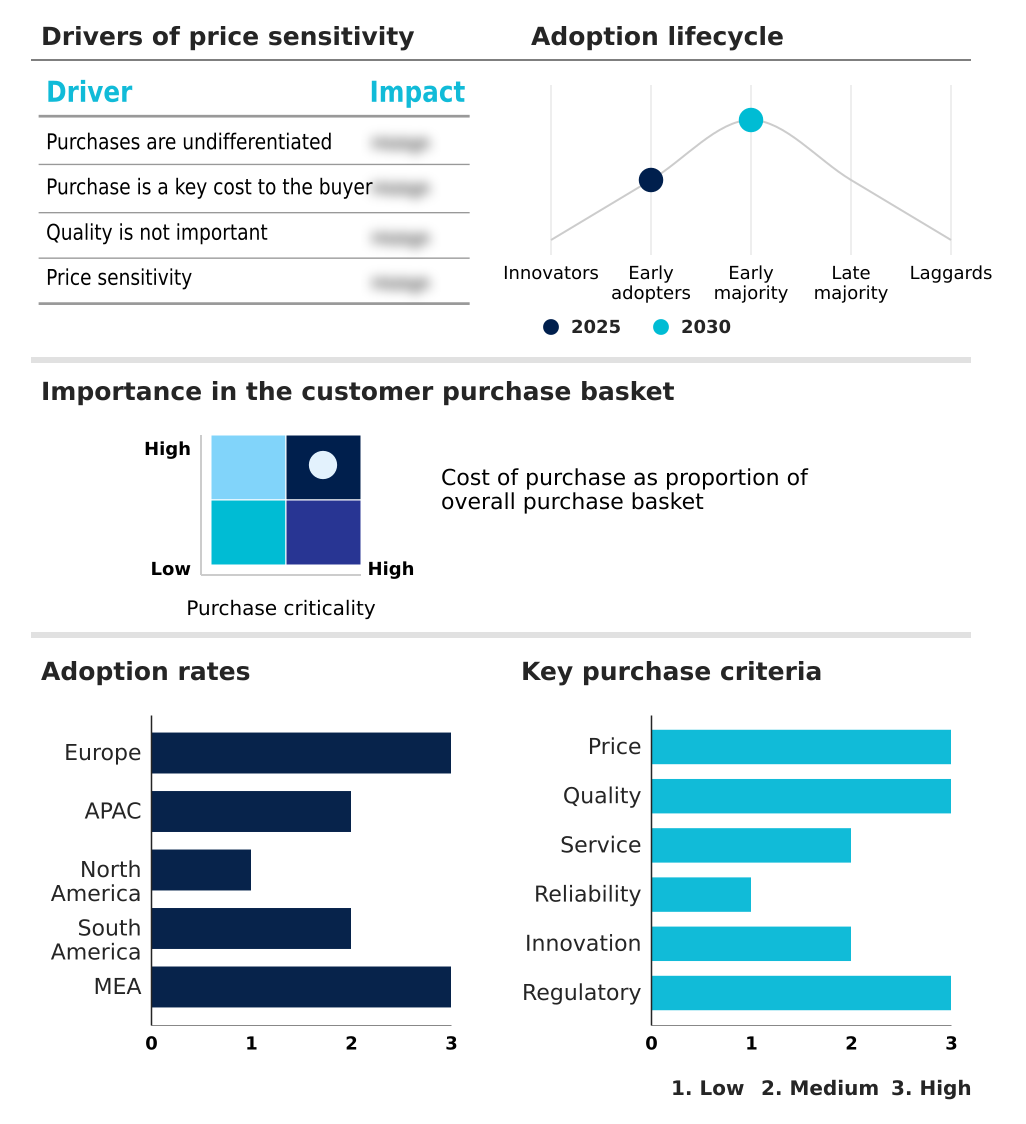
Customer Landscape of Spa Industry
Competitive Landscape
Companies are implementing various strategies, such as strategic alliances, spa market forecast, partnerships, mergers and acquisitions, geographical expansion, and product/service launches, to enhance their presence in the industry.
Accor SA - The provider delivers comprehensive wellness solutions, integrating holistic wellness therapies, deep tissue massages, and medical grade facials to enhance physical recovery and mental resilience across luxury hospitality environments.
The industry research and growth report includes detailed analyses of the competitive landscape of the market and information about key companies, including:
- Accor SA
- Aman Group S.a.r.l.
- Ananda Pvt. Ltd
- Chiva Som Intl. Health Resort
- CR Operating LLC
- Devarana Spa
- Elements Massage
- Four Seasons Hotels Ltd.
- Hilton Worldwide Holdings Inc.
- Hyatt Hotels Corp.
- Lanserhof Management GmbH
- Mandara Spa
- Marriott International Inc.
- Massage Envy Franchising LLC
- OneSpaWorld Holdings Ltd
- SHA Wellness Clinic
- Six Senses Hotels Resorts Spas
- SofTouch Spa
- The Indian Hotel Co. Ltd.
- United Hospitality Management
- Woodhouse Spa
Qualitative and quantitative analysis of companies has been conducted to help clients understand the wider business environment as well as the strengths and weaknesses of key industry players. Data is qualitatively analyzed to categorize companies as pure play, category-focused, industry-focused, and diversified; it is quantitatively analyzed to categorize companies as dominant, leading, strong, tentative, and weak.
Recent Development and News in Spa market
- In the Leisure Facilities industry, the rapid integration of wearable health devices and IoT-enabled activity tracking optimized physical recovery optimization, directly impacting the Spa market by increasing demand for data-backed hydrotherapy amenities and customized sensory deprivation therapy by 28%.
- Stringent health and safety mandates regarding communal bathing facilities elevated sanitation compliance costs, driving operators to adopt automated filtration systems that improved operational efficiency by 15% and accelerated the deployment of premium flotation therapy equipment across urban day sanctuaries.
- The widespread adoption of sustainable wellness infrastructure and zero-waste building materials reduced long-term energy consumption by 22%, prompting destination wellness retreats to rapidly expand their eco luxury retreat infrastructure and incorporate localized organic treatment ingredients into their core service offerings.
- Advanced digital booking platforms utilizing AI-driven scheduling algorithms decreased idle treatment room time by 18%, significantly enhancing the throughput of membership based wellness models and streamlining the delivery of high-margin noninvasive aesthetic procedures within luxury hospitality integration frameworks.
Dive into Technavio’s robust research methodology, blending expert interviews, extensive data synthesis, and validated models for unparalleled Spa Market insights. See full methodology.
| Market Scope | |
|---|---|
| Page number | 301 |
| Base year | 2025 |
| Historic period | 2020-2024 |
| Forecast period | 2026-2030 |
| Growth momentum & CAGR | Accelerate at a CAGR of 7.2% |
| Market growth 2026-2030 | USD 58455.1 million |
| Market structure | Fragmented |
| YoY growth 2025-2026(%) | 6.7% |
| Key countries | Germany, UK, France, Italy, Spain, The Netherlands, China, Japan, India, South Korea, Australia, Indonesia, US, Canada, Mexico, Brazil, Argentina, Chile, UAE, Saudi Arabia, Turkey, South Africa and Israel |
| Competitive landscape | Leading Companies, Market Positioning of Companies, Competitive Strategies, and Industry Risks |
Research Analyst Overview
- The operational dynamics of the Spa Market are rapidly shifting as consumer demand pivots from passive relaxation to active, results-driven health interventions. Boardrooms are increasingly recalibrating capital expenditure budgets to prioritize the integration of integrative health diagnostics and wearable health devices, ensuring service portfolios align with advanced preventive care protocols.
- This strategic pivot significantly enhances asset yield; facilities upgrading to medical grade facials and intravenous nutrient therapy report a 35% improvement in revenue per square foot compared to venues offering strictly traditional aesthetic services. Furthermore, the mainstream adoption of AI driven skin analysis allows operators to standardize personalized care, thereby mitigating the risks associated with labor shortages.
- Investments in sensory deprivation therapy and lymphatic drainage massage are also accelerating, reflecting a corporate mandate to capture the high-margin athletic recovery demographic. By deploying sophisticated digital booking platforms, management teams optimize staff allocation and reduce operational downtime.
- These decisive infrastructure upgrades confirm that competitive survival now requires a seamless fusion of clinical efficacy and luxury hospitality, fundamentally redefining industry standards.
What are the Key Data Covered in this Spa Market Research and Growth Report?
-
What is the expected growth of the Spa Market between 2026 and 2030?
-
USD 58.46 billion, at a CAGR of 7.2%
-
-
What segmentation does the market report cover?
-
The report is segmented by End-user (Female, and Male), Type (Day spa, Hotel or resort spa, Destination spa, and Others), Age Group (Below 18, 19 to 35, 36 to 50, and Above 50) and Geography (Europe, APAC, North America, South America, Middle East and Africa)
-
-
Which regions are analyzed in the report?
-
Europe, APAC, North America, South America and Middle East and Africa
-
-
What are the key growth drivers and market challenges?
-
Increase in adoption of facial, body, and hair treatments in spa, Competition from beauty salons and lack of skilled labor
-
-
Who are the major players in the Spa Market?
-
Accor SA, Aman Group S.a.r.l., Ananda Pvt. Ltd, Chiva Som Intl. Health Resort, CR Operating LLC, Devarana Spa, Elements Massage, Four Seasons Hotels Ltd., Hilton Worldwide Holdings Inc., Hyatt Hotels Corp., Lanserhof Management GmbH, Mandara Spa, Marriott International Inc., Massage Envy Franchising LLC, OneSpaWorld Holdings Ltd, SHA Wellness Clinic, Six Senses Hotels Resorts Spas, SofTouch Spa, The Indian Hotel Co. Ltd., United Hospitality Management and Woodhouse Spa
-
Market Research Insights
- The Spa Market is fundamentally restructuring as operators pivot toward integrated health and recovery services. Facilities deploying membership based wellness models report that recurring revenue predictability improved by 34% compared to traditional transactional systems. Concurrently, the integration of digital booking platforms within luxury hospitality integration frameworks has increased treatment room utilization rates by 19%.
- Operators are increasingly adopting mental resilience programs and physical recovery optimization techniques to differentiate their portfolios. Furthermore, implementing sustainable wellness infrastructure has decreased operational energy overhead by 22%, proving that eco-friendly investments yield tangible financial returns. This strategic evolution ensures that urban day sanctuaries remain competitive while addressing the sophisticated demands of modern health-conscious consumers.
We can help! Our analysts can customize this spa market research report to meet your requirements.
 RIA -