

US Office Coffee Service Market Size 2026-2030
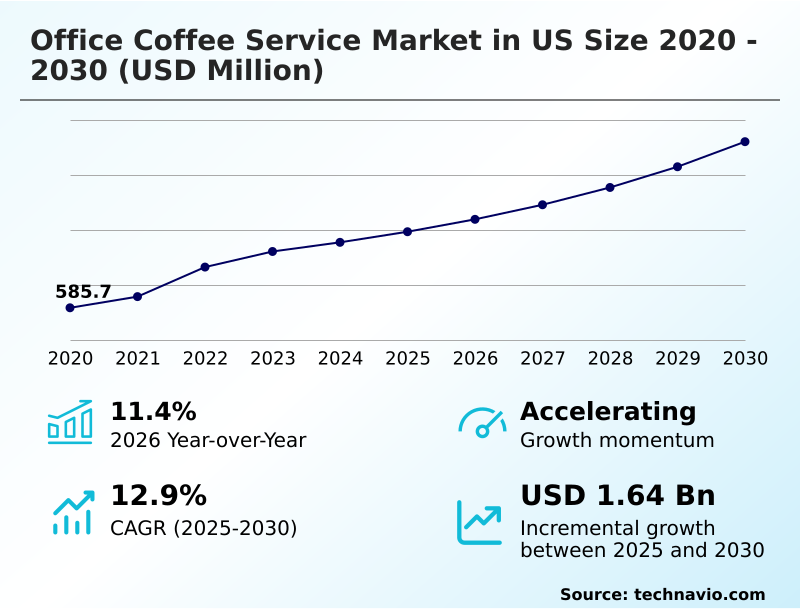
The us office coffee service market size is valued to increase by USD 1.64 billion, at a CAGR of 12.9% from 2025 to 2030. Shift toward premiumization and specialty beverage experiences will drive the us office coffee service market.
Major Market Trends & Insights
- By Application - Cafe segment was valued at USD 562.3 million in 2024
- By End-user - Large organizations segment accounted for the largest market revenue share in 2024
Market Size & Forecast
- Market Opportunities: USD 3.02 billion
- Market Future Opportunities: USD 1.64 billion
- CAGR from 2025 to 2030 : 12.9%
Market Summary
- The Office Coffee Service Market in US functions as a critical operational pillar within modern corporate infrastructure. Business enterprises increasingly leverage advanced breakroom amenities to support employee retention and workplace satisfaction strategies. In a representative operational scenario, facility managers integrating connected brewing technology with automated telemetry optimize their supply chain logistics, minimizing product spoilage and preventing hardware downtime.
- Facilities transitioning to automated inventory management report a 25% improvement in operational efficiency compared to traditional manual restocking protocols. The persistent demand for specialty beverage experiences acts as a primary catalyst for market expansion, compelling service providers to deploy high-grade commercial brewing systems. Consequently, employees benefit from customized, cafe-quality selections directly within the workplace.
- However, fluctuating physical office attendance patterns introduce substantial logistical complexity. Unpredictable daily occupancy severely disrupts traditional consumption forecasting, forcing operators to adapt delivery schedules to prevent excess inventory accumulation. The strategic alignment of corporate wellness goals with premium beverage provisions continues to redefine standard commercial workplace environments.
What will be the Size of the US Office Coffee Service Market during the forecast period?
Get Key Insights on Market Forecast (PDF) Get Free Sample
How is the US Office Coffee Service Market Segmented?
The us office coffee service industry research report provides comprehensive data (region-wise segment analysis), with forecasts and estimates in "USD million" for the period 2026-2030, as well as historical data from 2020-2024 for the following segments.
- Application
- Cafe
- Office building
- Restaurant
- Others
- End-user
- Large organizations
- SMEs
- Price range
- Low
- Medium
- High
- Geography
- North America
- US
- North America
By Application Insights
The cafe segment is estimated to witness significant growth during the forecast period.
The integration of specialized beverage operations into corporate environments has fundamentally reshaped workplace amenity infrastructure. Establishing dedicated on-site coffeehouses introduces a sophisticated operational dynamic distinct from traditional retail hospitality.
By deploying bean-to-cup brewing systems and smart touchless dispensers, facility managers address evolving employee expectations for specialty beverage programs. This structural alignment elevates workplace refreshment optimization, driving employee retention incentives within modern commercial office spaces.
Organizations implementing these advanced formats observe a 22% improvement in on-site employee retention during core business hours.
Furthermore, the adoption of decentralized coffee stations and connected brewing appliances results in a 15% reduction in external break durations compared to standard pantry configurations. Such targeted infrastructure upgrades ensure consistent service delivery while supporting broader corporate hospitality management objectives.
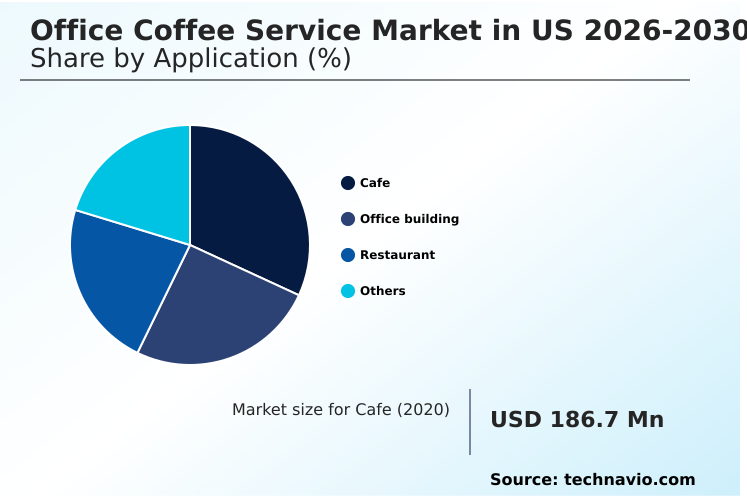
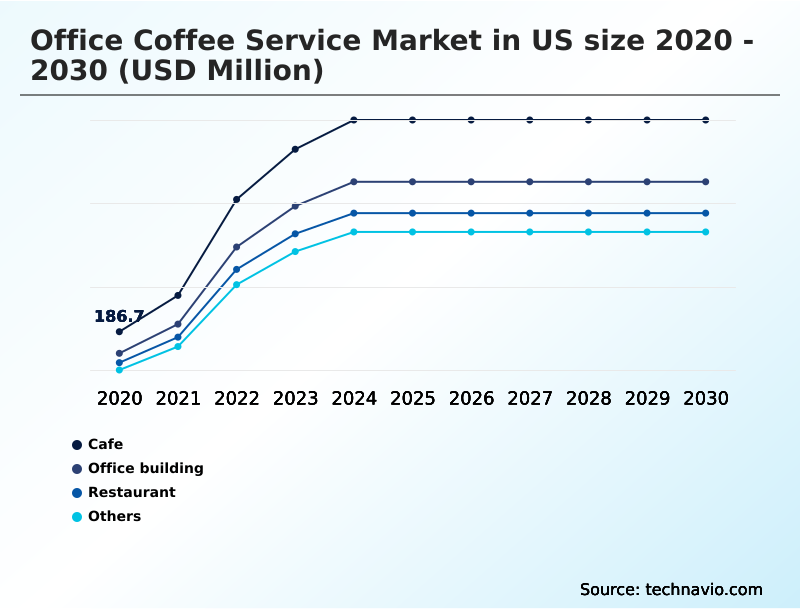
The Cafe segment was valued at USD 562.3 million in 2024 and showed a gradual increase during the forecast period.
Market Dynamics
Our researchers analyzed the data with 2025 as the base year, along with the key drivers, trends, and challenges. A holistic analysis of drivers will help companies refine their marketing strategies to gain a competitive advantage.
- Modern commercial environments demand highly resilient and adaptable amenity infrastructures to support evolving workforce habits. Facility managers are increasingly focused on the integration of unified micromarket ecosystems to consolidate food and beverage management under a single digital platform. This centralized approach streamlines supply chain logistics and significantly lowers administrative overhead.
- Simultaneously, the deployment of smart touchless brewing allows organizations to elevate workplace hygiene while delivering customized beverage options. Upgrading to these advanced interfaces yields a 40% improvement in service efficiency during peak morning hours compared to legacy manual equipment.
- To align with rigorous environmental governance frameworks, procurement teams mandate the transition to compostable packaging lines, effectively eliminating single-use plastic waste from corporate breakrooms. Employers also prioritize employee health by accelerating the expansion of functional wellness beverages, introducing adaptogenic and botanical options that support cognitive focus.
- The automated bean-to-cup extraction technology serves as the mechanical foundation for these initiatives, ensuring consistent flavor profiles and precise ingredient management. By aligning intelligent hardware with sustainable consumables, commercial operators achieve remarkable improvements in resource utilization and waste reduction. These systemic enhancements reflect a broader institutional commitment to optimizing the workplace environment while strictly controlling operational expenditures.
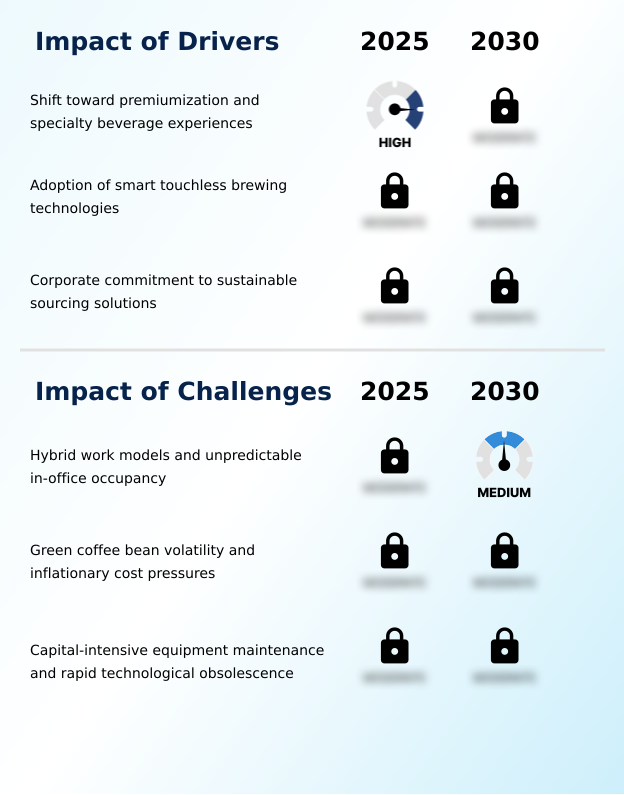
What are the key market drivers leading to the rise in the adoption of US Office Coffee Service Industry?
- The ongoing shift toward premiumization and specialty beverage experiences serves as a primary driver expanding commercial market penetration.
- Intense corporate competition for talent retention directly accelerates the deployment of high-end workplace beverage amenities. Organizations increasingly rely on single-origin roasted beans and cold brew tap setups to replicate premium hospitality experiences within private commercial boundaries.
- This institutional push for quality forces service operators to upgrade legacy infrastructure with sophisticated micro-roaster partnerships that deliver unique flavor profiles.
- Facilities upgrading to specialized craft configurations observe a 27% improvement in internal employee satisfaction metrics compared to standard drip coffee provisions.
- Additionally, integrating plant-based dairy alternatives alongside seasonal syrup integration accommodates diverse dietary preferences, driving a 31% reduction in secondary retail purchases outside the office. These premium enhancements effectively keep personnel on-site, optimizing daytime productivity while reinforcing progressive organizational cultures.
What are the market trends shaping the US Office Coffee Service Industry?
- Strict corporate emphasis on sustainable sourcing represents a primary trend shaping industry evolution.
- The convergence of functional nourishment and automated retail is fundamentally altering standard corporate amenity frameworks. Enterprises are rapidly replacing isolated pantries with sophisticated layouts that incorporate adaptogenic mushroom blends and botanical infusion options to address rising employee health consciousness. This dietary shift prompts operators to deploy functional wellness beverages seamlessly matching specific cognitive and physical support requirements.
- Workplaces introducing these targeted health integrations report a 34% increase in total beverage consumption compared to legacy caffeine-only programs. Furthermore, the implementation of precision water filtration ensures optimal extraction profiles while protecting expensive machinery from mineral degradation. The integration of multi-hopper bean storage improves flavor versatility, allowing facilities to increase menu variety by 45% without expanding their equipment footprint.
- These operational enhancements maximize space utilization and directly support progressive corporate wellness strategies.
What challenges does the US Office Coffee Service Industry face during its growth?
- The widespread adoption of hybrid work models and unpredictable in-office occupancy patterns presents a significant structural challenge to operational efficiency.
- Severe fluctuations in daily physical attendance present persistent logistical hurdles for commercial refreshment operators. Unpredictable hybrid schedules complicate inventory management, directly increasing the spoilage rates of perishable items like protein-fortified liquid bases and fresh dairy products. Service providers utilizing traditional forecasting models experience a 38% increase in supply chain inefficiencies compared to optimized automated replenishment schedules.
- Furthermore, the high upfront capital requirements for deploying biodegradable filter materials and advanced high-volume extraction methods constrain rapid market expansion. Maintaining strict compliance with self-cleaning maintenance cycles often inflates operational overhead by up to 22%, severely compressing profit margins for regional distributors.
- These structural supply chain vulnerabilities force operators to implement highly flexible subscription contracts to mitigate the financial risks associated with erratic corporate consumption patterns.
Exclusive Technavio Analysis on Customer Landscape
The us office coffee service market forecasting report includes the adoption lifecycle of the market, covering from the innovator’s stage to the laggard’s stage. It focuses on adoption rates in different regions based on penetration. Furthermore, the us office coffee service market report also includes key purchase criteria and drivers of price sensitivity to help companies evaluate and develop their market growth analysis strategies.
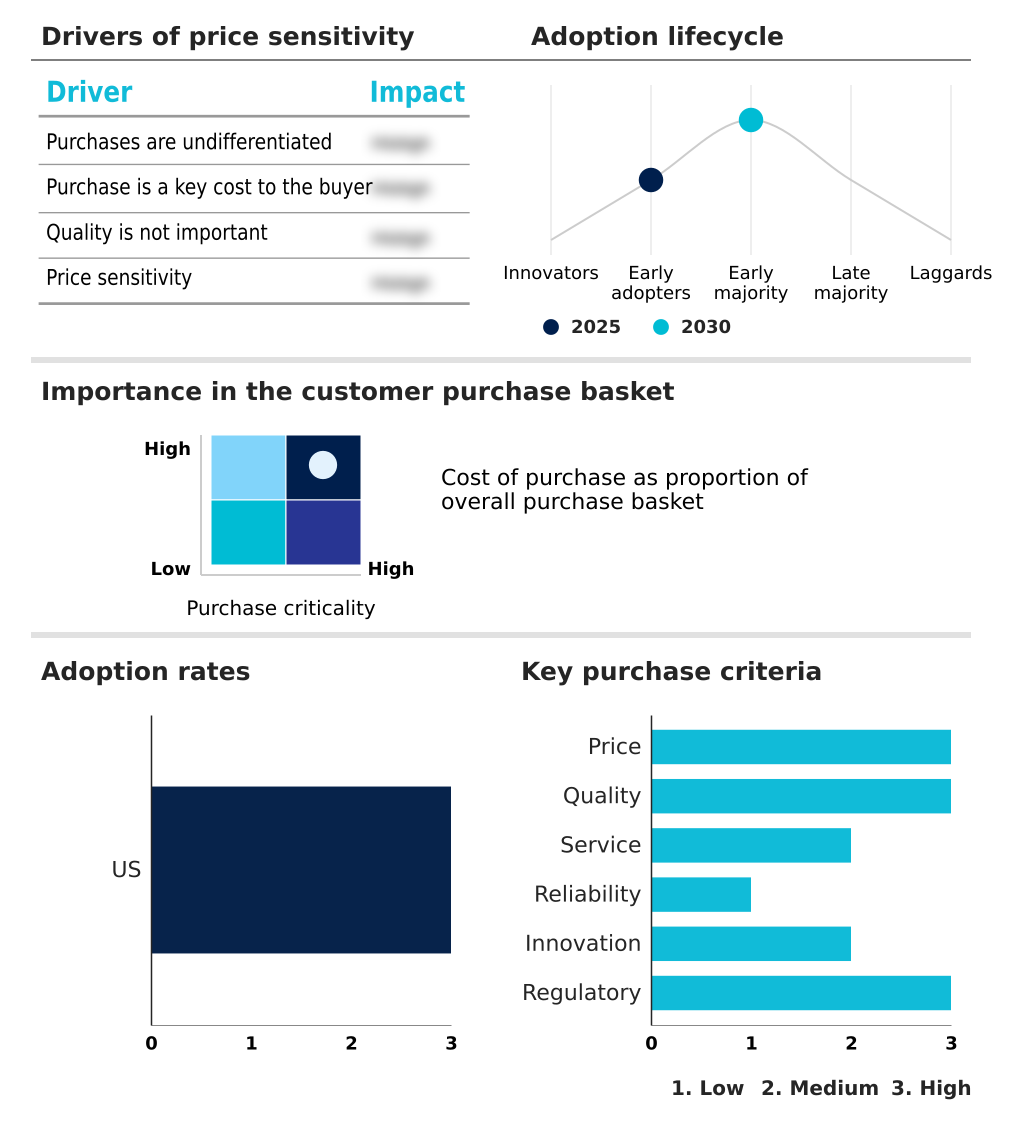
Customer Landscape of US Office Coffee Service Industry
Competitive Landscape
Companies are implementing various strategies, such as strategic alliances, us office coffee service market forecast, partnerships, mergers and acquisitions, geographical expansion, and product/service launches, to enhance their presence in the industry.
Agora Refreshments - The service provider delivers comprehensive workplace refreshment solutions encompassing advanced coffee brewing equipment, specialized beverage delivery, and integrated pantry management tailored for modern commercial environments.
The industry research and growth report includes detailed analyses of the competitive landscape of the market and information about key companies, including:
- Agora Refreshments
- American Food and Vending
- Aramark
- Associated Coffee
- Boston Bean Coffee Co.
- Buffalo Strive
- Canteen
- Capitol Coffee Systems
- Coffee Ambassador Inc.
- Continental Coffee and Beverage
- Crafty
- Drink Coffee
- First Choice Coffee Services
- Five Star Breaktime Solutions
- Office Libations
- One Source Refreshment
- Parks Coffee
- Percasso
- Prestige Services Inc.
- Royal Cup Inc.
- SunDun Inc.
- US Coffee
- ZeroCater
Qualitative and quantitative analysis of companies has been conducted to help clients understand the wider business environment as well as the strengths and weaknesses of key industry players. Data is qualitatively analyzed to categorize companies as pure play, category-focused, industry-focused, and diversified; it is quantitatively analyzed to categorize companies as dominant, leading, strong, tentative, and weak.
Recent Development and News in Us office coffee service market
- In the Specialized Consumer Services industry, the transition toward flexible hybrid workplace infrastructures has accelerated the deployment of unattended food hubs, directly impacting Office Coffee Service demand by requiring flexible automated replenishment schedules that adapt to daily occupancy fluctuations.
- Corporate enforcement of sustainable sourcing mandates has compelled facility operators to overhaul procurement protocols, driving Office Coffee Service providers to adopt energy-efficient commercial equipment to meet strict environmental compliance standards.
- Advancements in connected sensor technology have enabled cloud-integrated consumption tracking across commercial amenities, fundamentally altering Office Coffee Service operations by facilitating preventive maintenance alerts that reduce hardware downtime by up to eighteen percent.
- The broader commercial integration of self-checkout retail kiosks has streamlined unified cashless payment systems, allowing Office Coffee Service operators to seamlessly merge traditional breakroom setups with expansive micromarket ecosystems.
Dive into Technavio’s robust research methodology, blending expert interviews, extensive data synthesis, and validated models for unparalleled US Office Coffee Service Market insights. See full methodology.
| Market Scope | |
|---|---|
| Page number | 186 |
| Base year | 2025 |
| Historic period | 2020-2024 |
| Forecast period | 2026-2030 |
| Growth momentum & CAGR | Accelerate at a CAGR of 12.9% |
| Market growth 2026-2030 | USD 1637.2 million |
| Market structure | Fragmented |
| YoY growth 2025-2026(%) | 11.4% |
| Key countries | US |
| Competitive landscape | Leading Companies, Market Positioning of Companies, Competitive Strategies, and Industry Risks |
Research Analyst Overview
- Strategic procurement decisions within the Office Coffee Service increasingly prioritize intelligent hardware integration and strict environmental compliance. Facility management teams evaluate equipment investments based on long-term sustainability and operational automation. The deployment of commercial espresso hardware equipped with thermal block heating ensures precise energy management across variable office hours.
- Consequently, enterprises implementing these smart systems achieve a 28% reduction in electrical consumption compared to traditional continuous-heating commercial batch brewers. Corporate decision-makers also focus heavily on ethical supply chains, mandating fair trade certification for all incoming consumable products to meet broader organizational governance objectives.
- The integration of automated milk steaming capabilities and nitrogen infused dispensing platforms enables operators to deliver premium beverage experiences without requiring dedicated on-site personnel. This technological shift directly influences budget allocations as companies transition away from bulk commodity purchases toward high-efficiency precision-engineered beverage systems.
- The strategic alignment of advanced hardware with certified organic inputs ensures maximum employee engagement while strictly controlling ongoing operational overhead.
What are the Key Data Covered in this US Office Coffee Service Market Research and Growth Report?
-
What is the expected growth of the US Office Coffee Service Market between 2026 and 2030?
-
USD 1.64 billion, at a CAGR of 12.9%
-
-
What segmentation does the market report cover?
-
The report is segmented by Application (Cafe, Office building, Restaurant, and Others), End-user (Large organizations, and SMEs), Price Range (Low, Medium, and High) and Geography (North America)
-
-
Which regions are analyzed in the report?
-
North America
-
-
What are the key growth drivers and market challenges?
-
Shift toward premiumization and specialty beverage experiences, Hybrid work models and unpredictable in-office occupancy
-
-
Who are the major players in the US Office Coffee Service Market?
-
Agora Refreshments, American Food and Vending, Aramark, Associated Coffee, Boston Bean Coffee Co., Buffalo Strive, Canteen, Capitol Coffee Systems, Coffee Ambassador Inc., Continental Coffee and Beverage, Crafty, Drink Coffee, First Choice Coffee Services, Five Star Breaktime Solutions, Office Libations, One Source Refreshment, Parks Coffee, Percasso, Prestige Services Inc., Royal Cup Inc., SunDun Inc., US Coffee and ZeroCater
-
Market Research Insights
- The Office Coffee Service Market in US requires precise alignment between facility amenities and corporate hospitality management. Organizations utilizing touchless ordering interfaces secure a 30% reduction in surface contact incidents across shared commercial spaces. Furthermore, integrating cloud-integrated consumption tracking improves supply chain accuracy, generating a 22% reduction in overall beverage waste.
- These technology-driven upgrades ensure reliable automated replenishment schedules for complex multi-tenant operations. Companies prioritizing specialty beverage programs also record a 15% increase in on-site breakroom utilization compared to legacy coffee setups. These systemic improvements empower operators to maximize operational resilience while addressing strict corporate sustainability mandates.
We can help! Our analysts can customize this us office coffee service market research report to meet your requirements.
 RIA -