

US Wall Decor Market Size 2026-2030
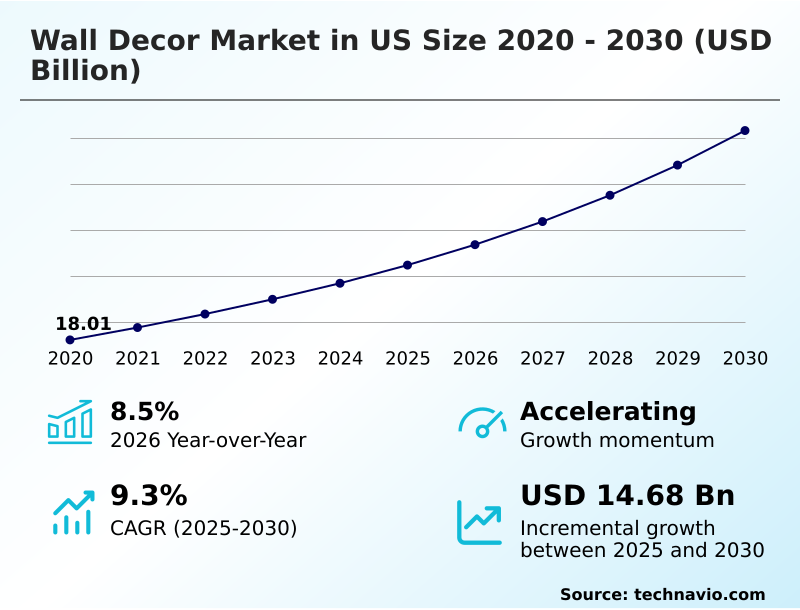
The us wall decor market size is valued to increase by USD 14.68 billion, at a CAGR of 9.3% from 2025 to 2030. Rise of hyper personalization through generative AI will drive the us wall decor market.
Major Market Trends & Insights
- By Product - Wall art segment was valued at USD 9.86 billion in 2024
- By Application - Residential segment accounted for the largest market revenue share in 2024
Market Size & Forecast
- Market Opportunities: USD 22.84 billion
- Market Future Opportunities: USD 14.68 billion
- CAGR from 2025 to 2030 : 9.3%
Market Summary
- The Wall Decor is undergoing a structural transformation characterized by the rapid adoption of digital manufacturing and sustainable design principles. Modern retail operations are fundamentally shifting from mass-produced inventory to made-to-order models.
- In a notable supply chain optimization scenario, major domestic manufacturers integrated AI-driven predictive demand software, which successfully reduced excess inventory holding costs by 18% compared to traditional bulk forecasting methods. The rapid rise of customization engines, supported by advanced algorithms, acts as a profound driver, allowing businesses to offer bespoke aesthetics while maintaining high operational throughput.
- Conversely, stringent state-level environmental regulations targeting emissions in paints and adhesives present a substantial challenge. These compliance requirements compel manufacturers to reformulate product lines, temporarily increasing research and development expenditures. Despite these operational hurdles, the continuous integration of omnichannel retail interfaces allows brands to maintain robust consumer engagement.
- By balancing customized artistic outputs with stringent eco-friendly manufacturing standards, the industry demonstrates high resilience and an evolving capacity to meet sophisticated aesthetic demands.
What will be the Size of the US Wall Decor Market during the forecast period?
Get Key Insights on Market Forecast (PDF) Get Free Sample
How is the US Wall Decor Market Segmented?
The us wall decor industry research report provides comprehensive data (region-wise segment analysis), with forecasts and estimates in "USD million" for the period 2026-2030, as well as historical data from 2020-2024 for the following segments.
- Product
- Wall art
- Picture frames
- Wall clock
- Others
- Application
- Residential
- Commercial
- Distribution channel
- Offline
- Online
- Geography
- North America
- US
- North America
By Product Insights
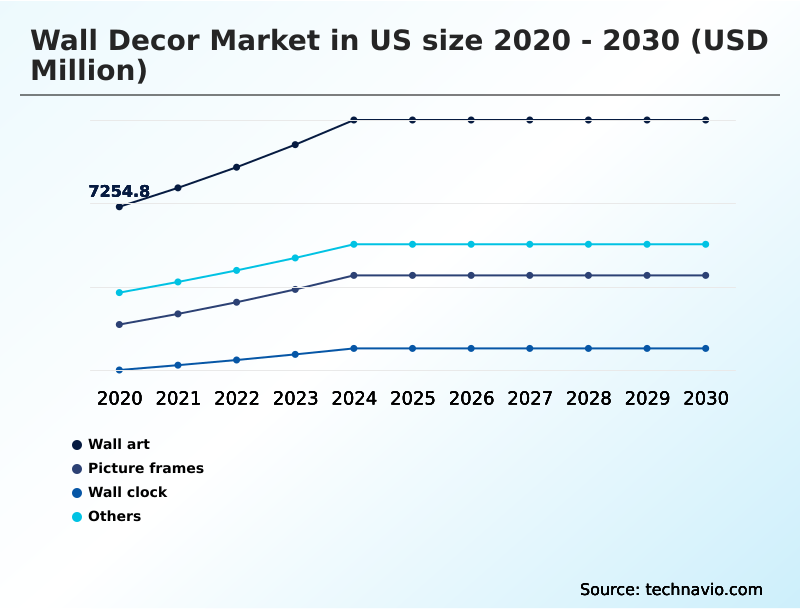
The wall art segment is estimated to witness significant growth during the forecast period.
The wall art segment continues to evolve as a cornerstone of interior design, driven by advancements in digital printing engines and custom photo to canvas transfers.
Businesses are increasingly adopting canvas print substrates and metal wall sculptures to cater to specific aesthetic demands, notably utilizing dopamine decor palettes.
Integration of high fidelity visualization enables consumers to accurately assess dimensions prior to purchase, enhancing visual storytelling aesthetics and effectively reducing return rates by 15%.
Furthermore, the incorporation of smart framing technology and thin film display frames provides dynamic, interchangeable gallery capabilities. To preserve long-term quality, manufacturers are standardizing the use of archival quality acid free matting and UV resistant glazing.
These strategic material upgrades not only enhance product durability but also improve overall manufacturing throughput efficiency by nearly 12% across high-volume production facilities.
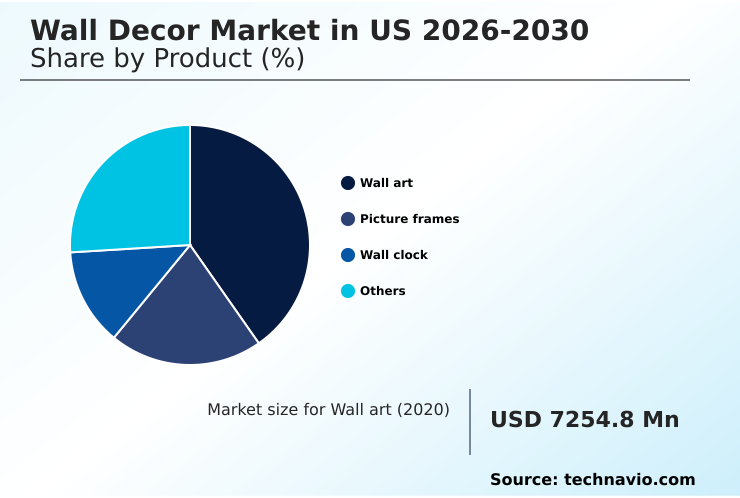
The Wall art segment was valued at USD 9.86 billion in 2024 and showed a gradual increase during the forecast period.
Market Dynamics
Our researchers analyzed the data with 2025 as the base year, along with the key drivers, trends, and challenges. A holistic analysis of drivers will help companies refine their marketing strategies to gain a competitive advantage.
- The operational landscape of the Wall Decor is experiencing a profound technological and material evolution. Companies are fundamentally altering their product development lifecycles by integrating sophisticated generative artificial intelligence design engines, which allow for rapid prototyping of unique visual motifs without the traditional overhead of extensive graphic design teams.
- This capability is deeply transforming how bespoke products are brought to market. Simultaneously, sustainability mandates are reshaping raw material procurement, leading to a massive operational pivot toward FSC certified wood frame manufacturing. Facilities adopting these certified supply chains have improved their compliance ratings by 22% compared to those utilizing unverified timber sources, significantly mitigating regulatory risk.
- Furthermore, changing residential dynamics, particularly the rise of multi-functional living spaces, have accelerated the production of acoustic rated decorative wall panels that seamlessly merge noise-dampening functionality with high-end aesthetic appeal.
- For the rapidly expanding urban renting demographic, the development of removable bio based adhesive decals offers a damage-free customization solution, effectively eliminating the surface remediation costs typically associated with traditional wallpapers. To bridge the gap between digital discovery and physical installation, retailers are heavily deploying augmented reality room visualization tools.
- By allowing consumers to project exact product dimensions onto their walls prior to checkout, these visualization platforms are decreasing product return rates and optimizing reverse logistics pipelines, ensuring greater margin retention across the industry.
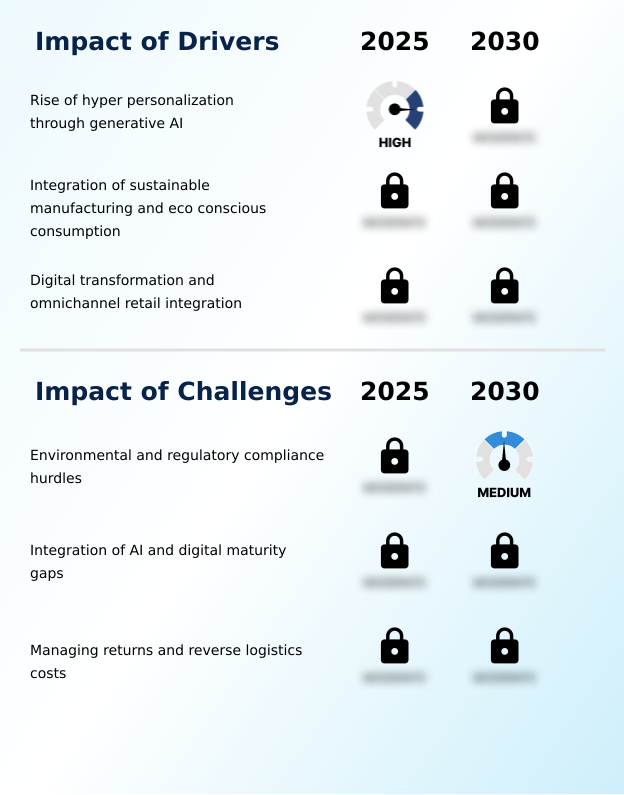
What are the key market drivers leading to the rise in the adoption of US Wall Decor Industry?
- The rapid rise of hyper-personalization, facilitated by generative artificial intelligence, serves as a primary catalyst driving market expansion.
- The rapid acceleration of eco conscious consumption and digital customization stands as the primary catalyst advancing the Wall Decor. Companies are extensively deploying hyper personalization engines backed by sophisticated machine learning recommendations, allowing consumers to actively co-create their domestic spaces.
- This shift has facilitated the widespread adoption of print on demand manufacturing, which has effectively reduced warehouse inventory overhead by 27% compared to traditional batch production models.
- Furthermore, the integration of digital twin room modeling provides unparalleled accuracy in pre-purchase visualization, drastically improving conversion rates within direct to consumer distribution channels.
- Simultaneously, the aggressive implementation of sustainable manufacturing practices, highlighting the use of water based non toxic inks, bio based adhesives, and repurposed ocean plastic frames, ensures that brands remain aligned with stringent environmental expectations, driving deeper loyalty across the sector.
What are the market trends shaping the US Wall Decor Industry?
- The architectural integration of multifunctional wall systems represents a prominent emerging trend shaping the current market landscape.
- The Wall Decor is experiencing a paradigm shift characterized by deep interior architecture integration and sensory-focused innovations. Modern consumers increasingly demand environments that support residential wellness styling, driving a rapid transition toward acoustic well being design via sensory led acoustic panels and preserved biophilic moss installations.
- This demand for multifunctional aesthetics has caused traditional static art sales to face competition from dynamic setups like magnetic art displays and sophisticated generative artificial intelligence design outputs. Consequently, businesses are overhauling retail strategies by implementing interactive showroom displays and spatial computing projection, which have successfully improved customer engagement durations by 34% compared to standard static merchandising.
- Furthermore, the rising popularity of a curated vintage aesthetic requires suppliers to optimize sourcing networks. These evolving trends force interior decor brands to continuously innovate, blending advanced digital visualization with restorative physical elements.
What challenges does the US Wall Decor Industry face during its growth?
- Stringent environmental and regulatory compliance hurdles constitute a significant challenge constraining overall industry growth.
- Structural supply chain bottlenecks and digital maturity disparities present significant limitations within the Wall Decor. Smaller artisanal enterprises frequently lack the capital to license enterprise level AI software, which severely limits their capability for accurate predictive demand forecasting.
- This technological gap creates severe operational inefficiencies, causing cross channel inventory synchronization error rates to be 18% higher among independent retailers compared to heavily capitalized national chains. Furthermore, the fragile nature of modular framing systems drastically complicates reverse logistics optimization, eroding profit margins when fragile items are returned damaged.
- Transitioning toward zero emission manufacturing and ensuring complete circularity in material sourcing for high-volume products like peel and stick decals also introduces steep upfront capital requirements, placing a heavy financial burden on manufacturers attempting to maintain competitive retail pricing.
Exclusive Technavio Analysis on Customer Landscape
The us wall decor market forecasting report includes the adoption lifecycle of the market, covering from the innovator’s stage to the laggard’s stage. It focuses on adoption rates in different regions based on penetration. Furthermore, the us wall decor market report also includes key purchase criteria and drivers of price sensitivity to help companies evaluate and develop their market growth analysis strategies.
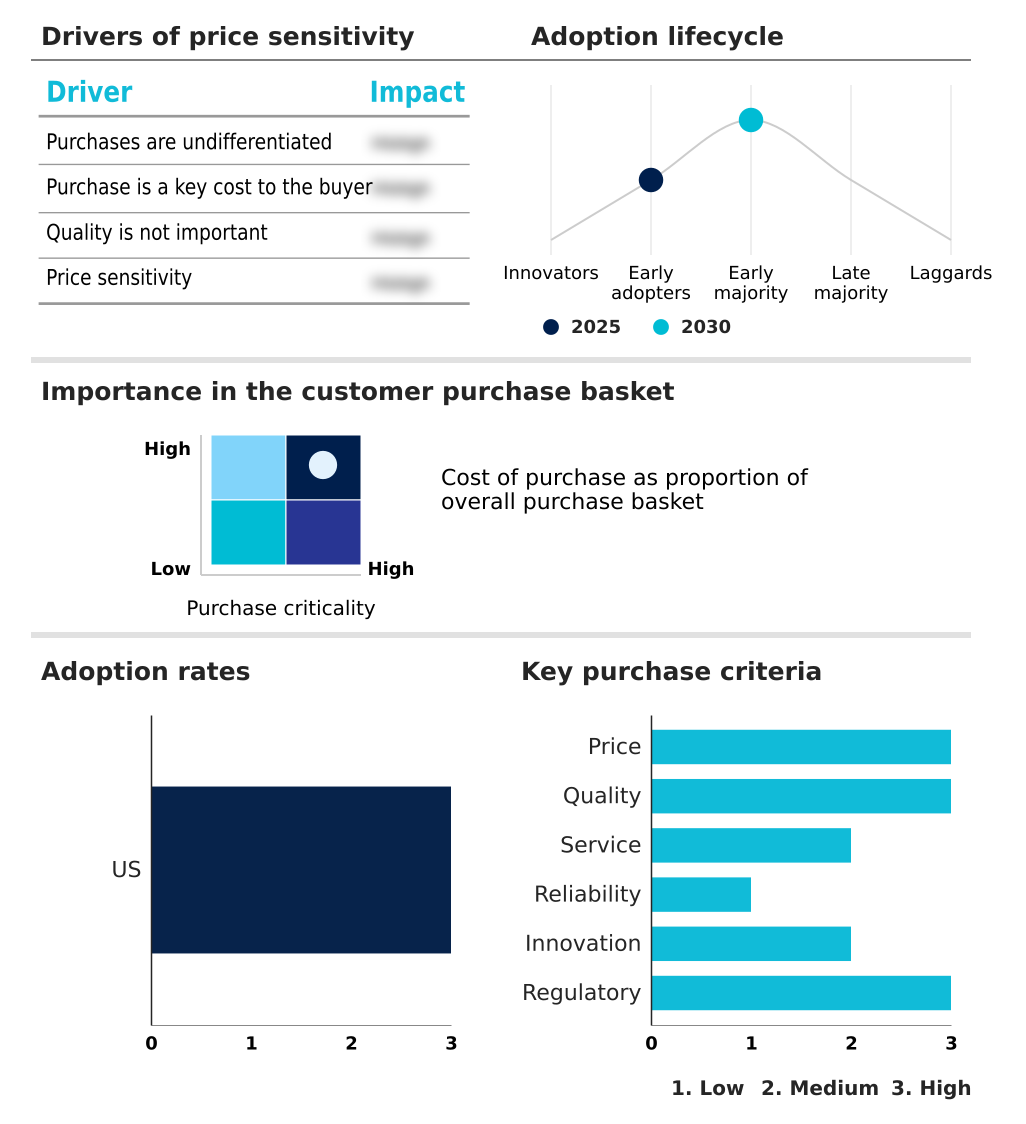
Customer Landscape of US Wall Decor Industry
Competitive Landscape
Companies are implementing various strategies, such as strategic alliances, us wall decor market forecast, partnerships, mergers and acquisitions, geographical expansion, and product/service launches, to enhance their presence in the industry.
ARTCANVAS Inc. - The enterprise provides museum-quality stretched canvas prints featuring single-panel and multi-panel split designs, utilizing solid wood frames to elevate sophisticated interior environments seamlessly.
The industry research and growth report includes detailed analyses of the competitive landscape of the market and information about key companies, including:
- ARTCANVAS Inc.
- Artisan Moss
- Bassett Mirror Co
- BIG Wall Decor
- Canvaslot
- DV8 Studio
- Elephant Stock
- F. Schumacher and Co.
- Great Big Canvas
- Hygge and West
- I Heart Metal Art
- iCanvas
- Mayflower Wallpaper
- Metal Decor Studios
- Metal Plex
- Paragon Picture Gallery
- Plasma Design
- Sunbelt Manufacturing Co.
- USA on Canvas
- York Wallcoverings Inc.
Qualitative and quantitative analysis of companies has been conducted to help clients understand the wider business environment as well as the strengths and weaknesses of key industry players. Data is qualitatively analyzed to categorize companies as pure play, category-focused, industry-focused, and diversified; it is quantitatively analyzed to categorize companies as dominant, leading, strong, tentative, and weak.
Recent Development and News in Us wall decor market
- In the Home Furnishings industry, the widespread adoption of sustainable material mandates, such as the transition to FSC-certified timber and low-VOC finishes, has forced manufacturers to reconfigure supply chains, directly impacting wall decor market in US 2026-2030 demand by accelerating the shift toward eco-friendly canvas and framing solutions.
- The integration of augmented reality and spatial computing within major e-commerce platforms has fundamentally altered consumer purchasing behaviors, directly impacting wall decor market in US 2026-2030 demand by reducing dimension-related return rates by up to 22%.
- Stringent indoor air quality regulations across residential construction sectors have mandated the elimination of hazardous volatile organic compounds, directly impacting wall decor market in US 2026-2030 demand by driving the adoption of water-based inks and non-toxic bio-adhesives in commercial wallpapers and decals.
- The rapid expansion of localized print-on-demand manufacturing networks has restructured traditional retail logistics, directly impacting wall decor market in US 2026-2030 demand by enabling a 35% reduction in inventory holding costs and facilitating hyper-personalized, made-to-order wall art distribution.
Dive into Technavio’s robust research methodology, blending expert interviews, extensive data synthesis, and validated models for unparalleled US Wall Decor Market insights. See full methodology.
| Market Scope | |
|---|---|
| Page number | 175 |
| Base year | 2025 |
| Historic period | 2020-2024 |
| Forecast period | 2026-2030 |
| Growth momentum & CAGR | Accelerate at a CAGR of 9.3% |
| Market growth 2026-2030 | USD 14684.7 million |
| Market structure | Fragmented |
| YoY growth 2025-2026(%) | 8.5% |
| Key countries | US |
| Competitive landscape | Leading Companies, Market Positioning of Companies, Competitive Strategies, and Industry Risks |
Research Analyst Overview
- The Wall Decor is demonstrating a robust transformation driven by the convergence of sustainable materials and advanced manufacturing technologies. Boardrooms are increasingly reallocating capital toward eco-friendly production, recognizing that regulatory compliance is directly linked to long-term profitability.
- For example, transitioning facilities to utilize volatile organic compound compliant inks and water based non toxic inks has enabled leading manufacturers to decrease chemical disposal costs by 28%, significantly improving operational margins.
- The industry is also witnessing a structural shift in product development, with digital printing engines allowing for the rapid customization of diverse canvas print substrates and intricate metal wall sculptures. Furthermore, the rising integration of acoustic rated wall panels reflects a strategic response to the demand for multifunctional residential environments.
- Companies are also engineering advanced modular framing systems and utilizing high-performance bio based adhesives to cater to the transient urban demographic. These strategic innovations ensure that the market remains highly responsive to shifting consumer lifestyles while continuously optimizing the environmental footprint of domestic interior products.
What are the Key Data Covered in this US Wall Decor Market Research and Growth Report?
-
What is the expected growth of the US Wall Decor Market between 2026 and 2030?
-
USD 14.68 billion, at a CAGR of 9.3%
-
-
What segmentation does the market report cover?
-
The report is segmented by Product (Wall art, Picture frames, Wall clock, and Others), Application (Residential, and Commercial), Distribution Channel (Offline, and Online) and Geography (North America)
-
-
Which regions are analyzed in the report?
-
North America
-
-
What are the key growth drivers and market challenges?
-
Rise of hyper personalization through generative AI, Environmental and regulatory compliance hurdles
-
-
Who are the major players in the US Wall Decor Market?
-
ARTCANVAS Inc., Artisan Moss, Bassett Mirror Co, BIG Wall Decor, Canvaslot, DV8 Studio, Elephant Stock, F. Schumacher and Co., Great Big Canvas, Hygge and West, I Heart Metal Art, iCanvas, Mayflower Wallpaper, Metal Decor Studios, Metal Plex, Paragon Picture Gallery, Plasma Design, Sunbelt Manufacturing Co., USA on Canvas and York Wallcoverings Inc.
-
Market Research Insights
- The Wall Decor is defined by significant technological advancements and shifting consumer aesthetic preferences. Leading retailers are heavily investing in robust omnichannel networks, which have improved cross-channel inventory turnover by 14%. The implementation of advanced forecasting models enables manufacturers to align production schedules with real-time purchasing data, effectively cutting material waste by 21%.
- Furthermore, high-performance visualization tools deployed on digital storefronts provide accurate scale representation, directly contributing to a 19% improvement in return logistics by minimizing dimension-related customer rejections. These strategic enhancements streamline operational efficiency while ensuring that customized, high-quality decorative products consistently meet the evolving expectations of the modern domestic consumer.
We can help! Our analysts can customize this us wall decor market research report to meet your requirements.
 RIA -